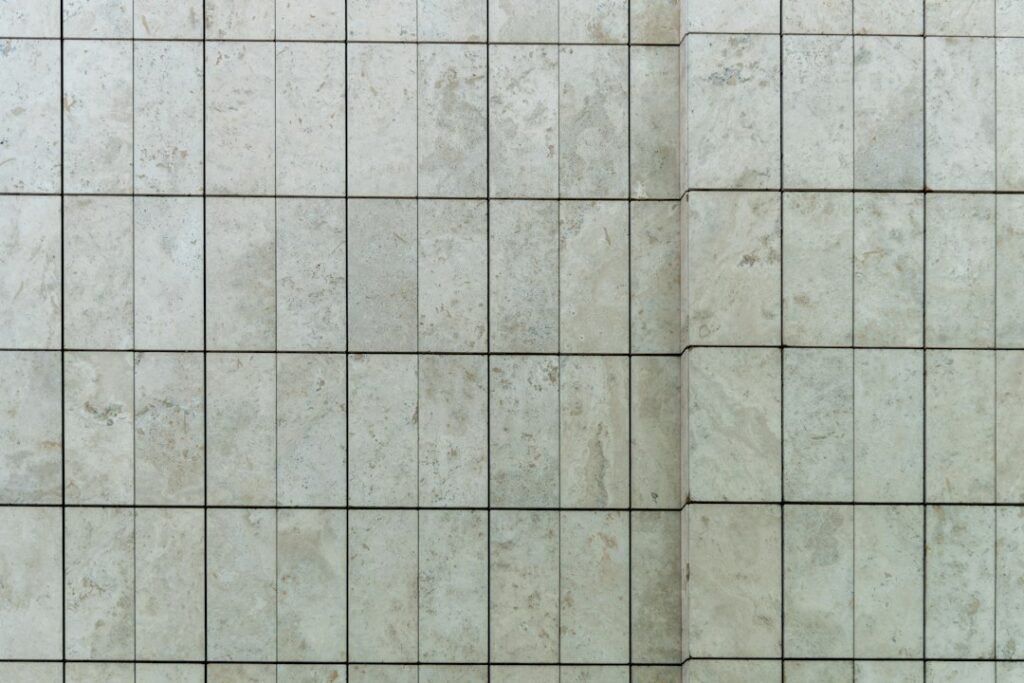
Most people who shop for silver floor tile picture a mirror-bright metallic surface, then discover that the best-performing silver floors look nothing like chrome. The finishes that hold up for decades are cool, light gray porcelains with a faint sheen, silvery slate and travertine, and a small number of glazed tiles with a mica or pearl effect. Choose the wrong one and you get a floor that shows every footprint, feels slick when wet, and scratches the first winter. Choose well and silver becomes one of the most flexible neutrals you can put underfoot, bridging warm wood cabinets and cool stainless appliances in the same room.
Part of our Tile & Grout guide — explore the full guide →
- What Counts as Silver Floor Tile?
- Porcelain vs. Stone vs. Metallic Glaze
- Silver Floor Tile Cost Breakdown
- Slip Resistance, Finish, and Where Silver Tile Works Best
- Choosing Grout and Pairing Colors
- Installation Tips That Prevent Cracks and Lippage
- Cleaning and Long-Term Care
- Is Silver Floor Tile the Right Choice?
What Counts as Silver Floor Tile?
Manufacturers use “silver” loosely, so it helps to sort the market into four groups before you compare prices. Each group has a different look, price band, and set of performance tradeoffs.
- Silver-gray porcelain: Through-body or color-body porcelain in pale gray tones, often with a light polished or satin finish. This is the workhorse category and the one most homeowners end up buying.
- Metallic-glaze ceramic and porcelain: Tiles with a reflective glaze containing metal oxides or mica. They sparkle under light but the glaze is the wear layer, so traffic matters.
- Natural stone with silver tones: Silver travertine, silver-gray slate, Carrara-type marbles, and some limestones. Each piece varies, and all need sealing.
- Actual metal tile: Stainless steel, aluminum, or metal-clad resin. These belong on backsplashes and accent strips, not on floors that see shoes and grit.
If a tile is marketed as silver but is really a light gray with a subtle shimmer, that is usually good news for a floor. Pure reflective finishes are decorative; subtle silver is practical.
Porcelain vs. Stone vs. Metallic Glaze
Porcelain is the safest choice for most rooms. It absorbs less than 0.5% water by weight, resists staining without sealer, and handles freeze-thaw cycles if you want the same floor running into a mudroom or covered porch. Look for a PEI rating of 4 or 5 for kitchens, entries, and hallways. A PEI 3 tile is fine for bathrooms and bedrooms where traffic is lighter and people are often barefoot.
Silver travertine and slate bring movement and texture that porcelain imitates but rarely matches. Travertine has natural pits that are filled at the factory; some fills pop out over time and need touch-up with color-matched epoxy. Slate is naturally cleft, which gives excellent grip but makes the surface uneven, so plan on a thicker mortar bed and more careful layout. Both stones need a penetrating sealer at installation and again every 1 to 3 years depending on traffic.
Metallic-glaze tiles are where buyers get burned. The glaze is thin, and a PEI 2 metallic tile will show dull traffic lanes within a couple of years in a kitchen. If you love the reflective look, use it as a border, a medallion, or in a powder room where foot traffic is light and nobody tracks in sand.
Silver Floor Tile Cost Breakdown
Pricing depends mostly on material and tile size. Large-format tiles cost more per piece and demand a flatter subfloor, which pushes labor up. The figures below are typical 2026 US ranges before sales tax.
| Tile Type | Material per sq ft | Installed per sq ft |
|---|---|---|
| Silver-gray ceramic | $1.50 – $4 | $7 – $13 |
| Silver-gray porcelain | $3 – $8 | $9 – $18 |
| Metallic-glaze porcelain | $6 – $15 | $13 – $26 |
| Silver travertine or slate | $5 – $12 | $13 – $25 |
| Silver-veined marble | $8 – $20 | $17 – $35 |
For a 120 sq ft bathroom in mid-range porcelain, a realistic budget runs $1,300 to $2,400 including thinset, grout, an uncoupling membrane, and labor. Add 10% extra tile for straight lays and 15% for diagonal or herringbone patterns. Keep one unopened box after the job; dye lots shift, and a matching replacement tile can be impossible to find five years later.
Slip Resistance, Finish, and Where Silver Tile Works Best
Polished silver tile looks stunning in a showroom under spotlights. In a bathroom with wet feet, it can be dangerous. Check the DCOF (dynamic coefficient of friction) on the spec sheet. The ANSI A326.3 standard calls for a minimum of 0.42 for level interior floors that get wet, and many designers prefer 0.50 or higher for bathrooms and kitchens. Matte, honed, and lightly textured finishes almost always outperform polished ones.
Here is how the finishes tend to match up with rooms:
- Bathrooms: Matte or textured porcelain, DCOF 0.50+. Small mosaics in the shower pan for grip.
- Kitchens: Satin or matte porcelain, PEI 4, in 12×24 or 24×24 formats to reduce grout lines.
- Entries and mudrooms: Textured porcelain or cleft slate that hides grit and salt residue.
- Living areas: Polished or lappato porcelain can work here, with rugs in main walkways.
- Basements: Porcelain over a vapor-appropriate membrane; skip natural stone if the slab stays damp.
One more point about light. Silver tones read cooler in north-facing rooms and under 5000K LED bulbs. In a room with warm 2700K lighting, the same tile can look almost beige-gray. Bring home two or three sample pieces and view them at night under your actual fixtures before you order.
Choosing Grout and Pairing Colors
Grout color changes how a silver floor reads more than most people expect. A grout one shade darker than the tile hides dirt and gives a clean, uniform surface. A matching light gray grout makes the floor look like one continuous plane, which suits large-format tiles. High-contrast charcoal or black grout emphasizes the pattern, which is great for subway or hexagon layouts but harsh on busy stone.
For kitchens and entries, consider a urethane or single-component premixed grout, or an epoxy grout. Standard cement grout in pale silver will stain from coffee, wine, and tracked-in dirt unless it is sealed and resealed. Epoxy grout costs around $50 to $80 per gallon kit versus $15 to $25 for cement grout, but it is essentially stain-proof and never needs sealing.
Silver pairs well with white or navy cabinetry, walnut and white oak wood tones, brushed nickel and matte black fixtures, and soft blues or sage greens on the walls. Avoid pairing it with yellow-toned beige paint, which tends to make gray tile look dingy by comparison.
Installation Tips That Prevent Cracks and Lippage
Most failed tile floors trace back to prep, not the tile. For silver porcelain in large formats, your subfloor must meet L/360 deflection for ceramic and porcelain, and L/720 for natural stone. That typically means 3/4-inch plywood or OSB over joists at 16 inches on center, sometimes with a second layer of 1/2-inch plywood for stone.
- Check flatness with a 10-foot straightedge. For tiles with any side 15 inches or longer, the tolerance is 1/8 inch in 10 feet and 1/16 inch in 24 inches.
- Install an uncoupling membrane or cement backer board, following the manufacturer’s fastening schedule.
- Use a large-and-heavy-tile (LHT) mortar for anything 15 inches or larger, and back-butter each tile.
- Stagger rectangular tiles no more than 33% of their length to limit lippage from natural bow.
- Use a leveling clip system for large-format tile and pull a tile periodically to confirm 95% coverage in wet areas.
- Leave a 1/4-inch movement joint at walls and cabinets, and add soft joints every 20 to 25 feet in large rooms.
Rectified tiles allow tight 1/16-inch or 1/8-inch grout joints. Non-rectified tiles need 3/16 inch or more to absorb size variation. Do not force a tight joint on a non-rectified tile; you will fight lippage across the whole floor.
Cleaning and Long-Term Care
Light-colored floors show dirt, and silver is no exception, though it hides dust better than bright white. Sweep or dry-mop daily in kitchens and entries, since sand is the main thing that dulls polished and metallic finishes. Damp-mop weekly with a pH-neutral tile cleaner diluted in warm water. Avoid vinegar and citrus cleaners on natural stone; acids etch travertine and marble within minutes.
On porcelain, streaks are usually cleaner residue rather than dirt. Rinse with plain water after mopping and buff dry with a microfiber pad to bring back the sheen. For grout, a nylon brush and an oxygen-based cleaner handle most stains. Reseal cement grout every 12 to 24 months; a simple water-drop test tells you when. If water darkens the grout within a minute, it is time.
Put felt pads on chair and table legs, and place walk-off mats at exterior doors. For metallic-glaze tiles, those two habits alone can double the time before wear lanes appear.
Is Silver Floor Tile the Right Choice?
Silver works best for homeowners who want a neutral that feels more intentional than plain gray, and who are willing to pick the finish based on the room instead of the showroom sample. A matte silver-gray porcelain in a bathroom or kitchen is a low-risk, durable choice that will outlast several paint colors and cabinet updates. Natural silver stone adds character but asks for sealing and gentler cleaning. Metallic-glaze pieces are best kept to accents.
Before you commit, confirm four things on the spec sheet: PEI rating, DCOF for wet areas, water absorption, and whether the tile is rectified. Then order a full box, lay out a few tiles dry on the floor, and live with them for a couple of days. That small step catches most regrets before a single tile gets set in mortar, and it gives you a realistic sense of how a silver floor tile will look in your home’s light, with your cabinets and your furniture, instead of a showroom’s.
Prefer to explore on your own?
See how new flooring looks in your actual room in seconds — free, no signup.
Try the free Floor Studio →