Real sisal is one of those materials designers love on a mood board and homeowners quietly curse two years later. The woven, organic, beach-house texture is genuinely beautiful — and the fiber itself is scratchy underfoot, stains if you look at it with a glass of wine, and buckles from a single spilled water bottle. That’s why the fastest-growing corner of the carpet showroom is sisal look carpet: synthetic and wool broadloom woven to mimic sisal’s flat, textured, basketweave character while behaving like a normal, cleanable carpet. I spec these constantly for stairs, family rooms, and rentals, and after years of installs I can tell you exactly which versions deliver the look and which just deliver beige loops. Here’s the full picture.
Why Real Sisal Disappoints (The Honest List)
Sisal is spun from agave leaf fibers, and every one of its problems traces back to that plant origin. It’s absorbent — a spilled drink wicks in and dyes it permanently, and even professional cleaners mostly decline sisal jobs because water-based extraction stains and shrinks it. It’s dimensionally unstable — humidity swings make it ripple, and wet cleaning can buckle a wall-to-wall install beyond repair. It’s rough — genuinely uncomfortable for bare feet, crawling babies, and lounging dogs; nobody sprawls on a sisal floor twice. It sheds and snags — vacuum beater bars chew it, and chair legs pull loops. And it wears unevenly — traffic lanes on sisal stairs polish smooth and slick, which is a real slip hazard on treads. Price isn’t even the consolation: decent sisal runs $5 to $12 per square foot for material, more than many excellent synthetics. The look earned its popularity; the fiber didn’t.
What “Sisal Look” Actually Means
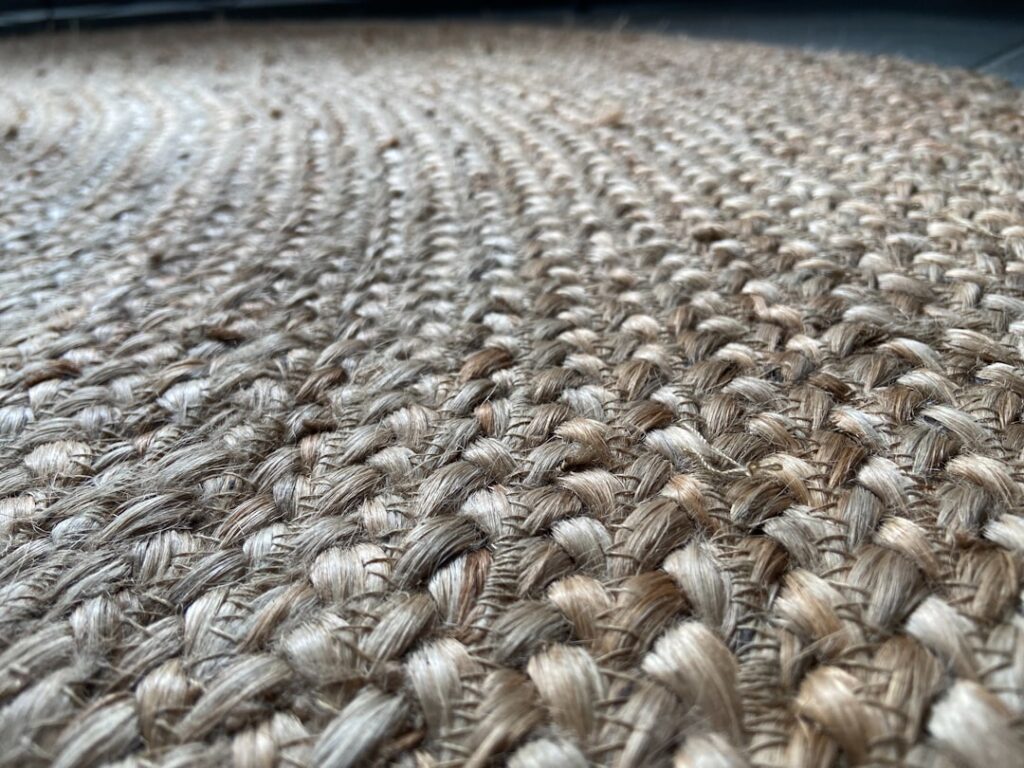
Sisal-look carpet copies three visual signatures: a flat or low-loop woven texture rather than plush pile; a chunky, irregular basketweave, boucle, or ribbed pattern; and natural flax, wheat, oatmeal, and greige colorways, often with subtle flecking or two-tone yarns that fake sisal’s organic variation. Get those three right in a durable fiber and from standing height the difference from real sisal is honestly hard to spot — I’ve had designers kneel down and rub a swatch before believing it was nylon.
The Fiber Options, Ranked for Real Life
| Fiber | Look Accuracy | Durability | Stain Resistance | Installed Cost/sq ft | Best For |
|---|---|---|---|---|---|
| Solution-dyed nylon loop | Very good | Excellent | Excellent (bleach-cleanable in many lines) | $6–$11 | Stairs, halls, whole homes |
| Solution-dyed polyester (PET) | Very good | Good | Excellent | $4–$8 | Bedrooms, budget projects |
| Polypropylene (olefin) flatweave | Excellent — many “faux sisal” rugs are olefin | Moderate (crushes in traffic) | Excellent, even outdoors | $3–$7 | Indoor-outdoor, rentals, dining rooms |
| Wool sisal-weave | Excellent, most luxurious | Excellent | Good (wool self-hides soil, but dye-stains) | $10–$20 | High-end living rooms, stairs runners |
| Blends (wool/nylon, wool/viscose — avoid viscose) | Good | Varies | Varies | $8–$15 | Check the label; skip viscose content |
My default recommendation for most families is solution-dyed nylon in a textured loop. Solution-dyed means the color runs through the fiber like a carrot, not sprayed on like a radish — so sun doesn’t fade it and many lines tolerate diluted bleach for cleanup, which is a sentence you will never hear about real sisal. Wool sisal-weaves are the premium play: warmer underfoot than any synthetic, naturally soil-hiding, and the texture reads richest. The one label warning: skip anything with viscose/rayon content, which stains and crushes worse than the sisal you’re escaping.
Lines and Styles Worth Asking For
Without turning this into a catalog, know the vocabulary that gets you to the right samples fast. Ask your dealer for “textured loop,” “berber flatweave,” “boucle,” or explicitly “sisal-look” styles. Strong categories include Stanton and Couristan’s woven sisal-look collections (heavily used by designers for stair runners), Shaw and Mohawk solution-dyed nylon loop lines, and the indoor-outdoor flatweave world (Couristan Recife and similar) where olefin faux-sisal has been perfected for decades. For area rugs, machine-made polypropylene faux sisal from the big rug mills runs a fraction of natural fiber pricing — a 8×10 faux-sisal rug commonly lands between $200 and $500 versus $700-plus for real sisal, and the synthetic survives the dining table years longer.
Where Sisal-Look Beats Real Sisal Hands Down
Stairs: this is the killer app. Real sisal on stairs polishes slick with wear; a nylon sisal-look runner keeps its texture and traction, takes the vacuum without shredding, and handles the pivoting foot traffic that destroys natural fiber nosings. A wool or nylon sisal-look runner over stained oak treads is the single most-requested stair look I install. Dining rooms: spills are a when, not an if — solution-dyed fiber laughs at merlot. Kids’ rooms and family rooms: softer hand underfoot; loop styles in nylon rated for heavy traffic shrug off toys and traffic lanes. Basements and beach houses: humidity that would ripple real sisal does nothing to olefin or nylon. Rentals: durability plus cleanability plus a designer look at $4 to $8 installed is the whole landlord trifecta.
Honest Downsides of the Look-Alikes
Fair is fair. Loop constructions — real or faux — snag: cat claws and aggressive beater bars can pull loops, so run vacuums on suction-only or brush-height raised, and think twice with a determined clawing cat. Olefin crushes: in a daily hallway, budget polypropylene mats down within a few years; spend up to nylon where traffic is real. Some synthetics shine: cheap PET loops can develop a plasticky sheen in sunlight that real sisal never has — solution-dyed matte yarns avoid this, another reason to buy a grade up. And texture is a compromise: the deepest, chunkiest basketweaves live in the wool and premium nylon tiers; the $3 stuff reads as “commercial loop” rather than “coastal magazine.” Bring home large samples and look at them beside your floor in daylight before ordering.
Cleaning and Everyday Care
This is the section that justifies the whole switch, because sisal look carpet gets cleaned like carpet, not like a museum piece. Vacuum weekly on suction-only or with the brush raised to protect loops. Spills: blot immediately, then treat — solution-dyed nylon and olefin tolerate almost any consumer carpet spotter, and many solution-dyed lines accept a 1:10 bleach solution for the truly cursed stains (confirm your specific product’s cleaning guide first). Annual hot-water extraction is fine on synthetics and low-moisture cleaning is best on wool weaves — either way, you can actually hire a carpet cleaner, which real sisal owners cannot. Two habits extend the life of the look: rotate area rugs 180 degrees yearly so traffic and sunlight distribute evenly, and clip — never pull — any snagged loop flush with scissors before it zippers. Compare that regimen to real sisal’s “blot, pray, and call a specialist who will say no,” and the maintenance argument ends quickly.
Buying and Installation Notes
Order a quality cushion but keep it firm and thin — 3/8 inch, 8-pound density or a synthetic felt pad — because flat woven looks telegraph squish; a plush pad under faux sisal makes it flex and wrinkle. For wall-to-wall, insist on power-stretching (not knee-kicking alone) since loop carpets show ripples badly if under-stretched. On stairs, ask for a waterfall or Hollywood wrap with the pattern running consistently, and confirm the line is rated for stairs — some flatweaves aren’t. Seams: chunky woven patterns hide seams worse than plush; have the installer plan seam placement away from main sightlines. Typical all-in pricing for a quality nylon sisal-look wall-to-wall job in 2026: $6 to $11 per square foot including pad and labor, with wool weaves running $12 to $22.
The bottom line from someone who has ripped out plenty of stained, rippled real sisal: the natural-texture look is worth having, and the natural fiber usually isn’t. Buy the weave, not the plant. A solution-dyed nylon or wool sisal look carpet gives you the flat, organic, layered-designer texture with none of the wine panic, water buckling, or scratchy feet — and five years in, when the real thing would be showing every dinner party it ever hosted, yours will still look like the day the installer power-stretched it in.