A cramped closet isn’t a storage problem so much as a design problem. Smart small closet organization can nearly double the usable capacity of a tiny reach-in closet by using the vertical space, the door, and every forgotten corner that a single rod and shelf ignore. The secret to small closet organization is thinking in zones and going vertical, not cramming more into the same old layout. This guide gives you a practical plan, the products worth buying, and the habits that keep it from sliding back into chaos.
- Measure and Map Before You Buy
- Double-Hang Rods to Instantly Double Capacity
- Think in Vertical Zones
- Use the Full Depth With Drawers and Shelves
- Work the Back of the Door
- Smart Products That Punch Above Their Weight
- Organizing Shoes in a Small Closet
- Lighting a Dark Closet
- Maximizing Corners and Awkward Spaces
- Keeping It Organized Long-Term
Measure and Map Before You Buy
Every good closet project starts with a tape measure, not a shopping cart. Measure the width, height, and depth of your closet, then note the position of the door and any light fixture. Most reach-in closets are 24 inches deep, just right for hanging clothes, and 6 to 8 feet wide.
Sketch the space and think about what you actually store: how many hanging items, how many folded, shoes, and accessories. The single most common mistake is a closet with one rod at 66 inches and a shelf above, leaving three to four feet of dead air below your shirts. That wasted vertical space is your biggest opportunity.
Double-Hang Rods to Instantly Double Capacity
The highest-impact change in any small closet is adding a second rod. Shirts, blouses, folded pants, and jackets only need about 40 inches of vertical hanging height. Stack two rods and you fit twice the clothing in the same footprint.
Set the arrangement like this:
- Top rod: around 80 to 82 inches high
- Bottom rod: around 40 to 42 inches high
- Reserve one full-height section (about 64 inches of clear hang) for dresses and long coats
Adjustable hanging rods and add-a-rod products from ClosetMaid or a simple tension-mounted second rod cost $15 to $30 and can double your hanging space in an afternoon.
Think in Vertical Zones
Divide the closet height into three functional zones so nothing goes to waste. This mental model transforms how you use the space.
- Top zone (above the rods): shelf space for out-of-season items, luggage, and things you rarely reach for. Use labeled bins.
- Middle zone (eye to knee level): your double-hang rods and most-used folded items, the prime real estate for daily wear.
- Bottom zone (floor to knees): shoes, drawers, and baskets.
Store the things you use most in the easy-reach middle zone and push seasonal or rare items to the top. This keeps daily dressing frictionless.
Use the Full Depth With Drawers and Shelves
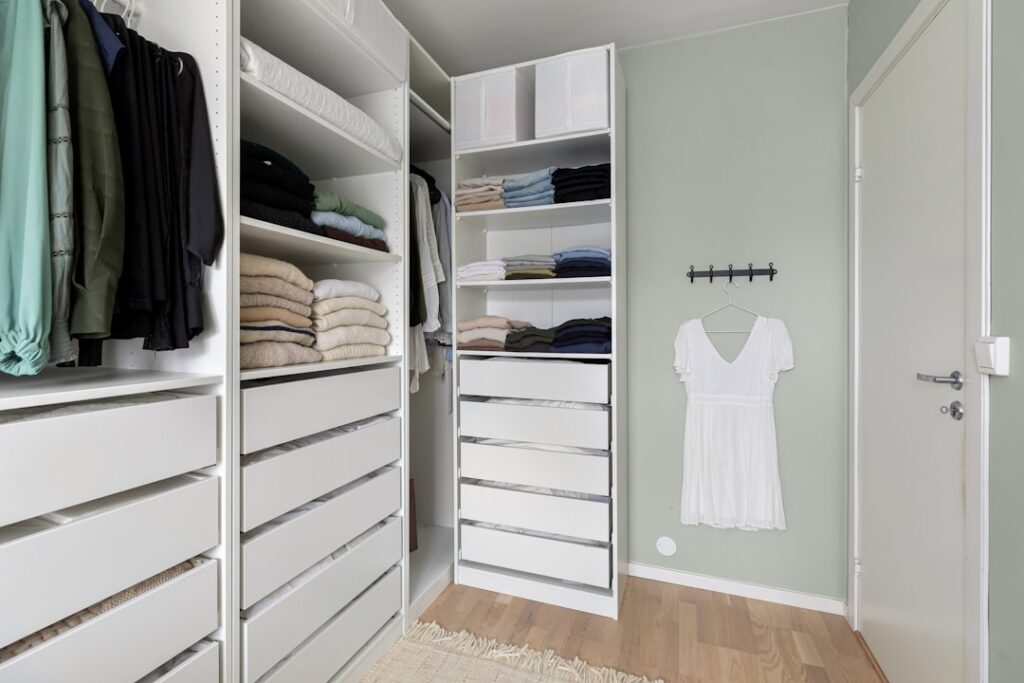
Hanging clothes uses only the front of a 24-inch-deep closet. Folded items on shelves or in drawers use the depth far more efficiently. A stack of shelves or a small drawer tower in one section stores folded jeans, sweaters, and t-shirts in a fraction of the width they’d take on hangers.
Consider a modular system like the Elfa system from The Container Store or an IKEA ALGOT/BOAXEL setup, which combine shelves, drawers, and rods on a mounted track you configure to your exact space. These run $150 to $500 for a small closet and pay off in daily usability. Cube organizers with fabric bins are a cheaper alternative for folded storage.
Work the Back of the Door
The closet door is prime unused real estate. An over-the-door organizer adds a surprising amount of storage without touching the closet interior.
- An over-the-door shoe organizer holds 12 to 24 pairs, or repurpose the pockets for accessories, belts, and scarves
- Hooks on the back of the door hold robes, bags, and tomorrow’s outfit
- A slim over-door rack works for jewelry and small items
These products cost $10 to $25 and instantly reclaim space that was doing nothing. For sliding doors, use the closet’s side walls with hooks and narrow shelves instead.
Smart Products That Punch Above Their Weight
A few inexpensive tools dramatically increase capacity and order:
- Slim velvet hangers: they’re a third the thickness of plastic and non-slip, gaining you inches of rod and a tidier look for about $1 each
- Shelf dividers: keep stacked sweaters and bags from toppling into each other
- Hanging shelf organizers: fabric cubbies that clip onto a rod for shoes or folded items
- Stackable clear bins: for accessories, letting you see contents at a glance
- A tension rod low in the closet: to hang spray bottles or use as a bonus accessory bar
Swapping every hanger to slim velvet alone often frees up 20 to 30 percent more rod space.
Organizing Shoes in a Small Closet
Shoes are the great space-eaters of any closet, sprawling across the floor and burying everything. Corralling them reclaims the bottom zone and instantly makes the closet look tidier.
- Stackable shoe racks: a two-tier metal or bamboo rack doubles floor capacity
- Over-the-door shoe organizer: 12 to 24 pairs off the floor entirely
- Clear shoe boxes: stackable, protect the shoes, and let you see each pair
- A hanging shoe shelf: fabric cubbies that clip to the rod for lighter shoes
- Angled shelf risers: display and access pairs on a shelf without stacking
Store off-season shoes (heavy boots in summer, sandals in winter) in labeled bins on the top shelf so only current footwear takes prime real estate. Rotating shoes seasonally, like clothing, keeps the daily-use zone uncluttered.
Lighting a Dark Closet
A dim closet feels smaller and makes everything harder to find, which is why lighting is an underrated part of organization. You don’t need an electrician to fix it.
Battery-powered LED puck lights or motion-activated strip lights stick to the underside of a shelf and turn on the moment you open the door. Rechargeable motion-sensor bars from brands like Mr. Beams cost $15 to $30 and transform a black hole into a usable space. Position the light high so it washes down over the rods and shelves. Good lighting reveals the organization you worked to create and stops the pile of unseen, forgotten clothes at the back that defeats every system.
Maximizing Corners and Awkward Spaces
Small closets waste space in corners, above the door, and in the dead zone where a side wall meets the back. Targeting these forgotten spots squeezes out real capacity.
In a corner reach-in, a corner shelf unit or a lazy-Susan-style turntable uses the depth that a straight rod can’t reach. The wall space beside a rod, often left blank, takes hooks for bags, hats, and belts. The area above the door frame inside the closet fits a narrow shelf for rarely used items. Even the sides of a built-in shelf tower accept adhesive hooks for jewelry or scarves. Walk your closet and look specifically for blank vertical surfaces and unreachable depth; each one is capacity waiting to be claimed with an inexpensive add-on.
Keeping It Organized Long-Term
The best system fails without habits to maintain it. Start with a ruthless declutter: pull everything out and only return what you wear and love. A good rule is if you haven’t worn it in a year, donate it. Empty space is what makes a small closet functional.
Then assign a home to every category and put things back consistently. Store off-season clothing in under-bed bins or vacuum bags to free the closet for current-season wear. Do a quick five-minute reset weekly and a bigger edit each season. With double-hang rods, defined zones, the door pressed into service, and slim hangers, even a tiny reach-in closet holds far more than you’d think and stays that way. Good small closet organization isn’t about a bigger closet; it’s about using every cubic inch of the one you have.