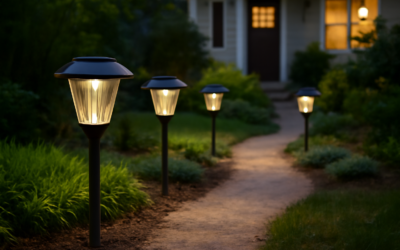
Choosing the right solar pathway lights can completely transform your outdoor space — adding safety, ambiance, and curb appeal without running a single wire. In 2026, solar lighting technology has advanced significantly, with longer battery life, brighter LEDs, and more stylish designs than ever before.
Whether you’re illuminating a front walkway, lining a garden path, or lighting up your driveway, this guide covers everything you need to know to pick the perfect solar pathway lights for your home.
How Solar Pathway Lights Work
Solar pathway lights operate on a simple but effective principle. During the day, a photovoltaic panel on top of the light absorbs sunlight and converts it into electrical energy, which is stored in a rechargeable battery (typically NiMH or lithium-ion). At dusk, a built-in sensor detects the drop in ambient light and automatically turns on the LED bulbs, using the stored energy to illuminate your pathways throughout the night.
Modern solar pathway lights in 2026 offer several technological improvements:
- Higher-efficiency solar panels — monocrystalline panels that charge faster even in partial shade
- Upgraded batteries — lithium-ion batteries that hold charges longer and last 3-5 years
- Brighter LEDs — many models now produce 20-50 lumens per light
- Smart features — motion sensing, adjustable brightness, and app control
Top 8 Solar Pathway Lights for 2026
| Product | Lumens | Battery Life | Material | Price (per light) | Best For |
|---|---|---|---|---|---|
| GIGALUMI Solar Path Lights | 15 | 8-10 hrs | Stainless Steel | $5 – $8 | Budget buyers |
| SOLPEX Solar Pathway Lights | 12 | 8-12 hrs | Glass & Steel | $6 – $10 | Decorative appeal |
| BEAU JARDIN Solar Lights | 10 | 8 hrs | Glass & Metal | $8 – $12 | Warm ambiance |
| URPOWER Solar Lights | 30 | 10-12 hrs | ABS Plastic | $10 – $15 | Bright illumination |
| LITOM Solar Pathway Lights | 25 | 10 hrs | Stainless Steel | $12 – $18 | Modern design |
| Hampton Bay Solar LED | 35 | 8-10 hrs | Die-Cast Metal | $15 – $25 | Durability |
| Ring Solar Pathlight | 50 | Up to 14 hrs | Aluminum | $25 – $35 | Smart home integration |
| Hinkley Landscape Solar | 45 | 12 hrs | Brass & Copper | $40 – $60 | Premium aesthetics |
Types of Solar Pathway Lights
Stake Lights
The most common type, stake lights push directly into the ground along pathways. They typically stand 12-16 inches tall and are the easiest to install — simply push the stake into soft soil or mulch. Ideal for lining garden walkways and front paths.
Bollard Lights
Taller and sturdier than stake lights, bollard-style solar path lights stand 18-30 inches high. They provide wider light coverage and create a more dramatic look, making them perfect for driveways and longer walkways.
Lantern-Style Lights
These feature a decorative housing that mimics traditional gas lanterns or coach lights. They add a classic, elegant touch to farmhouse and traditional home exteriors. If you’re going for a farmhouse aesthetic, these pair beautifully with your overall design.
Flush-Mount / Deck Lights
Installed flush with the ground or into deck boards, these lights create a subtle, integrated look. They’re excellent for modern landscapes and work well alongside other exterior home improvements.
Decorative & Novelty Lights
From mosaic glass globes to flower-shaped designs, decorative solar path lights add personality and whimsy to garden spaces. They prioritize aesthetics over raw brightness.
Key Features to Consider
When shopping for solar pathway lights in 2026, pay attention to these critical features:
Brightness (Lumens)
Lumens measure the total light output. For pathway lighting, you generally want:
- 5-15 lumens: Soft ambient glow for decorative purposes
- 15-30 lumens: Good visibility for regular walkways
- 30-50+ lumens: Bright illumination for safety and security
Color Temperature
Measured in Kelvin (K), color temperature affects the mood of your lighting:
| Color Temperature | Appearance | Best For |
|---|---|---|
| 2700K – 3000K | Warm White | Cozy, inviting ambiance |
| 3500K – 4000K | Neutral White | Balanced visibility |
| 5000K – 6500K | Cool White / Daylight | Security, modern look |
Most homeowners prefer warm white (3000K) for pathway lights, as it creates a welcoming atmosphere without the harsh glare of cooler temperatures.
Battery Type & Capacity
Lithium-ion batteries outperform older NiMH batteries in nearly every way — they charge faster, hold more energy, and last longer (3-5 years vs. 1-2 years). Look for lights with at least 600mAh capacity for reliable overnight performance.
Weather Resistance
Check the IP (Ingress Protection) rating. For outdoor pathway lights, look for at least IP44 (splash-proof) or ideally IP65 (weather-resistant against rain, snow, and dust).
Material & Build Quality
Stainless steel and die-cast aluminum models resist rust and corrosion far better than plastic alternatives. For premium installations, brass and copper fixtures develop a beautiful patina over time.
Installation Tips & Best Practices
One of the biggest advantages of solar pathway lights is their easy installation — no wiring or electrician required. Follow these steps for the best results:
- Choose the right location — Select areas that receive at least 6-8 hours of direct sunlight daily for optimal charging.
- Test placement first — Set out your lights during the day before staking them in. Walk the path at night to confirm the layout.
- Prepare the ground — Soften hard soil by watering it first. For rocky ground, pre-drill holes with a screwdriver or spike.
- Push stakes in firmly — Insert stakes at least 4-6 inches deep for stability. Avoid hammering, which can crack plastic components.
- Allow initial charge — Let new lights charge for 24-48 hours in full sun before expecting peak performance.
Placement & Spacing Guide
Proper spacing ensures even illumination without dark spots or wasted lights.
| Pathway Width | Recommended Spacing | Placement Pattern |
|---|---|---|
| 2-3 feet | 6-8 feet apart | One side only |
| 3-4 feet | 8-10 feet apart | Alternating sides |
| 4-6 feet | 6-8 feet apart | Both sides (staggered) |
| 6+ feet (driveway) | 8-10 feet apart | Both sides (aligned) |
For curved paths, place lights at each curve point to clearly define the route. Near steps or elevation changes, position lights closer together (4-5 feet apart) for safety.
Maintenance & Troubleshooting
Solar pathway lights are low-maintenance, but a little care goes a long way in extending their lifespan.
Regular Maintenance
- Wipe solar panels clean every 2-4 weeks to remove dust, pollen, and debris
- Check for overgrown vegetation that may block sunlight
- Tighten loose stakes after storms or heavy winds
- Replace rechargeable batteries every 2-3 years (or when runtime drops noticeably)
Common Issues & Fixes
- Lights won’t turn on: Check the on/off switch, clean the solar panel, and ensure the battery tab has been removed
- Dim light output: Clean the panel, reposition to avoid shade, or replace the battery
- Lights flicker: Usually indicates a dying battery — replace it
- Short runtime: The light may not be getting enough sun — move to a sunnier spot
Cost Comparison: Solar vs. Wired Pathway Lights
| Factor | Solar Pathway Lights | Low-Voltage Wired Lights |
|---|---|---|
| Per-Light Cost | $5 – $60 | $15 – $100+ |
| Installation Cost | $0 (DIY) | $200 – $800 (electrician) |
| Monthly Electricity | $0 | $2 – $10 |
| Maintenance | Battery replacement every 2-3 years | Bulb replacement, wire checks |
| Brightness | Moderate (10-50 lumens) | High (50-200+ lumens) |
| Reliability | Weather-dependent charging | Consistent performance |
| Flexibility | Easy to move & rearrange | Fixed installation |
For most homeowners, solar pathway lights offer the best value — zero operating costs, effortless installation, and the flexibility to rearrange as your landscaping evolves.
Frequently Asked Questions
How long do solar pathway lights last?
Quality solar pathway lights typically last 3-5 years overall. The LED bulbs themselves can last 25,000+ hours, but the rechargeable batteries will need replacement every 2-3 years to maintain optimal brightness and runtime.
Do solar pathway lights work in winter?
Yes, but with reduced performance. Shorter days and lower sun angles mean less charging time, which may result in dimmer light or shorter runtime. Position lights where they’ll receive maximum winter sunlight, and keep panels clear of snow for best results.
How many lumens do I need for a pathway?
For basic path visibility, 10-15 lumens per light is sufficient. For well-lit walkways where safety is a priority, aim for 25-50 lumens. Remember that spacing also affects overall brightness — closer spacing with lower-lumen lights can be just as effective as wider spacing with brighter lights.
Can solar pathway lights charge on cloudy days?
Yes, solar panels still absorb UV rays on cloudy days, but charging efficiency drops to about 25-40% of full-sun capacity. On consistently cloudy days, expect shorter runtimes. Monocrystalline panels perform better in low-light conditions than polycrystalline alternatives.
Are solar pathway lights bright enough for security?
Standard solar path lights (10-20 lumens) are designed for ambiance and wayfinding, not security. For security purposes, look for solar lights with 50+ lumens, motion sensors, and wider beam angles. Dedicated solar security floodlights are a better option for that purpose.
What is the best brand for solar pathway lights in 2026?
Ring and Hampton Bay lead the premium market with smart features and superior build quality. For budget-friendly options, GIGALUMI and SOLPEX offer excellent value. The best brand for you depends on your budget, desired brightness, and whether you want smart home integration.
Last updated: March 2026