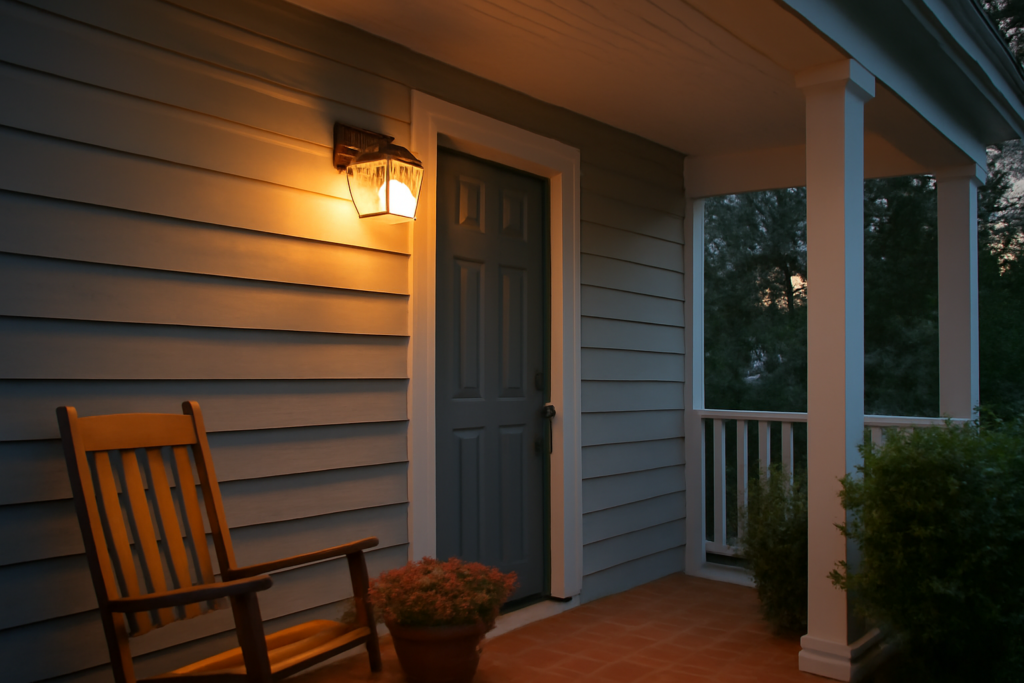
Few upgrades improve a home’s curb appeal and safety as cheaply as good lighting at the front door, and solar porch lighting makes it possible without running a single wire. Modern solar fixtures have come a long way from the dim, bluish stake lights of a decade ago. Today’s panels and LEDs deliver genuinely useful brightness, charge faster, and last longer, which means you can light a porch, walkway, or entry with no electrician, no trenching, and no addition to your power bill.
This guide explains how solar porch lights work, the main types available, what to look for when shopping, and how to keep them performing well through every season.
How Solar Porch Lighting Works
Every solar light combines four basic parts: a photovoltaic panel, a rechargeable battery, an LED bulb, and a small controller. During the day the panel converts sunlight into electricity that charges the battery. When darkness falls, a light sensor switches the LED on, drawing from the stored charge. At dawn the cycle repeats.
The quality of those four components determines everything. A larger panel charges faster, a higher-capacity battery runs longer into the night, and efficient LEDs squeeze more hours of light from each charge. Cheap units skimp on all three, which is why they fade by midnight.
Main Types of Solar Porch Lights
Solar lighting now comes in nearly every style of fixture you would find in a wired version.
- Wall-mounted lanterns: Classic carriage-style fixtures that flank a door, with the solar panel built into the top or mounted separately on the roof.
- Hanging lights: Pendant-style fixtures for covered porches and overhangs.
- String and accent lights: Decorative options that outline railings and posts.
- Motion-sensor floodlights: Brighter security-focused units that switch on when they detect movement.
- Step and deck lights: Low-profile fixtures that mark stairs and edges for safe footing.
What to Look For When Buying
Brightness is measured in lumens, and it is the spec people most often overlook. For ambient porch lighting, 50 to 200 lumens per fixture is comfortable, while motion-activated security lights often range from 400 to over 1,000 lumens. Warm white light around 2700 to 3000 Kelvin feels inviting, while cooler white reads as more utilitarian and brighter.
Check the battery type and capacity. Lithium batteries hold up far better than older nickel-based cells, especially in cold weather. Finally, confirm the fixture is rated for outdoor use, typically an IP65 weatherproof rating or higher, so it survives rain and snow.
Placement and Sun Exposure
Solar lights are only as good as the sunlight they receive, so placement is critical. The panel needs several hours of direct sun each day to fully charge. On a covered porch, that often means choosing a fixture with a separate panel you can mount on the roof or a sunny wall, connected by a cord to the light below.
Avoid placing panels under deep eaves, beneath trees, or where other outdoor lights shine on them, since stray light at night can confuse the dusk sensor and keep the fixture from turning on. South-facing exposure generally collects the most sun across the day.
Installation Made Simple
The single biggest advantage of solar is the easy installation. Most fixtures need nothing more than a screwdriver and a few minutes.
- Charge the unit fully in direct sun for one to two days before first use, as the manufacturer directs.
- Choose a location with maximum sun exposure for the panel.
- Mark and drill pilot holes, then screw the bracket or fixture to the wall or post.
- Flip the power switch to on, which is often hidden under the panel or in the battery compartment.
- Let the light cycle through its first full night to confirm it works.
Keeping Solar Lights Bright
A little maintenance goes a long way. Wipe the solar panel clean every few weeks, since dust, pollen, and bird droppings dramatically cut charging efficiency. In winter, brush off snow promptly so the panel can still collect light during shorter days.
Rechargeable batteries do wear out, typically after one to three years of nightly cycling. The good news is that most quality fixtures use standard replaceable cells, so you can swap in fresh batteries instead of buying entire new lights when output starts to drop.
Solar Versus Wired Porch Lighting
It helps to weigh solar against traditional wired fixtures honestly. Wired lighting delivers constant, reliable brightness regardless of weather and never depends on a battery, which makes it the better choice when you need guaranteed illumination for security. The downsides are installation cost and complexity, since running power to a fixture often requires an electrician and adds to your monthly bill.
Solar trades that constant performance for zero wiring and zero running cost. For decorative and ambient lighting, where an occasional dim night is no big deal, solar is the clear winner on convenience and value. Many homeowners split the difference, using wired lighting for a primary entry fixture and solar units to accent walkways, steps, and railings where running power would be impractical.
Choosing Lights for Cold and Cloudy Climates
If you live somewhere with long, gray winters or heavy snow, choose your solar lights with extra care. Cold temperatures reduce battery efficiency, and short, overcast days limit charging time, so units that perform beautifully in summer may struggle in January. Lithium-iron-phosphate and standard lithium batteries handle the cold far better than older nickel-based cells, making them the smart pick for harsh climates.
Look for fixtures with oversized solar panels relative to their light output, since a larger panel banks more energy on the limited sunlight winter provides. Some models include a separate panel you can angle toward the low winter sun for better collection. Keeping the panel clear of snow and positioning it where it catches the most daylight will make the biggest difference in how reliably your lights perform through the colder months.
Are Solar Porch Lights Worth It
For most homeowners, solar porch lighting is an easy win. You get free operation, no wiring, automatic dusk-to-dawn operation, and a quick install. The trade-offs are that output depends on sunlight and batteries need occasional replacement. Choose fixtures with lithium batteries, adequate lumens for your needs, and a solid weatherproof rating, and you will enjoy a welcoming, safer entryway that costs nothing to run night after night.