
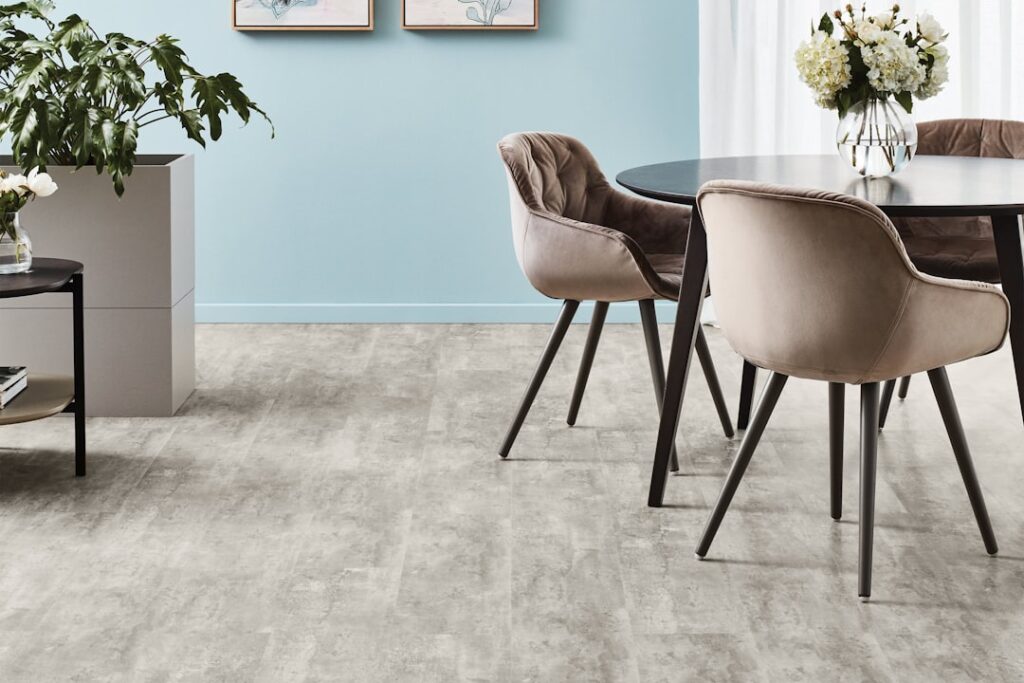
Every few years a new flooring category shows up promising to solve every problem with the last one. This time the contender actually delivers on most of it. SPC hybrid flooring combines a rigid stone-polymer core with a wear layer, print film, and attached underlayment, producing a plank that is fully waterproof, dimensionally stable, and tough enough for commercial traffic. That said, there are real drawbacks that rarely make it into the marketing brochures.
- What Hybrid Flooring Actually Means
- How SPC Differs from WPC and Standard LVP
- Wear Layer: The Number That Actually Matters
- Pros of SPC Hybrid Flooring
- Cons Worth Knowing Before You Buy
- Cost Expectations by Tier
- Brands and Lines Worth Shortlisting
- Installation Basics Done Right
- Where SPC Makes Sense and Where It Does Not
What Hybrid Flooring Actually Means
Hybrid is an Australian-coined term that crossed into US retail around 2018. It describes a floating floor that borrows the best traits of laminate (rigid core, click lock), vinyl (waterproof, soft underfoot), and tile (stability, durability). SPC stands for Stone Plastic Composite, sometimes called Stone Polymer Composite, and refers to the core material: roughly 60 to 70 percent limestone powder, plus PVC resin and stabilizers.
The result is a plank that will not swell when water sits on it, will not shrink when your HVAC cycles between 65 and 78 degrees, and will not telegraph subfloor imperfections the way thinner LVP does. Most SPC hybrid planks measure 5 to 7 mm thick, with an attached IXPE or EVA pad that adds another 1 to 1.5 mm.
How SPC Differs from WPC and Standard LVP
WPC (Wood Plastic Composite) uses a foamed core and is softer, warmer underfoot, and slightly quieter. SPC is denser and harder, which translates to better dent resistance under heavy furniture but a cooler, harder feel than WPC. Standard glue-down LVP has no rigid core at all and needs a very flat subfloor.
- SPC core density: around 2.0 g/cm3, highly dent-resistant
- WPC core density: around 1.1 g/cm3, softer and warmer
- Laminate core: HDF, swells on water exposure
- Flexible LVP: no core, conforms to subfloor
Wear Layer: The Number That Actually Matters
Walk into any flooring store and you will see thickness advertised in mm. Ignore overall thickness for a minute and focus on the wear layer. This is the clear urethane film on top that protects the printed pattern from scratches and scuffs. It is measured in mils (thousandths of an inch), not millimeters.
For a busy family home with pets, insist on a 20-mil wear layer minimum. 12-mil suits light residential use like a guest bedroom. 6 and 8-mil wear layers belong in rental properties or flip houses where you do not plan to live with the floor long. Commercial-grade planks run 22 to 30 mil and often carries a lifetime residential warranty.
Pros of SPC Hybrid Flooring
- 100 percent waterproof core, bathrooms and kitchens included
- Dimensional stability across 50 to 95 degrees Fahrenheit
- Installs as a floating floor over most existing hard surfaces
- Attached pad eliminates separate underlayment purchase
- No acclimation needed in most climates
- Works over radiant heat up to around 85 degrees F
Cons Worth Knowing Before You Buy
- Harder and colder underfoot than WPC or engineered wood
- Hollow acoustic sound unless you add a premium pad
- Cannot be refinished when the wear layer eventually fails
- Heavy furniture can still dent cheap 4 mm products
- PVC content means it is not a green building material
- Discontinued colors make matching future repairs difficult
Cost Expectations by Tier
Pricing varies more than buyers expect because the category stretches from bargain imports to premium commercial products. Here are realistic 2026 ranges I see on jobs across the US:
- Budget SPC (4 to 5 mm, 6 to 12 mil wear layer): $1.29 to $2.49 per sq ft
- Mid-range (5 to 6 mm, 12 to 20 mil): $2.50 to $4.50 per sq ft
- Premium (6 to 8 mm, 20 to 30 mil, enhanced bevels): $4.50 to $7 per sq ft
- Installation by a pro: $2 to $4 per sq ft floating install
- Total installed budget: $3.50 to $11 per sq ft
Brands and Lines Worth Shortlisting
COREtec Pro Plus and COREtec Originals still set the benchmark for SPC hybrid flooring in the US, with 20 to 28-mil wear layers and convincing wood visuals. Shaw Floorte Pro, Mohawk SolidTech, and Armstrong Pryzm sit in the mid-premium range at big-box stores. Direct-to-consumer brands like LL Flooring’s CoreLuxe, Floor & Decor’s NuCore, and Home Depot’s LifeProof offer similar specs at lower prices, though edge bevels and print quality can vary batch to batch.
For contractor-grade work, Karndean Korlok Select and Mannington Adura Rigid deliver commercial warranties with residential-grade good looks. Expect to pay $5 to $8 per sq ft but you get warranties measured in decades.
Installation Basics Done Right
These rigid planks float over almost any clean, flat substrate. Manufacturers typically require 3/16-inch flatness over 10 feet, which is looser than tile but stricter than cheap laminate. Mechanical transitions at doorways every 30 feet in any direction are mandatory on most warranties, even though the planks themselves are stable.
- Sweep and vacuum the subfloor thoroughly
- Check flatness with an 8-foot straightedge
- Fill low spots with self-leveler, grind high spots
- Start with a 1/4 to 3/8-inch expansion gap at all walls
- Stagger end joints at least 6 to 8 inches between rows
- Tap click locks with a tapping block, never hit planks directly
Where SPC Makes Sense and Where It Does Not
It is my first recommendation for kitchens, laundry rooms, basements, and homes with dogs or kids. It holds up to wheeled appliances, spilled wine, and winter boots. It also works over radiant heat and in coastal condos where humidity swings from 30 to 80 percent RH in a single day.
I steer clients away from SPC in formal living rooms where they want the genuine warmth of wood, and in older homes with sentimental value where engineered or solid hardwood still reads as a premium material. For those projects, spend the extra money on real wood and live with the maintenance.
Prefer to explore on your own?
See how new flooring looks in your actual room in seconds — free, no signup.
Try the free Floor Studio →

