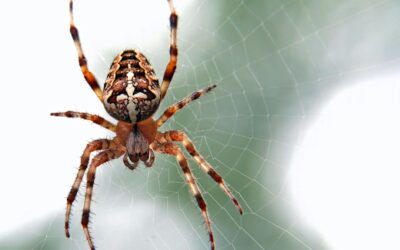
Finding spiders in your home is unsettling for most people, even though the vast majority of household spiders are harmless. Effective spider removal goes beyond squishing individual spiders. It requires eliminating what attracts them in the first place, sealing the entry points they use, and applying targeted treatments that keep them from returning. A systematic approach clears your home and keeps it spider-free long term.
Why Spiders Enter Your Home
Spiders are not drawn to your home for warmth or shelter the way mice and cockroaches are. They follow their food supply. If you have spiders indoors, you have a population of insects, specifically the flying and crawling insects that spiders eat. Gnats, flies, mosquitoes, ants, and moths are the primary prey that draws spiders inside.
Common entry points include gaps under exterior doors (even 1/16 inch is enough), cracks around window frames, holes where plumbing and wiring penetrate walls, open garage doors, and vents without screens. Spiders also hitch rides on firewood, cardboard boxes, outdoor furniture, and grocery bags brought inside.
Identifying Common House Spiders
Before starting spider removal, it helps to know what you are dealing with. Most household spiders in the US are harmless:
- Common house spider — Small (about 1/4 inch body), brown or tan with mottled patterns. Builds messy, irregular webs in corners and window frames. Completely harmless.
- Cellar spider (daddy longlegs) — Thin body with extremely long, delicate legs. Hangs upside down in messy webs in basements, crawl spaces, and closets. Harmless and actually preys on other spiders.
- Wolf spider — Large (up to 1.5 inches body), hairy, brown with stripes. Does not build webs but hunts on the ground. Fast-moving and startling but rarely bites. Slightly painful bite if provoked, but not medically significant.
- Brown recluse — Light brown, 1/4 to 3/4 inch body, distinctive violin-shaped marking on the head. Found primarily in the South and Midwest US. Medically significant bite that can cause tissue damage. Reclusive and rarely seen in the open.
- Black widow — Shiny black, 1/2 inch body, red hourglass marking on the underside of the abdomen. Found throughout the US, particularly in garages, sheds, and woodpiles. Medically significant bite that requires medical attention.
If you identify brown recluse or black widow spiders, skip the DIY approach and call a licensed pest control professional immediately.
Immediate Removal Methods
Vacuum Them Up
A vacuum cleaner with a hose attachment is the fastest way to remove individual spiders, egg sacs, and webs. The suction kills most spiders on contact. After vacuuming, immediately empty the canister or remove the bag and dispose of it in an outdoor trash bin. This prevents any surviving spiders from crawling back out.
Sticky Traps
Flat cardboard glue traps placed along baseboards, behind furniture, and in closets catch spiders as they travel across the floor. Catchmaster and Trapper brand glue boards ($5-$10 for a pack of 12) work well. Place them in dark, undisturbed areas where spiders are most active: along basement walls, under sinks, behind toilets, and inside closets. Check traps weekly and replace when full or dusty.
Sticky traps also serve as a monitoring tool. If you are catching many spiders of the same species in one area, you have identified a hotspot that needs additional treatment.
Glass and Paper Method
For people who prefer to release spiders alive, place a glass or jar over the spider, slide a stiff piece of paper or cardboard underneath, and carry the trapped spider outside. Release it at least 20 feet from your home so it does not walk right back in.
Natural Spider Repellents
Several natural substances repel spiders without killing them:
- Peppermint oil — Mix 15-20 drops of pure peppermint essential oil with water in a spray bottle. Spray around doorframes, window sills, baseboards, and any areas where spiders enter. Reapply every 1-2 weeks. The strong scent disrupts spiders’ sensory abilities. A 4 oz bottle of peppermint oil costs about $8-$12 and lasts months.
- White vinegar spray — A 50/50 mix of white vinegar and water sprayed in the same locations repels spiders due to the acetic acid. Less pleasant smelling than peppermint but effective. Avoid spraying on natural stone or finished wood surfaces.
- Diatomaceous earth (food grade) — A fine powder made from fossilized algae. Sprinkle it along baseboards, behind appliances, and in crawl spaces. The microscopic sharp edges damage spiders’ exoskeletons, causing dehydration. Safe around children and pets when using food-grade DE. A 10-pound bag costs about $15 and treats an entire home.
- Cedar chips or cedar oil — Cedar’s natural oils repel many insects and spiders. Place cedar blocks or sachets in closets, storage areas, and along baseboards. Cedar oil spray works as a surface treatment.
Chemical Treatments
When natural methods are not sufficient, targeted insecticides provide stronger control:
- Residual barrier sprays — Products containing bifenthrin, deltamethrin, or lambda-cyhalothrin create a long-lasting barrier that kills spiders on contact. Ortho Home Defense ($12-$15 per gallon) is the most widely available option. Spray a 4-inch band along the interior perimeter where walls meet floors, around window and door frames, and in the garage. One application lasts 3-4 months indoors.
- Dust insecticides — CimeXa or Delta Dust applied into wall voids, attic spaces, and behind electrical outlet covers reaches spiders in their hiding spots. A hand duster applicator ($8-$12) makes application precise. These dusts remain effective for years in undisturbed areas.
- Outdoor perimeter treatment — Spray the foundation of your home with a residual insecticide from ground level up to the first 3 feet, including around windows, doors, utility penetrations, and eaves. This kills spiders before they enter. Reapply every 2-3 months.
Prevention: Keeping Spiders Out Permanently
The most effective long-term spider removal strategy focuses on exclusion and habitat modification:
- Seal entry points. Caulk cracks around window frames, door frames, and foundation penetrations. Install door sweeps on all exterior doors. Repair or replace damaged window screens. This single step reduces spider entry by 70-80 percent.
- Reduce outdoor lighting. Exterior lights attract flying insects, which attract spiders. Switch to yellow or sodium vapor bulbs that attract fewer insects, or move lights away from doors and windows.
- Clear vegetation from the foundation. Shrubs, mulch, leaf piles, and ground cover within 12 inches of your home’s foundation create habitat for spiders and the insects they eat. Maintain a gravel or bare zone along the perimeter.
- Reduce clutter. Boxes, piles of clothing, and stacked materials provide hiding spots. Store items in sealed plastic bins rather than cardboard boxes, especially in basements, attics, and garages.
- Control moisture. Fix leaky pipes, use dehumidifiers in basements, and ensure proper drainage away from the foundation. Damp environments attract the insects that spiders feed on.
- Regular cleaning. Vacuum corners, ceiling junctions, and behind furniture weekly. Remove webs as soon as they appear. Persistent web removal discourages spiders from re-establishing in the same location.
When to Call a Professional
Professional pest control is warranted when you are dealing with venomous species (brown recluse or black widow), when DIY methods fail to reduce the population after 4-6 weeks of consistent effort, or when the infestation is severe (seeing 10+ spiders per day). Professional treatment costs $150-$300 for a one-time service or $40-$70 per month for ongoing quarterly treatment plans. Most pest control companies guarantee their work and will return for free re-treatment if spiders persist between scheduled visits.