
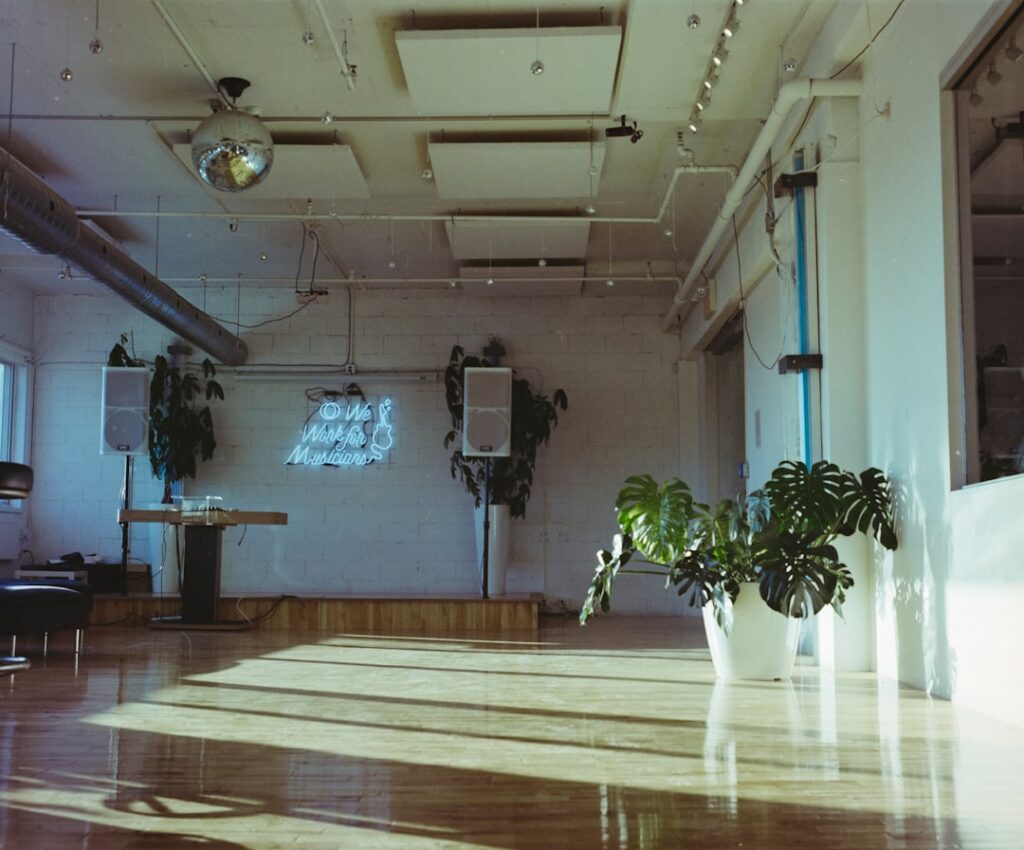
A sprung dance floor is the single most important investment a serious dancer or studio owner can make, and most people have never heard of it. Unlike a regular floor laid directly on concrete, a sprung floor floats on a cushioning layer that flexes underfoot. That flex absorbs the shock of every landing, jump, and turn before it travels up into ankles, knees, hips, and the lower back. Dancing on concrete or a hard slab does measurable, cumulative damage over years. A properly built sprung floor is the engineered answer to that problem.
What Makes a Floor “Sprung”
The word sprung refers to the floor’s ability to give and return energy. It is not a trampoline. The deflection is subtle, just enough to soften the peak force of impact and then spring back to support the next movement. The energy return matters as much as the absorption; a floor that is too soft, like thick foam alone, feels dead and saps a dancer’s power.
A good sprung floor strikes a balance. It is forgiving on landings yet stable enough to push off from. Engineers call this combination “area elasticity,” and it is what separates a real dance floor from a yoga mat over plywood.
How a Sprung Dance Floor Is Built
Most sprung floors use one of two construction systems, both built up in layers over the existing subfloor.
Foam Block System
This is the most common DIY-friendly approach. Closed-cell foam blocks, often two to three inches square, are glued in a grid pattern to the underside of plywood panels. The panels then rest on the foam, which compresses slightly under load. The grid spacing controls how much the floor gives.
Basketweave Batten System
The professional studio standard. Two crisscrossed layers of wooden battens sit on resilient pads, with plywood subpanels and the finish surface on top. It is more labor-intensive and expensive but delivers the most consistent, controlled response across the whole floor.
Surface Options: Marley vs Wood
The sprung structure handles the cushioning. The top surface handles grip and feel, and the right choice depends on the style of dance.
- Vinyl marley: A roll-out vinyl performance surface with a slip-resistant matte finish. It is the standard for ballet, modern, and contemporary, where controlled slide matters. It comes in different grades for different shoe and barefoot work.
- Hardwood or engineered wood: Preferred for tap, ballroom, jazz, and Irish dance, where a harder, more reflective surface and audible footwork are wanted. Wood over a sprung base gives both sound and shock protection.
Marley is frequently laid loose or taped over the sprung subfloor, which means you can swap or replace it without rebuilding the structure underneath.
Pros and Cons
The case for a sprung floor is overwhelmingly about long-term health, but it is worth weighing honestly.
- Pros: Dramatically reduces joint stress, lowers injury risk, improves jump comfort and endurance, and provides consistent grip with the right surface.
- Cons: Higher upfront cost than a plain floor, raises the floor height by two to four inches, and a poorly designed build can feel bouncy, uneven, or dead.
For a hobbyist who dances occasionally, a simple foam-block home floor is plenty. For anyone training seriously or running a studio, the batten system pays for itself in fewer injuries.
Cost Expectations
Pricing varies widely with size, system, and surface. A small home practice floor built with foam blocks and a roll of marley might run $800 to $2,500 for materials. A professionally installed studio batten floor with a premium marley surface commonly lands between $8 and $20 per square foot installed, so a 1,000-square-foot studio can reach $10,000 to $20,000 or more. The marley surface alone typically costs $4 to $10 per square foot.
DIY vs Professional Installation
A home foam-block floor is a realistic weekend project for a handy person. You cut plywood panels, glue foam blocks in a grid on the underside, lay the panels with small expansion gaps, and roll out marley on top. The main skills are accurate cutting and patient layout.
A studio-grade batten floor is a different story. Getting the deflection consistent across a large room, managing seams, and meeting performance specs is genuinely specialist work. If the floor is for paying students or professional rehearsal, hire an installer who builds dance floors specifically. The margin for error in feel and safety is too small to guess at.
Caring for a Sprung Floor
Keep street shoes off it. Dust mop daily and damp mop the marley with a cleaner made for vinyl performance surfaces, never an oil soap or heavy detergent that leaves residue and changes the slip. Inspect the foam or battens periodically for compression or movement, and re-tape marley seams as they wear. Treated well, a quality sprung floor lasts well over a decade.
Where Sprung Floors Are Used
Sprung floors are standard equipment in places where people land hard and often. Ballet and dance studios are the classic example, since pointe work and repeated jumps put enormous strain on feet and ankles. Theater stages use them so performers can dance, leap, and fall safely night after night. Gymnastics and martial arts spaces rely on the same principle of absorbing impact, and even some home practice rooms and garage studios are built sprung so a serious student can train without a hard slab punishing their joints.
The common thread is repetition. A single jump on concrete will not injure anyone, but thousands of them, week after week, cause the overuse injuries, shin splints, stress fractures, and joint pain, that end dance careers early. The sprung floor exists to spread that load over years of training.
Final Thoughts
A sprung dance floor is not a luxury for serious dancers; it is protective equipment. Match the construction system to your budget and the surface to your dance style, build it level and consistent, and it will guard the joints that the rest of your training depends on. Cutting this corner is the one mistake that follows a dancer for the rest of their career.
Prefer to explore on your own?
See how new flooring looks in your actual room in seconds — free, no signup.
Try the free Floor Studio →

