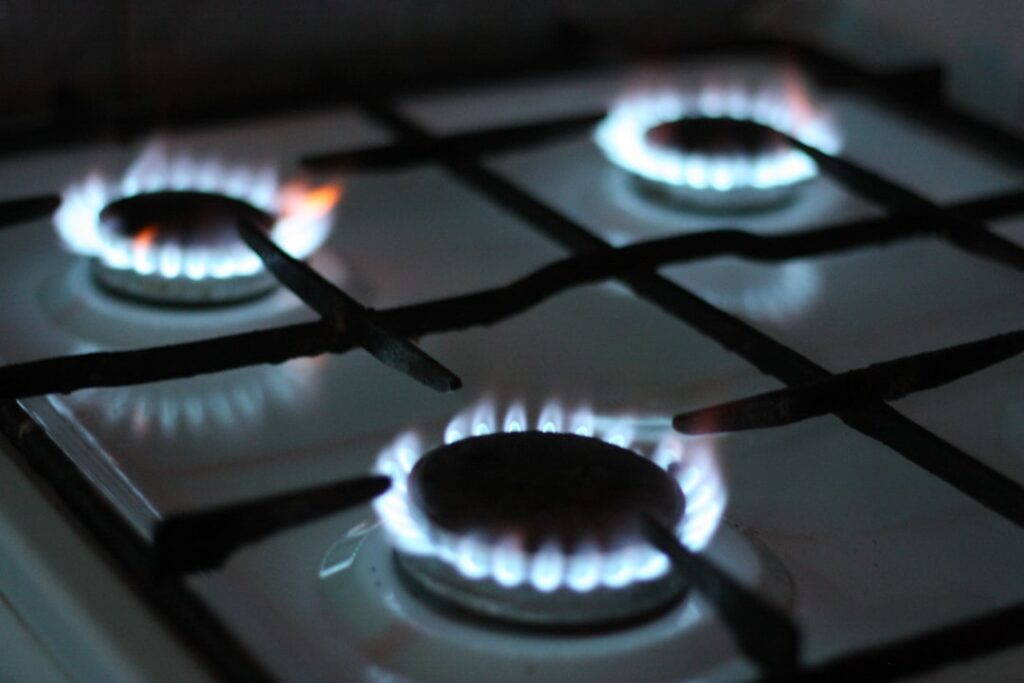
A stainless steel gas range is still the workhorse most serious home cooks reach for, and for good reason: real flame gives you instant heat control, visible feedback, and it keeps cooking during a power outage. Buying one, though, means wading through BTU numbers, steel grades, and burner layouts that manufacturers rarely explain in plain English.
- Why Gas, and What You’re Really Paying For
- 30-Inch vs 36-Inch: Sizing the Range
- Understanding BTU Per Burner
- Sealed Burners vs Open Burners
- 430 vs 304 Stainless Steel
- Convection and Oven Features Worth Having
- Brands and What You Get
- Installation and Safety, Do Not Skip This
- Grates, Griddles, and Cooking Surface Details
- Budgeting for the Real Total
- Making the Call
I’ve installed and serviced these ranges for years, so let me walk you through what actually matters before you drop $700 to $3,000 on a machine that should last 15 to 20 years.
Why Gas, and What You’re Really Paying For
Gas heats the pan, not the surface, so a burner responds the instant you turn the knob. Bring a stockpot to a boil, then drop to a bare simmer in two seconds. Electric coil and even induction lag behind on that transition. The tradeoff is combustion: you get moisture and combustion byproducts in the kitchen air, which is why ventilation matters more than most buyers realize.
The price spread comes down to burner power, build quality of the steel and grates, oven features like convection, and brand. A basic 30-inch Frigidaire runs around $700 to $900. A KitchenAid or high-output GE Profile with dual-fuel-style features lands at $1,800 to $3,000.
30-Inch vs 36-Inch: Sizing the Range
The 30-inch range is the standard American slot. It fits the cutout in the vast majority of kitchens, gives you four burners, and one oven cavity around 5.0 to 5.8 cubic feet. If your cabinets were built in the last 40 years, a 30-inch drops right in.
Step up to 36 inches and you get five or six burners, often including a center oval or a dedicated high-BTU burner, plus a roomier oven near 5.9 to 6.5 cubic feet. But you need the counter run to accept it. Measure your opening: a 36-inch range needs a true 36-inch cutout, and you lose a full cabinet base versus the 30-inch. Confirm the depth too, standard is about 25 to 29 inches deep, and check that the handle won’t clash with an island behind you.
- 30-inch: 4 burners, 5.0-5.8 cu ft oven, drops into standard cutout, $700-$2,000
- 36-inch: 5-6 burners, 5.9-6.5 cu ft oven, needs wider cutout, $1,500-$3,000+
Understanding BTU Per Burner
BTU (British Thermal Units per hour) tells you how much heat a burner puts out. This is the single spec that separates a range that sears from one that just warms. On a typical stainless steel gas range you’ll see a spread:
- 5,000 BTU: simmer burner, for melting chocolate, holding sauces, gentle reductions
- 9,000-12,000 BTU: everyday cooking, the burners you use 80 percent of the time
- 15,000-18,000 BTU: the power burner, for searing steak, stir-frying in a wok, boiling a big pot fast
Don’t get seduced by one giant 18,000-BTU burner if the other three are all 9,500. A good layout gives you at least one true simmer under 6,000 BTU and one power burner above 15,000. That range of output is what makes a stove versatile. Note that pushing a high-BTU burner throws serious heat, and that heat has to go somewhere.
Sealed Burners vs Open Burners
Almost every modern range uses sealed burners, where the burner base is welded to the cooktop so spills stay on top of the surface instead of dripping into the burner box. Wipe them up with a sponge. Open burners, found on some pro-style ranges, breathe a little better for very high output but let food fall into the guts of the stove, which is a nightmare to clean.
For 95 percent of home kitchens, sealed burners are the right call. The continuous cast-iron grates that sit over them let you slide a heavy pot from one burner to the next without lifting.
430 vs 304 Stainless Steel
Not all stainless is the same, and this trips up a lot of buyers. The two grades you’ll encounter:
- 430 stainless: the budget grade, magnetic, contains less nickel, so it’s more prone to surface staining and can show fingerprints and heat discoloration over time. Most sub-$1,000 ranges use it.
- 304 stainless (18/8): the premium grade with more chromium and nickel, better corrosion resistance, holds its finish longer. You’ll find it on KitchenAid and higher-end GE and Samsung models.
A quick test: a magnet sticks firmly to 430 and weakly (or not at all) to 304. Neither grade is bad, but if you have hard water or a busy kitchen, 304 stays looking new with less effort. Many ranges now add a fingerprint-resistant coating on top, which helps regardless of grade.
Convection and Oven Features Worth Having
The oven is half the appliance, so don’t ignore it. Convection uses a fan (and often a third heating element, called true or European convection) to move hot air around the cavity. That means even browning, faster cook times, and the ability to bake on multiple racks at once. If you bake cookies or roast often, convection is worth the upcharge, usually $150 to $300 over a standard model.
Other features that earn their keep: a self-clean or steam-clean cycle, a genuine number-set temperature probe, edge-to-edge continuous grates, and a storage or broiler drawer at the bottom. Skip gimmicks like a dozen preset “recipes” you’ll never touch.
Brands and What You Get
- Frigidaire: best value, $700-$1,200, reliable sealed burners, 430 steel, good for a first range or a rental
- GE / GE Profile: $900-$2,500, strong dealer and parts network, edge-to-edge grates, solid convection
- Samsung: $1,000-$2,000, feature-heavy, air fry modes, sleek finishes, mixed long-term parts availability
- KitchenAid: $1,800-$3,000, 304 steel, heavy grates, true convection, closest to pro-style without the pro-style price
Whatever badge you choose, check that local appliance-parts suppliers stock igniters and valves for that brand. A range you can’t get a $30 igniter for in two days is a headache waiting to happen.
Installation and Safety, Do Not Skip This
This is where gas earns its respect. A stainless steel gas range connects to a live fuel line, and that connection has to be right.
- Gas hookup: Have a licensed plumber or gas fitter make the connection. Use a new UL-listed flexible connector rated for the range, never reuse an old one. After the line is on, brush a soapy-water solution over every joint and watch for bubbles, which mean a leak. If you smell rotten eggs (that’s the odorant), shut the valve, ventilate, and call for service. Do not light anything.
- Anti-tip bracket: Every range ships with an anti-tip bracket. Install it. Screw it into the floor or wall stud so a child standing on the open oven door can’t pull the range over on top of them. This is a real injury cause, not a formality.
- Ventilation and CO: Gas combustion produces carbon monoxide. Always run a vent hood that ducts outdoors (aim for 300-400 CFM over a 30-inch range) and keep a working CO detector in the kitchen. Never use the oven or a burner to heat the room.
If you’re converting from natural gas to propane or vice versa, the range needs a conversion kit and the burner orifices swapped, which is a job for a qualified technician.
Grates, Griddles, and Cooking Surface Details
The grates carry more weight in daily use than buyers expect. Heavy continuous cast-iron grates hold heat, sit flat, and let you drag a 12-quart stockpot across the whole cooktop without lifting it off the flame. Lightweight stamped or thin grates rattle, shift, and telegraph every wobble to the pan. Pick up the grate in the showroom; if it feels flimsy in your hand, it’ll feel flimsy for 15 years.
Many 36-inch models and some 30-inch ones include a center griddle burner or ship with a reversible cast-iron griddle that drops over two burners. If you cook pancakes, smash burgers, or bacon for a crowd, that’s a genuinely useful feature. Confirm the griddle is included and not a $120 accessory sold separately.
Budgeting for the Real Total
The sticker price isn’t the whole cost. Plan for the extras so you’re not surprised at checkout:
- Delivery and haul-away: $50 to $150, often waived on higher-end purchases
- Professional gas connection: $100 to $250 for a licensed plumber or gas fitter, more if a new shutoff valve or flex line is needed
- New connector kit: $20 to $40 for the UL-listed flexible connector, never reuse the old one
- Propane conversion kit: $20 to $50 plus labor, only if you’re on propane
Rolled together, a $1,200 range can realistically cost $1,450 to $1,650 installed and running. Factor that in when you compare models, because a cheaper range with a difficult install can close the gap fast.
Making the Call
For most kitchens, a 30-inch stainless steel gas range with four sealed burners spanning 5,000 to 18,000 BTU, continuous cast-iron grates, and true convection in the $1,000 to $1,600 range hits the sweet spot of performance and value. Go 36-inch only if you have the space and genuinely cook for a crowd. Whatever you buy, budget for professional gas installation and don’t cut the corner on the anti-tip bracket or the vent hood.