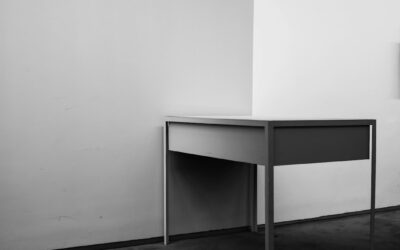
Most people buy a desk by eye and only discover the problem when the monitor sits too close or the chair slams into the bed frame. A standard desk size for a home office is about 48 to 60 inches wide, 24 to 30 inches deep and 29 to 30 inches tall, and those three numbers cover the majority of writing desks, computer desks and small office desks sold in the United States. Wider executive models stretch to 72 inches, while compact laptop desks shrink to 40 inches or less.
The right pick depends on what sits on the surface, who sits at it and how much floor you can give up. A desk is only half of the footprint. You also need roughly 36 inches of open floor behind the front edge so the chair can roll back and you can stand up without bumping a wall, a dresser or a closet door.
- Standard Desk Size Chart for Home and Office
- Understanding Desk Width
- Desk Depth and Desk Top Dimensions
- Standard Desk Height and Chair Fit
- Chair Clearance and Room Planning
- How to Choose the Right Desk Size
- Desk Sizes for Small Rooms and Shared Spaces
- Common Desk Sizing Mistakes and Fixes
- Cost Ranges by Desk Size
- When to Call a Pro
- Frequently Asked Questions
Getting all three measurements right, and leaving room for the chair, matters more than any finish or style choice. A desk that fits your body and your floor plan will feel comfortable for years, while a mismatched one creates neck strain, sore wrists and a cramped room.
Standard Desk Size Chart for Home and Office
Manufacturers do not follow a single national rule, but common desk sizes cluster tightly because they are built around the human body and around standard sheet goods. These ranges cover the categories you will see most often when shopping or building.
| Desk Type | Width | Depth | Height |
|---|---|---|---|
| Compact or laptop desk | 36 to 42 in | 18 to 22 in | 29 to 30 in |
| Small writing desk | 40 to 48 in | 20 to 24 in | 29 to 30 in |
| Standard computer desk | 48 to 60 in | 24 to 30 in | 29 to 30 in |
| Executive desk | 60 to 72 in | 30 to 36 in | 29 to 30 in |
| L-shaped desk (each leg) | 48 to 72 in | 20 to 30 in | 29 to 30 in |
| Adjustable height desk | 42 to 72 in | 24 to 30 in | about 25 to 50 in |
If you only remember one set of figures, make it this: a desk 48 inches wide by 24 inches deep is the average desk size for a spare bedroom office, and a 60 by 30 inch top is the workhorse of commercial office desk dimensions. Both stand about 29.5 inches tall.
Understanding Desk Width
Width controls how many things you can spread out at once. A single laptop and a notebook fit comfortably on 40 inches. Add an external monitor and a desk lamp and you will want at least 48 inches. Two monitors side by side typically need 55 to 60 inches, because two 27-inch screens alone measure close to 48 inches across before you account for speakers or a document holder.
Standard desk width also affects how the desk sits in a room. A 72-inch executive top looks generous in a dedicated study but overwhelms a 10 by 10 foot bedroom. Measure the wall where the desk will go and subtract at least 6 inches on each side if a window trim, outlet or door casing sits nearby. That margin keeps outlets reachable and lets curtains hang freely.
Typical Desk Width by Task
- Laptop only, occasional use: 36 to 42 inches
- Laptop plus one monitor: 44 to 50 inches
- Dual monitors or drafting work: 55 to 63 inches
- Paper-heavy work, meetings at the desk: 66 to 72 inches
Desk Depth and Desk Top Dimensions
Depth is the measurement people overlook most. A shallow 20-inch top works for a laptop, but it puts a full-size monitor so close that you end up leaning back or squinting. Office desk size guidelines generally suggest 24 inches as the practical minimum for a monitor, and 30 inches if you want the keyboard, mouse and a notepad in front of the screen without crowding.
When you compare desk top dimensions online, check whether the listed depth includes a hutch, a raised back rail or a cable tray. Those features can steal 2 to 4 inches of usable surface. Look for the clear working depth, measured from the front edge to the first obstruction.
Standard Desk Height and Chair Fit
Fixed desks are almost always 28 to 30 inches tall, with 29 to 30 inches being the sweet spot for most adults between about 5 feet 4 inches and 6 feet tall. At that height your forearms rest roughly parallel to the floor when your chair seat sits 16 to 20 inches high and your feet are flat.
Shorter users often find a 30-inch desk too tall, which pushes the shoulders up and strains the neck. Taller users may hit their knees on an apron or drawer. The fix for both is an adjustable chair with a footrest, or a desk whose height can change. An adjustable height desk lets each person dial in elbow height while seated and switch to standing work during the day, which is why many home offices now start there instead of a fixed frame.
Knee and Leg Clearance
Check the space under the desk as carefully as the top. You want about 24 to 27 inches of vertical clearance from the floor to the underside of any drawer or apron, roughly 20 inches of clear width for your legs, and 15 to 19 inches of depth for your knees. A center drawer that looks handy can make a desk unusable for anyone with long legs.
Chair Clearance and Room Planning
The chair zone matters as much as the desk itself. Plan about 36 inches of open floor from the front edge of the desk to the nearest wall or furniture piece. That allows a rolling chair to pull back, and it lets you stand without twisting. If someone needs to walk behind you while you work, increase that to 44 to 48 inches.
Add those numbers together and a 24-inch deep desk plus 36 inches of chair space consumes 60 inches, or 5 feet, from the wall. For a 30-inch deep executive desk the total jumps to 66 inches. Whatever standard desk size you settle on, sketch that rectangle on graph paper or tape it on the floor before you buy.
Pay attention to flooring, too. A rolling chair on hardwood, laminate or luxury vinyl will scuff the finish over time. A chair mat sized at least 36 by 48 inches protects the floor and makes the chair roll more easily, and on carpet it keeps casters from digging in.
How to Choose the Right Desk Size
Picking among standard desk dimensions is easier if you work through the decision in order instead of starting with style.
- List what goes on the desk. Count monitors, laptops, printers, lamps and paper trays. Each external monitor adds roughly 24 inches of width.
- Decide on depth. Use 24 inches for one monitor at normal size, 30 inches for large screens or multiple devices.
- Measure the wall. Note window positions, outlets, heating registers and door swings.
- Add chair clearance. Reserve 36 inches behind the desk, more if it is a walkway.
- Check height fit. Sit in your chair and measure from the floor to your bent elbow. Your desk surface should be at or just below that height.
- Tape it out. Mark the full footprint, including chair zone, with painter’s tape and live with it for a day.
- Confirm delivery path. Measure doorways and stair turns. A fully assembled 72-inch executive desk can be impossible to get into an upstairs room.
Desk Sizes for Small Rooms and Shared Spaces
In a guest room or apartment corner, a compact desk 40 to 42 inches wide and 20 to 24 inches deep usually leaves enough space for a bed or sofa. Wall-mounted floating desks save floor area and can be as shallow as 18 inches, though they suit laptops better than monitors.
For couples or parents and kids sharing an office, two 48-inch desks side by side often work better than one huge surface, because each person gets a defined zone and a matching chair. An L-shaped desk tucked into a corner gives a single user a lot of surface without eating the center of the room. Measure both legs and remember the inside corner is hard to reach, so place rarely used items there.
Common Desk Sizing Mistakes and Fixes
- Monitor too close: If your desk is shallow, mount the screen on an arm that clamps to the back edge to gain several inches of viewing distance.
- Desk too tall: Raise the chair and add a footrest so your elbows are level with the surface.
- Knees hit a drawer: Remove the center drawer or choose a table-style desk with an open front.
- Chair bumps the bed: Rotate the desk to face a different wall or switch to a narrower top that frees up floor depth.
- Cables everywhere: Add an under-desk tray and plug equipment into a surge protector mounted under the top.
Cost Ranges by Desk Size
Prices vary widely by material, but size is a strong predictor. Compact laminate desks often run under a couple hundred dollars. Standard 48 to 60 inch computer desks in engineered wood or metal commonly fall in the low to mid hundreds. Solid hardwood executive desks and motorized adjustable frames with large tops can reach the high hundreds or more than a thousand dollars. A custom built-in desk with cabinets, installed by a finish carpenter, usually costs more again because of labor and trim work.
When to Call a Pro
Most freestanding desks are simple DIY assemblies. Bring in a carpenter or handyman if you want a built-in desk that spans wall to wall, needs to be scribed to uneven walls, or must anchor into studs to carry heavy monitors and shelving. A pro can also add a dedicated outlet or data line near the desk; any new outlet or circuit should be installed by a licensed electrician.
Frequently Asked Questions
What is the most common desk size?
The most common home-office desk measures about 48 inches wide, 24 inches deep and 29 to 30 inches tall. Commercial offices more often use 60 by 30 inch tops.
Is a desk 48 inches wide big enough for two monitors?
It is tight. Two 24-inch monitors can fit, but two 27-inch screens usually need 55 to 60 inches of width to leave room for speakers or a lamp.
How much space do I need behind a desk?
Plan about 36 inches from the desk edge to the nearest wall or furniture so the chair can roll back. Allow 44 to 48 inches if people walk behind you.
What height should a desk be for a short person?
Many people under 5 feet 4 inches are more comfortable at 26 to 28 inches. An adjustable chair with a footrest or a height-adjustable desk solves the mismatch.
What size is an executive desk?
Executive desks are typically 60 to 72 inches wide and 30 to 36 inches deep, standing the same 29 to 30 inches tall as other desks.