Wool and silk may get the glory, but the rug under most American living rooms is made of plastic, and often that is the smarter buy. A synthetic rug made from polypropylene, nylon, or polyester delivers stain resistance, durability, and easy cleaning at a fraction of the cost of natural fiber, which is exactly why they dominate high-traffic homes with kids and pets. The category is broad, though, and the differences between fibers are significant. This guide breaks down the main synthetic materials, where each one shines, and how to keep them looking good for years.
Why Choose Synthetic Over Natural Fiber
The appeal of a synthetic rug comes down to performance for the price. Man-made fibers are engineered to resist stains, fading, moisture, and wear, and they cost far less than wool. For families juggling spills, muddy paws, and constant foot traffic, that combination is hard to beat. Many synthetics are also non-shedding and hypoallergenic, since they do not harbor allergens the way some natural fibers can.
The trade-offs are real but manageable. Synthetics generally feel less luxurious underfoot than wool, can flatten in very high traffic, and are made from petroleum-based materials, which matters to some buyers. Still, for durability and value, a synthetic rug is the practical default for most homes.
The Main Synthetic Fibers
Polypropylene (Olefin)
Polypropylene is the most common synthetic rug fiber and the workhorse of budget and outdoor rugs. It is highly stain- and moisture-resistant, fade-resistant even in sunlight, and inexpensive. Because it repels water, it is the go-to material for outdoor rugs, patios, and mudrooms. Its weaknesses are that it crushes under heavy furniture and traffic more than nylon, and it can attract oil-based stains, but for the price it is remarkably practical.
Nylon
Nylon is the most durable and resilient synthetic, which is why it dominates high-traffic and commercial settings. It springs back from crushing, holds vibrant colors well, and resists abrasion better than any other synthetic fiber. It is more expensive than polypropylene and less naturally stain-resistant unless treated, but for a busy hallway, stairs, or a family room that sees constant use, nylon offers the best long-term wear.
Polyester (PET)
Polyester, often made from recycled plastic bottles as PET, is prized for its softness and rich color. It feels plush and luxurious underfoot and resists water-based stains well, making it popular for bedrooms and lower-traffic living areas. Its downside is that it crushes more easily than nylon and can attract oils, so it is best kept out of the highest-traffic zones.
Comparing the Options
- Best for outdoors and moisture: polypropylene
- Best for durability and high traffic: nylon
- Best for softness and budget plushness: polyester
- Best overall value: polypropylene for most rooms, nylon where wear matters most
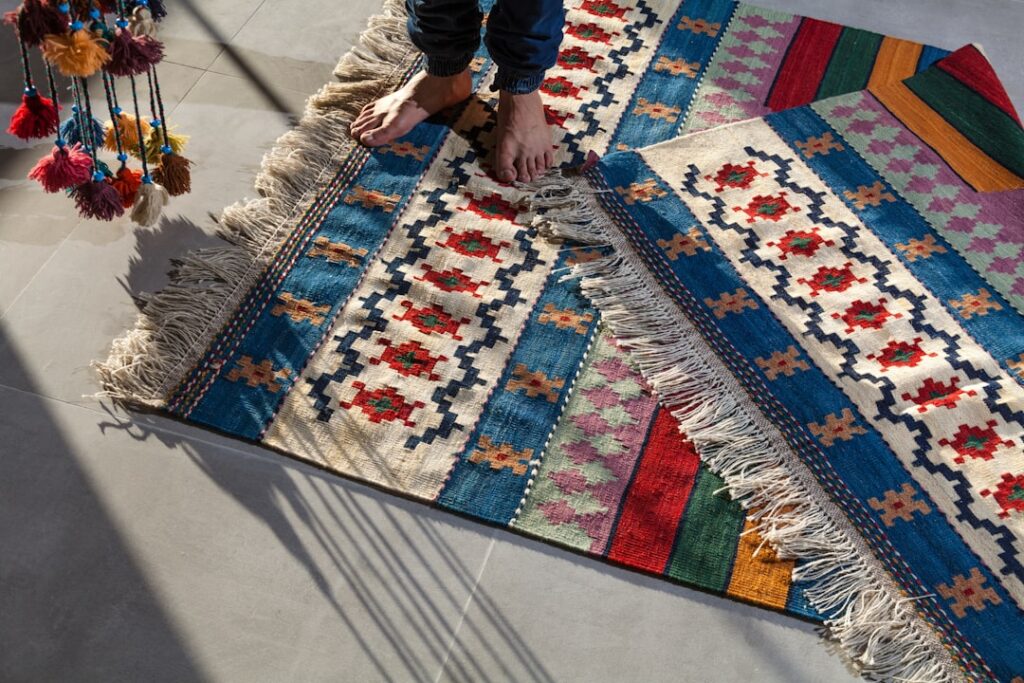
Many synthetic rugs also blend fibers or use synthetic yarns woven to mimic the look of natural jute, sisal, or wool, giving you the appearance of natural fiber with the easy care of plastic.
Where Synthetic Rugs Work Best
Because they shrug off spills and sunlight, synthetic rugs excel exactly where natural fiber struggles. Outdoor patios, covered porches, and pool areas are natural homes for polypropylene, which will not rot or mildew. Kitchens, entryways, and mudrooms benefit from the same water resistance and easy cleaning. Kids’ rooms and family living rooms are ideal for stain-resistant nylon or polyester that can handle juice, markers, and pet accidents without a permanent mark.
In formal, low-traffic spaces where feel matters more than durability, a natural fiber may still be worth the splurge, but for the everyday rooms that take the most abuse, a synthetic rug is usually the right call.
Cleaning and Care
Easy maintenance is a synthetic rug’s biggest selling point, and a simple routine keeps it looking new. Vacuum regularly to lift grit before it grinds into the fibers, and rotate the rug periodically so it wears and fades evenly. For spills, blot immediately with a clean cloth rather than rubbing, which pushes the stain deeper.
Most synthetics tolerate spot cleaning with mild soap and water, and many outdoor polypropylene rugs can be hosed down and left to dry in the sun. Always check the label, but as a rule synthetics handle water far better than wool or cotton. For stubborn stains, a mix of dish soap and warm water usually does the job, and because the fibers resist water damage you rarely need to worry about oversaturating them, though thorough drying still prevents any mildew in the backing.
What to Watch Out For
A few caveats keep expectations realistic. Cheaper polypropylene rugs can flatten under a heavy sofa, so a good rug pad helps distribute weight and adds cushioning. Oil-based stains, like food grease or cosmetics, are the hardest for synthetics to release, so treat those promptly. And while synthetics resist fading, prolonged direct sun on lower-quality dyes can still lighten a rug over years, so rotate accordingly.
Sizing and Rug Pads
Even the best synthetic rug looks like an afterthought if it is the wrong size, so measure your space before you shop. In a living room, aim for a rug large enough that at least the front legs of your sofa and chairs rest on it, which usually means an 8-by-10-foot rug for a standard seating group. Under a dining table, choose a rug that extends about 24 inches beyond the table edge on all sides so chairs stay on the rug when pulled out. In a bedroom, a rug that reaches 18 to 24 inches past the sides and foot of the bed frames the space nicely.
A quality rug pad is a small purchase that makes a big difference with synthetics. It grips the floor to prevent sliding, adds a cushioned feel underfoot that plastic fibers otherwise lack, and lifts the rug slightly so dirt falls through to be vacuumed away. On hard floors a non-slip pad also protects the finish from the rug’s backing. For outdoor polypropylene rugs, look for a pad rated for outdoor use that allows airflow and drainage so moisture never gets trapped between the rug and the surface below.
The Bottom Line
A synthetic rug is the practical, affordable choice for the rooms that take the most punishment, offering stain resistance, durability, and easy cleaning that natural fibers cannot match at the price. Choose polypropylene for outdoors and moisture, nylon for heavy traffic, and polyester for soft, budget-friendly comfort. Add a quality rug pad, vacuum regularly, and treat spills quickly, and your synthetic rug will look good and hold up for many years of real family life.