
The roof over your head is the single most important system protecting your home, yet most people only think about it once it starts leaking. Understanding the different kinds of roofing before that day arrives helps you weigh upfront cost against lifespan, durability, and curb appeal, so you choose a material that fits both your budget and your climate. A cheap roof that needs replacing in 15 years can cost more over time than a premium one that lasts 50. Here is how the major options stack up.
Asphalt Shingles: The Default Choice
Asphalt shingles cover roughly 80 percent of American homes for good reason. They are inexpensive at $4 to $7 per square foot installed, come in dozens of colors, and almost any roofer can install them quickly. A typical asphalt roof lasts 15 to 30 years depending on quality and climate.
Within asphalt there are tiers. Three-tab shingles are the cheapest and flattest, while architectural (dimensional) shingles cost a bit more, last longer, and add visual depth that mimics wood or slate. For most homeowners, architectural shingles are the sweet spot of cost and performance.
Metal Roofing: Longevity and Efficiency
Metal has moved from barns to mainstream homes, and it earns its growing popularity. A standing-seam metal roof lasts 40 to 70 years, sheds snow and rain easily, resists fire, and reflects solar heat to cut cooling bills in hot climates. Expect to pay $8 to $16 per square foot installed for steel or aluminum, more for copper or zinc.
The higher upfront cost is offset by the lifespan and low maintenance. Metal comes as standing-seam panels for a sleek modern look or as metal shingles that imitate traditional materials. The main drawbacks are the initial price and the noise during heavy rain unless properly insulated.
Clay and Concrete Tile
Tile roofs define the look of Mediterranean, Spanish, and Southwestern homes, and they last an exceptionally long time, often 50 to 100 years. Clay and concrete tiles resist fire, insects, and rot, and they hold up beautifully in hot, dry climates.
The trade-off is weight and cost. Tile runs $10 to $25 per square foot installed and weighs so much that many homes need reinforced framing to support it, adding to the expense. Individual tiles can crack under impact or foot traffic, but replacing a single tile is straightforward.
Slate: The Premium Option
Natural slate is the longest-lasting roofing material available, with genuine slate roofs commonly surviving 75 to 150 years, sometimes outliving the structure beneath them. The stone is fireproof, waterproof, and strikingly elegant, which is why it tops historic estates and high-end homes.
All that performance comes at a steep price: $15 to $30 per square foot or more, plus the need for specialized installers and reinforced framing to carry the heavy stone. For homeowners planning to stay for generations, slate’s century-plus lifespan can justify the investment.
Flat and Low-Slope Roofing
Flat roofs on modern homes, additions, and commercial buildings use membrane systems rather than shingles. The common options each handle standing water differently:
- EPDM rubber: a durable black membrane, affordable at $4 to $8 per sq ft, lasts 20 to 30 years
- TPO: a white reflective membrane that bounces heat, energy-efficient and increasingly popular
- Built-up roof (BUR): layered asphalt and gravel, a traditional tar-and-gravel system
- Modified bitumen: asphalt-based rolled sheets, good for foot traffic
Wood Shakes and Shingles
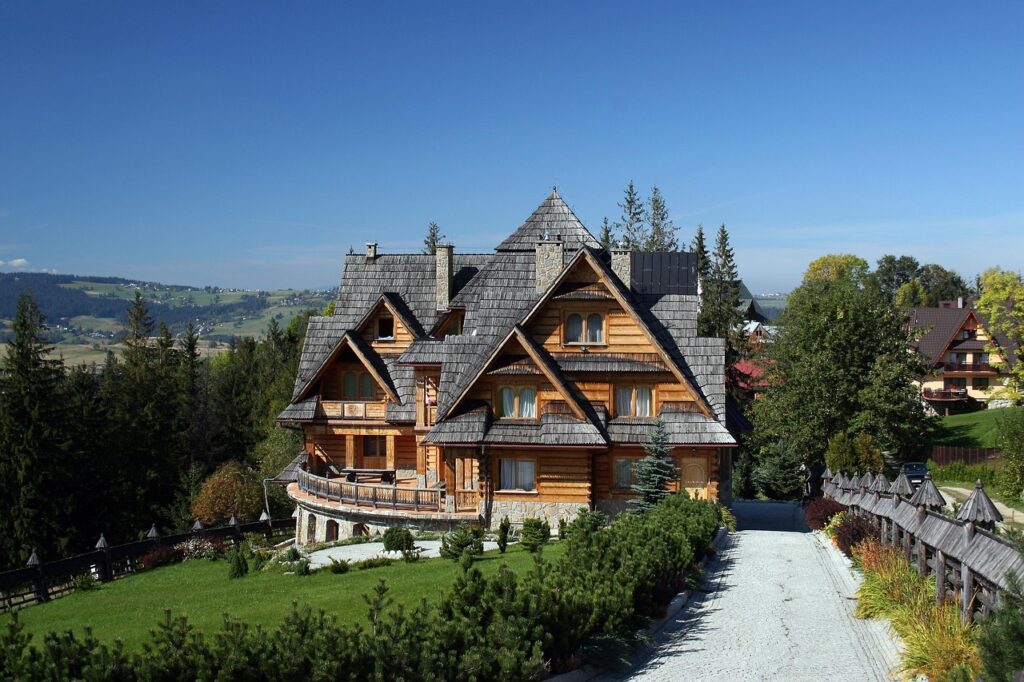
Cedar shakes give a home a warm, natural, rustic character that ages to a silvery gray. They last 25 to 40 years with maintenance and offer decent insulation. The catch is upkeep and fire risk: wood needs periodic treatment against rot, mold, and insects, and many fire-prone regions restrict or ban it unless treated to a Class A fire rating. Installed cost runs $7 to $14 per square foot.
Synthetic and Composite Roofing
A newer category of synthetic roofing imitates premium materials at a fraction of the weight and cost. Composite shingles made from recycled rubber and plastic mimic the look of slate or cedar shakes while weighing far less, so they install on standard framing without reinforcement. Brands like DaVinci and Brava produce these molded products with realistic texture and color.
Synthetic options typically last 30 to 50 years, carry strong impact and fire ratings, and cost $8 to $14 per square foot installed, well below genuine slate or tile. They appeal to homeowners who want the high-end look without the structural demands or the price of natural stone. The main caveat is that quality varies by manufacturer, so stick to established brands with proven track records and solid warranties.
Climate Considerations
Your region should steer the decision as much as your budget. In hot, sunny climates, reflective metal and light-colored tile cut cooling costs and resist sun damage. In snowy areas, metal sheds heavy snow loads and resists ice dams, while steep-sloped asphalt also performs well. Coastal homes battered by salt air and high winds benefit from metal or rated impact-resistant shingles.
Fire-prone regions favor Class A materials like metal, tile, and slate, and many areas restrict wood shakes entirely. Heavy-rain climates need watertight systems with proper underlayment and flashing regardless of the surface material. Matching the roof to your local weather extends its life and can even lower your homeowner’s insurance premiums.
How to Choose
Match the material to four factors: your budget, your climate, your roof’s slope, and how long you plan to stay. Asphalt makes sense for most homeowners on a budget or planning to move within a decade. Metal rewards those who want decades of low-maintenance performance. Tile and slate suit the right architectural style and a long-term horizon. Among the different kinds of roofing, the cheapest option is rarely the most economical over the life of the home, so weigh cost per year of service, not just the sticker price, and always hire a licensed roofer who pulls the proper permits.


