A new roof is one of the largest single expenses in homeownership, running anywhere from $5,000 to $45,000+ depending on the material and home size. Understanding the major types of roofing materials before you get quotes helps you ask the right questions, avoid upsells on products you do not need, and choose a roof that matches both your budget and your climate. Here is an honest breakdown of every mainstream option.
Asphalt Shingles
Asphalt shingles cover roughly 75% of American homes, making them the dominant roofing material by a wide margin. They come in two main varieties:
3-Tab Shingles
The most basic and affordable option. Each shingle has three uniform tabs that create a flat, consistent appearance. Cost runs $3.50-$5.50 per square foot installed, and they last 15-20 years in moderate climates. Manufacturers like GAF, Owens Corning, and CertainTeed all produce reliable 3-tab lines. They handle wind up to about 60 mph.
Architectural (Dimensional) Shingles
Thicker, heavier shingles with a layered profile that creates a more textured, dimensional look. They cost $4.50-$7.00 per square foot installed and last 25-30 years. Wind ratings reach 110-130 mph on premium lines. Architectural shingles have largely replaced 3-tab as the standard for new construction, and the price difference is modest enough that most contractors recommend them. Owens Corning Duration and GAF Timberline HDZ are the two best-selling lines nationally.
Metal Roofing
Metal roofing has surged in popularity over the past decade, now accounting for about 15% of new residential roofs. It comes in several styles:
- Standing seam: Interlocking vertical panels with raised seams. The most durable and weather-tight metal option. $8-$14 per square foot installed
- Metal shingles: Stamped to resemble asphalt shingles, slate, or wood shake. $7-$12 per square foot installed
- Corrugated metal: Wavy or ribbed panels most common on agricultural buildings and modern industrial-style homes. $4-$8 per square foot installed
Metal roofs last 40-70 years, reflect solar heat (reducing cooling costs by 10-25%), and handle wind up to 140 mph. The main trade-offs are higher upfront cost and the need for experienced installers — improper installation causes expansion and contraction issues that lead to leaks and noise. Rain noise is a common concern, but modern metal roofs with proper underlayment and attic insulation are no louder than asphalt during storms.
Clay and Concrete Tile
Tile roofing dominates in the Southwest, Florida, and Mediterranean-influenced architecture. Clay tiles cost $10-$18 per square foot installed and last 50-100+ years. Concrete tiles are a more affordable alternative at $8-$14 per square foot with a 40-60 year lifespan.
Both materials are fireproof (Class A rating), handle heat exceptionally well, and resist insect damage entirely. The major drawback is weight — tile roofs weigh 600-1,100 pounds per square (100 sq ft), compared to 200-350 pounds for asphalt. Most homes require structural reinforcement before tile installation, which adds $1,000-$5,000 to the project. Tile is also fragile underfoot, making maintenance and repair work riskier and more expensive.
Slate Roofing
Natural slate is the premium choice for longevity and aesthetics. A properly installed slate roof lasts 75-150 years — some slate roofs in the northeastern US have been in service since the 1800s. Cost runs $15-$30 per square foot installed, making it the most expensive mainstream option.
Slate is fireproof, virtually maintenance-free, and adds significant curb appeal and resale value. Like tile, it is extremely heavy (800-1,500 pounds per square) and requires structural verification. Finding qualified slate installers is the biggest practical challenge — improper nailing and flashing work can reduce a 100-year roof to a 30-year roof. If you are considering slate, hire a contractor certified by the Slate Roofing Contractors Association.
Wood Shake and Shingles
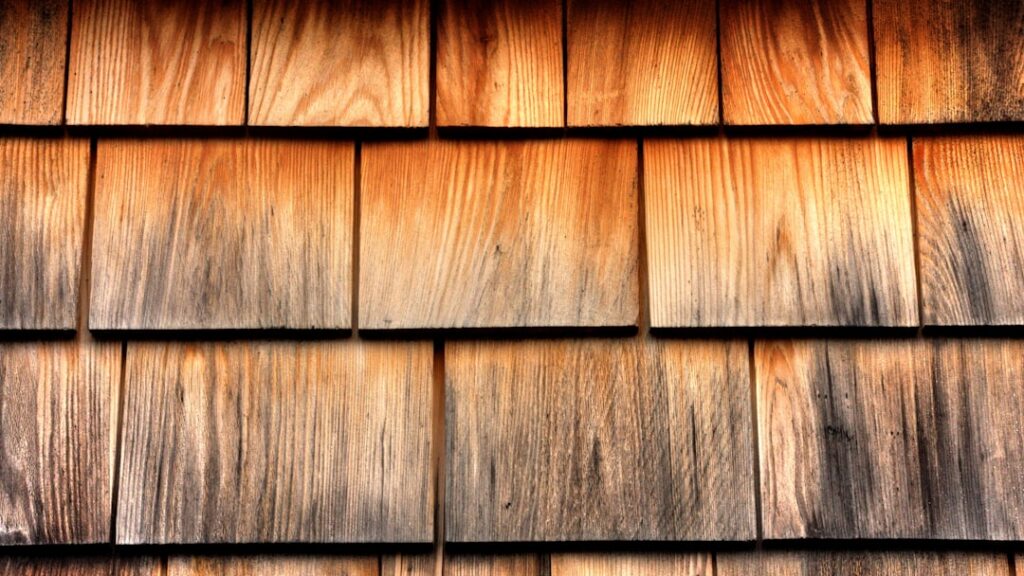
Cedar shakes and shingles offer a rustic, natural appearance that ages to a silver-gray patina over time. Shakes are thicker and rougher (hand-split), while shingles are thinner and machine-cut for a smoother profile.
Cost ranges from $6-$11 per square foot installed, and lifespan is 25-40 years with proper maintenance. Wood roofing requires more upkeep than any other material — annual cleaning to prevent moss and algae, periodic treatment with preservatives, and prompt replacement of cracked or curled pieces. Many fire-prone regions (especially in California) restrict or ban wood roofing due to fire risk, even when treated with fire retardant.
Synthetic and Composite Roofing
Synthetic roofing materials are engineered to mimic the appearance of slate, wood, or tile at a fraction of the weight and cost. Products like DaVinci Roofscapes and CeDUR use polymer composites that weigh 75% less than the natural materials they replicate.
Cost runs $7-$14 per square foot installed, and manufacturers typically warrant them for 50 years. They resist impact, fire, and UV degradation better than natural materials in many cases. The main criticism is that up close, synthetics still look like synthetics to a trained eye — though the gap narrows with every product generation.
Flat Roof Options
Low-slope and flat roofs (common on modern homes, additions, and commercial buildings) use different materials entirely:
- TPO (Thermoplastic Polyolefin): White reflective membrane, $5-$8 per square foot installed, lasts 20-30 years. The current standard for commercial flat roofs
- EPDM (rubber): Black synthetic rubber membrane, $4-$7 per square foot installed, lasts 20-25 years. Easy to repair
- Modified bitumen: Asphalt-based rolled roofing, $4-$8 per square foot installed, lasts 15-20 years. Multiple layers improve durability
- Built-up roofing (BUR): Multiple layers of tar and gravel, $5-$9 per square foot installed, lasts 20-30 years. The traditional flat roof system
How to Choose the Right Material
Your decision should balance four factors: budget, climate, architecture, and how long you plan to stay in the home. Spending $25,000 on a metal roof that lasts 50 years costs less per year than a $10,000 asphalt roof that needs replacement in 20 years. But if you are selling the house in five years, the asphalt makes more financial sense.
Climate matters significantly. Hail-prone areas in the Midwest and South favor impact-resistant shingles or metal. Hot, sunny climates benefit from reflective metal or tile. Snow-heavy regions need materials and pitch angles that shed snow loads effectively. Coastal areas need corrosion-resistant options — standard steel metal roofing corrodes quickly in salt air, while aluminum and zinc perform well.
Get at least three quotes from licensed, insured contractors, and always ask to see completed projects using the material you are considering. A roofing material is only as good as the crew installing it.