Here is the uncomfortable truth up front: there is no magic “grout machine” sitting at the rental counter that erases twenty years of gray grout lines in one pass. When homeowners search for a tile grout cleaning machine rental, what actually exists to rent is a short list of general-purpose machines — steam cleaners, rotary floor scrubbers, and carpet extractors with hard-floor attachments — each of which helps with grout in a different way. This guide covers what you can realistically rent, honest price expectations, what is buy-only, and the technique that determines whether any machine works at all.
What Rental Counters Actually Stock
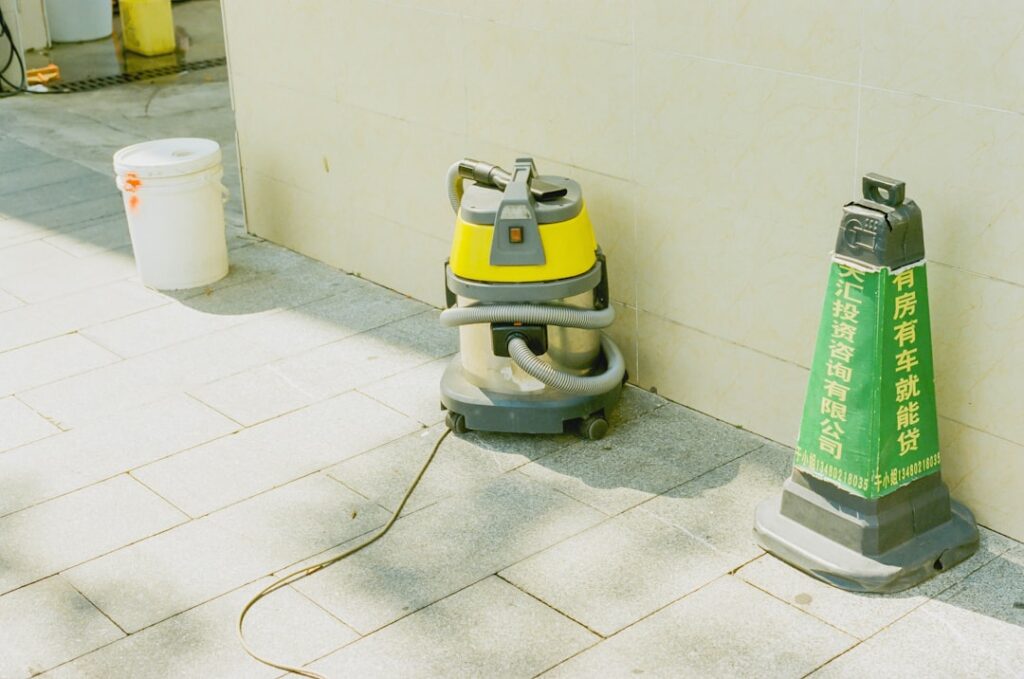
Big-box tool rental departments and independent equipment rental yards carry three machine types relevant to grout. Commercial steam cleaners (vapor steamers) heat water past 212°F and blast superheated vapor through a small nozzle or brush head — the most grout-specific tool on the list, because the jet reaches down into the joint. Rotary floor scrubbers, from single-disc 13- to 17-inch swing machines up to walk-behind auto-scrubbers, drive a brush or pad across the whole floor; fitted with a nylon-bristle brush rather than a flat pad, the bristles dip slightly into grout lines while cleaning the tile face. Carpet extractors with hard-surface wands combine pressurized hot spray with vacuum recovery, rinsing away the dirty solution other methods leave behind — the closest rentable cousin to the truck-mounted rigs the pros use.
Some tile-focused rental yards also carry dedicated tile and grout spinner tools that connect to an extractor, enclosing a high-pressure rotating jet inside a vacuum dome. These deliver near-professional results but are the least commonly stocked — call ahead.
Honest Rental Price Expectations
Rates vary by region and by machine class, so treat these as typical ranges rather than quotes:
- Consumer-grade steam cleaner or carpet extractor: roughly $30 to $50 per day.
- Commercial vapor steamer: roughly $50 to $100 per day where available.
- Single-disc rotary floor scrubber: roughly $40 to $80 per day, plus brush and pad charges.
- Walk-behind auto-scrubber: roughly $100 to $200 per day — overkill for anything smaller than a large basement or commercial space.
Budget another $15 to $40 for cleaning solution, brushes, or pads, and expect a deposit. For a typical 200- to 400-square-foot kitchen-plus-bath project, a one-day rental is realistic if you pre-treat before the machine arrives (more on that below). Compare the total against professional tile and grout cleaning, which commonly runs $0.50 to $1.50 per square foot — on small areas, the pro visit sometimes wins on pure economics.
What You Cannot Rent (Buy-Only Territory)
The handheld tools most people imagine — small canister steamers with grout nozzles, electric spin scrubbers, oscillating brush tools, and drill-mounted grout brushes — are consumer purchase items, typically $25 to $150, not rental stock. Nobody rents a $40 drill brush kit. Likewise, the truck-mounted hot-water extraction systems professionals use, which deliver both higher pressure and hotter water than anything rentable, stay on the truck. The practical takeaway: for one bathroom, buying a $30 to $60 handheld steamer or drill-brush set beats renting; renting starts to make sense somewhere around 150-plus square feet of tile or a whole-house refresh.
Technique Decides the Result, Not the Machine
Every rental machine works dramatically better on pre-treated grout. The winning sequence: vacuum the floor thoroughly, then apply an alkaline tile-and-grout cleaner (not vinegar — acid attacks cement grout and etches some stone) diluted per the label, and give it 10 to 15 minutes of dwell time to break down the greasy soil film. Only then bring in the machine. With a steamer, work slowly along each joint — about an inch per second — and wipe or vacuum the liquefied soil immediately, because dirty water that dries redeposits. With a rotary scrubber, make two slow passes in different directions, then rinse and recover the slurry with a wet vacuum; leaving the dirty solution to air-dry is the number one cause of “the machine didn’t work” complaints.
Test a hidden square yard first. If grout is stained through — dye, rust, or years of soil bonded into the cement — no cleaning method will make it uniform, and your real options become a grout colorant/sealer product or re-grouting.
Match the Machine to Your Job
- One bathroom or a backsplash: skip the rental; a purchased handheld steamer or drill brush plus alkaline cleaner does it in an afternoon.
- Kitchen and hallway, 150 to 400 sq ft: rent a steam cleaner or extractor for a day; pre-treat everything before pickup so machine hours go to cleaning, not waiting.
- Whole main floor or rental-property turnover: rotary scrubber with nylon brush plus a shop wet-vac, or an extractor with a hard-floor wand.
- Deep, uniform restoration on large areas: price a professional with a truck mount and spinner tool against two days of rentals — the pro often wins.
After the Clean: Seal, or Do It Again Next Year
Cement grout is porous, and freshly cleaned joints are open pores waiting for the next spill. Once the floor is fully dry — give it 24 hours — apply a penetrating grout sealer with an applicator bottle or small brush, wiping excess off the tile face before it hazes. Sealing takes an hour or two for an average kitchen and typically stretches the interval between deep cleanings from months to a couple of years. Epoxy-grouted and most porcelain-tile surfaces do not need sealing; the grout joints in older homes almost always do.
The Bottom Line
A tile grout cleaning machine rental is worth it when the square footage is large and you respect the process: rent a steamer, scrubber, or extractor from a big-box or equipment yard at roughly $30 to $100 a day, pre-treat with an alkaline cleaner, recover the dirty water instead of letting it dry, and seal the grout afterward. For a single bathroom, buy a small tool instead. And when grout is stained to its core, save the rental fee and put the money toward colorant or re-grouting — no machine rents its way out of that.
Prefer to explore on your own?
See how new flooring looks in your actual room in seconds — free, no signup.
Try the free Floor Studio →