Choosing where to buy your tile is just as important as choosing the tile itself, because the right store guides you toward products rated for your project and helps you avoid expensive mistakes. Finding the best tile shop Omaha homeowners can count on means weighing selection, staff knowledge, fair pricing, and the support to see your project through. Whether you are planning a backsplash, a shower surround, or a full floor, this guide explains how to evaluate local tile stores, the questions to ask, the price ranges to expect, and the warning signs to watch for.
Part of our Tile & Grout guide — explore the full guide →
Where Omaha Shoppers Can Buy Tile
Most buyers choose among three kinds of retailers. Big-box home improvement stores are convenient and competitively priced on common tiles but offer a limited selection and only basic product knowledge. Specialty tile showrooms carry far broader and more premium selections with staff who genuinely understand the products. Flooring and design centers often sell tile alongside installation services and full project support.
For a small, straightforward job, a big-box store may suffice. For a shower, a natural stone floor, or a statement feature wall, a dedicated showroom usually delivers better selection and guidance that prevents costly errors.
What Separates a Great Tile Store
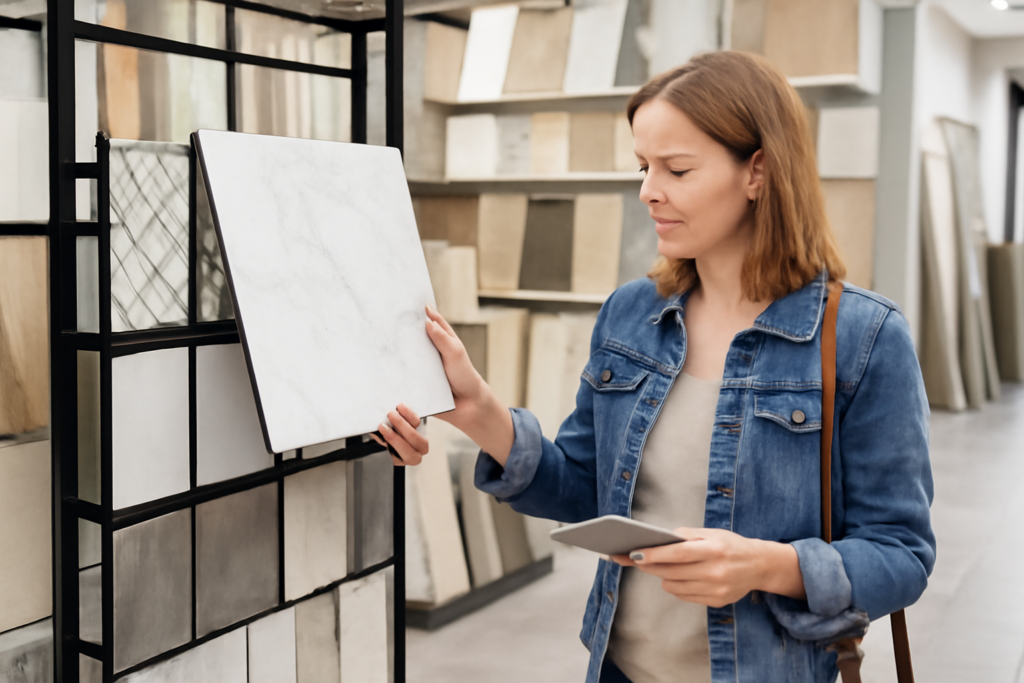
The strongest tile shops offer a wide, current selection across ceramic, porcelain, and natural stone, displayed in full panels rather than tiny chips so you can judge color and scale. Their staff ask about your room, moisture exposure, and traffic before recommending anything, and they explain the difference between wall, floor, and wet-area tiles.
Top stores also stock the correct setting materials, including the right thinset, grout, waterproofing membranes, and trim, and they help you calculate quantities with appropriate waste. Take-home samples, transparent pricing, and a fair return policy on unopened boxes round out a store worth your business.
Questions to Ask Before You Buy
These questions quickly separate helpful, honest stores from order-takers:
- Is this tile rated for my use, such as floor, wall, or wet shower?
- What is the PEI rating for wear and the DCOF for slip resistance?
- Which thinset, grout, and waterproofing do you recommend for this job?
- How much extra should I buy for cuts, waste, and future repairs?
- Is this in stock, or what is the lead time if I need more?
- What is your return policy on unopened boxes?
Staff who answer clearly and ask smart questions back are the ones who will steer you to the right product the first time.
Price Ranges to Expect
Tile prices vary widely by material and quality. As general market guidelines for the Omaha area and most US markets:
- Basic ceramic: $1 to $4 per square foot
- Quality porcelain: $3 to $8 per square foot
- Large-format and wood-look porcelain: $4 to $10 per square foot
- Natural stone (marble, travertine, slate): $5 to $20-plus per square foot
- Specialty mosaics and handmade tile: $8 to $30-plus per square foot
Budget separately for setting materials and labor. Professional tile installation in most markets runs $7 to $20 per square foot depending on tile size, pattern complexity, and substrate preparation.
Red Flags to Watch For
Avoid stores that recommend whatever is in stock without asking about your project, or that cannot tell you a tile’s PEI or slip ratings. High-pressure sales tactics, vague lead-time answers, and no returns on unopened full boxes are all warning signs. A reputable store is patient and transparent.
Be cautious of prices that look too good to be true on natural stone or porcelain, which can signal seconds, discontinued lots, or mislabeled product. A trustworthy shop is upfront about grade, origin, and whether tile is first-quality or clearance.
Buying Smart for Your Project
Order extra tile to cover cuts, breakage, and future repairs, generally 10 percent for straight layouts and 15 to 20 percent for diagonal or patterned installs. Buy all your tile from the same dye lot or batch, because color and dimensions can vary slightly between production runs, leaving visible mismatches.
Take large samples home and view them under your own lighting at different times of day, since showroom lights can be misleading. Confirm the tile’s rating matches its application; a wall tile is not built for floors, and a glossy floor tile can be slippery when wet. These details up front prevent costly do-overs.
Understanding Tile Ratings
Two ratings should guide every floor tile decision, and a knowledgeable store will explain both. The PEI rating measures surface wear resistance on a 1-to-5 scale. Wall tiles often rate PEI 0 or 1 and must never be installed on a floor. For residential floors, PEI 3 covers most rooms, while PEI 4 or 5 suits high-traffic areas and entryways.
The DCOF rating measures slip resistance, which matters most in wet areas. Aim for a DCOF of 0.42 or higher on bathroom and entryway floors. A polished tile may look beautiful but turn slippery when wet, so always verify the slip rating for any floor exposed to moisture before you buy.
Coordinating Tile With Your Design
Tile rarely stands alone, so coordinate it with the rest of the room before committing. Bring photos and samples of your cabinets, countertops, paint, and existing flooring so showroom staff can help you find complementary colors and finishes. Lay your top candidates next to those materials to judge how they work together.
Consider scale as well as color. Large-format tiles make small rooms feel bigger, while mosaics and patterns shine as accents. A trusted store will help you balance a statement tile with simpler surrounding finishes so the overall design feels cohesive rather than busy.
The Bottom Line
Picking a tile shop in Omaha comes down to selection, knowledgeable staff, fair and transparent pricing, and dependable support. Specialty showrooms excel for complex or premium projects, while big-box stores handle simple budget jobs. Ask about PEI and slip ratings and setting materials, buy extra from a single dye lot, and view samples in your own light. Shop this way and you will leave with the right tile and the confidence to install it well.
Prefer to explore on your own?
See how new flooring looks in your actual room in seconds — free, no signup.
Try the free Floor Studio →