
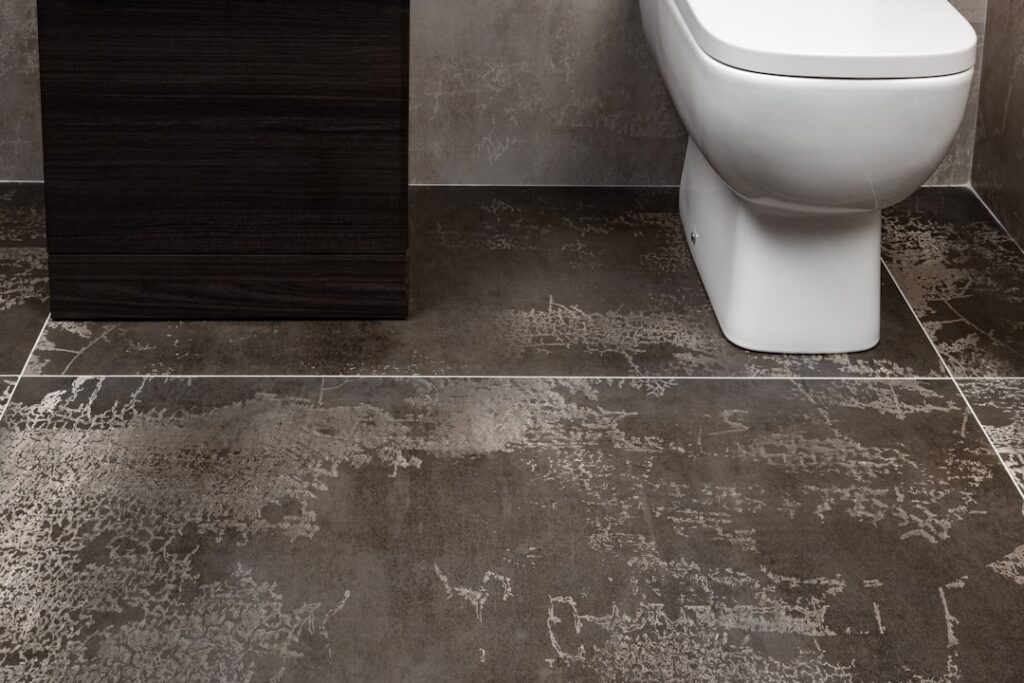
It’s one of those small bathroom details nobody thinks about until it’s wrong, and then it drives everyone crazy. Get the toilet paper height from floor wrong and the holder ends up awkwardly out of reach, banging against a knee, or wedged uncomfortably behind the toilet tank. Get it right and it disappears into the background exactly the way good design should, always within an easy, natural reach when you need it.
Part of our Bathroom Remodeling & Flooring guide — explore the full guide →
After roughing in and finishing more bathrooms than I can count, I’ve learned that a few simple, repeatable numbers take all the guesswork out of this. There’s a widely accepted standard height, a set of ADA guidelines for accessible bathrooms, and a couple of spacing rules that keep the roll from crowding the toilet or the wall. Once you know them, mounting a holder takes about ten minutes and comes out perfect the first time.
The Standard Toilet Paper Holder Height
The generally accepted standard is to mount the toilet paper holder so its center sits about 26 inches above the finished floor. That measurement is taken to the centerline of the holder, not the top or bottom of the mounting plate, and 26 inches lands the roll at a comfortable, natural reaching height for most adults when seated. It’s the number I use as my default on virtually every standard residential bathroom.
You’ll sometimes see a slightly wider range quoted, typically anywhere from 24 to 30 inches from the floor, and that flexibility exists for a reason. Taller households may nudge it up an inch or two, and homes with young children often mount it a touch lower so little hands can reach. But if you want a single safe number that works for nearly everyone and matches what builders and designers use, 26 inches to center is the sweet spot.
ADA Requirements for Accessible Bathrooms
Accessible and commercial bathrooms follow the Americans with Disabilities Act guidelines, which are more specific. The ADA sets the mounting height for a toilet paper dispenser between 15 and 48 inches from the floor, which is the standard accessible reach range, and in practice designers usually place the holder centered right around that lower-middle zone so it’s easy to reach from a seated or wheelchair position.
The ADA also cares a great deal about the horizontal placement. Guidelines call for the dispenser to be mounted roughly 7 to 9 inches in front of the toilet bowl, measured from the front edge of the bowl to the dispenser centerline, so it’s reachable without twisting or straining. If you’re renovating for aging-in-place or building anything that must be code-compliant, follow the ADA numbers rather than the residential standard, and always confirm current local accessibility codes before you finalize placement.
How Far in Front of the Toilet to Mount It
Height is only half the equation; horizontal position matters just as much for everyday comfort. The common recommendation is to place the holder about 8 to 12 inches in front of the leading edge of the toilet bowl. That range keeps the roll close enough to reach while seated but far enough forward that your arm isn’t pinned against the tank or the side of the bowl.
If you mount it too far back, near or behind the tank, reaching becomes an uncomfortable stretch and the roll can rub the tank. Too far forward and you’re leaning out of position to grab it. Eight to twelve inches in front, combined with that 26-inch height, produces the relaxed, natural reach that feels effortless. When you’re deciding exactly where in that range to land, factor in the wall layout and whether a vanity, grab bar, or door swing competes for the same space.
Choosing the Right Wall and Location
The ideal spot is the side wall closest to the toilet, positioned so a seated person can reach it with a slightly bent elbow. When that side wall is available and falls within the spacing guidelines above, it’s almost always the best choice. In tighter powder rooms where no side wall is within reach, people sometimes mount the holder on the front of the vanity cabinet or use a freestanding floor stand instead.
Watch what’s behind the wall before you drill. You want to hit a stud or, more often, use sturdy drywall anchors rated to hold the holder plus the tug of pulling paper, which adds up over years of use. Also keep the holder clear of the door swing, the vanity, and any towel bars so nothing collides. A quick dry-run, holding the fixture against the wall and miming the motion of reaching for a sheet, tells you instantly whether the spot feels right before you commit to holes.
Installing the Holder Step by Step
Start by marking your height. Measure 26 inches up from the finished floor and make a light pencil mark for the centerline, then measure your chosen distance, 8 to 12 inches, forward from the front edge of the bowl and mark that too. Where those two measurements cross is your holder’s center. Hold the mounting bracket at that point and use a small level to make sure it’s straight, because a crooked toilet paper holder is surprisingly noticeable on a finished wall.
Mark the screw holes through the bracket, then drill. If you’ve hit a stud, drive the screws straight in; if not, install proper drywall anchors first, then mount the bracket to them. Secure the bracket, snap or slide on the decorative cover if your model has one, and load a roll to test the reach and the spin. Give it a firm tug to confirm the anchors are solid. That’s it, a ten-minute job that, done to the right numbers, you’ll never have to think about again.
Common Mistakes to Avoid
The most frequent error I see is mounting the holder too high, up near towel-bar height around 30 to 36 inches, which forces an awkward upward reach when seated. Keep it down around that 26-inch mark. The second common mistake is placing it too far behind the front of the bowl, which makes the roll a stretch to reach and often causes knuckles to scrape the tank.
Other avoidable problems include skipping the level and ending up with a visibly tilted holder, and mounting into bare drywall without anchors so the whole fixture loosens and pulls out within a year. Finally, don’t forget to account for the finished floor height if you’re mounting before tile or flooring goes down; measure from where the final floor will be, not the subfloor. Nail these details and your toilet paper height from floor will be spot-on, comfortable for everyone, and completely forgettable in the best possible way.
Quick Reference and Final Tips
To keep the numbers straight, here’s the short version I keep in my head on every job. Standard residential height is 26 inches to the center of the holder, measured from the finished floor. The comfortable range is 24 to 30 inches if you want to fine-tune for a taller household or young kids. Horizontally, place the holder 8 to 12 inches in front of the leading edge of the bowl. For ADA-compliant bathrooms, work within the 15-to-48-inch reach range and set the dispenser about 7 to 9 inches in front of the bowl.
A couple of finishing thoughts make the whole job smoother. If you’re mounting in a spot with a grab bar, coordinate the two so the holder doesn’t block the bar or force a reach across it; accessibility hardware always takes priority in placement. In a shared family bathroom, consider the shortest regular users when choosing between the standard and a slightly lower position. And always test with an actual roll before you call it done, spinning it a few times to confirm nothing rubs the wall, tank, or vanity. Ten minutes of care with a tape measure and a level buys you a fixture that simply works, day in and day out, for as long as you own the home.
Prefer to explore on your own?
See how new flooring looks in your actual room in seconds — free, no signup.
Try the free Floor Studio →

