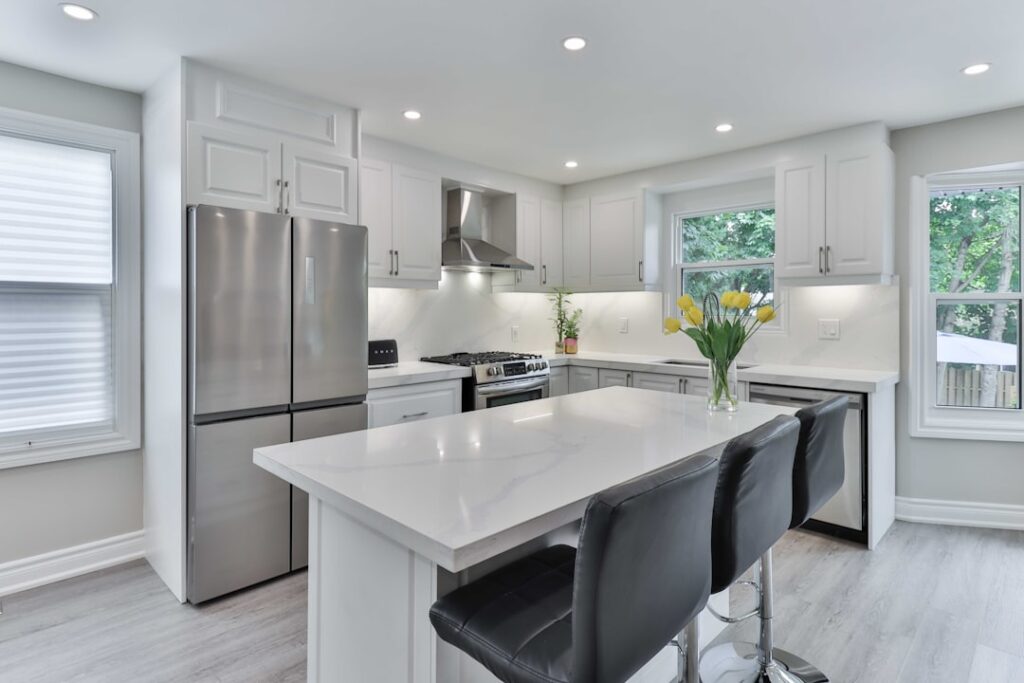
A strictly traditional kitchen can feel fussy. A strictly modern one can feel cold. The sweet spot — and the most resale-friendly style of the last decade — is transitional kitchen design. The look borrows warmth and craftsmanship from traditional kitchens while stripping away ornate moldings and pairing them with the clean lines, neutral palette, and open feel of contemporary design. Done well, a transitional kitchen dates slowly, suits almost any architectural style, and appeals to the widest buyer pool if resale ever matters.
The Core Elements That Make It Transitional
Transitional kitchens share a short list of common choices that you see across almost every published design:
- Shaker-style cabinets — recessed flat-panel doors with a simple square frame
- Neutral color palette — warm whites, soft grays, greige, and occasional navy or forest green accents
- Natural stone or quartz counters — white with subtle veining, not bold or busy
- Mixed metals — brushed nickel plus matte black, or polished chrome plus aged brass
- Simple hardware — bar pulls or classic knobs, no ornate rope or filigree detail
The rule of thumb: each element should feel at home in either a traditional or modern magazine spread. Nothing should scream exclusively from one camp.
Cabinet Choices
Shaker cabinets are the anchor of almost every transitional kitchen. The clean rail-and-stile frame with a flat center panel echoes historic craftsmanship without the decorative embellishment of raised-panel or inset beaded doors. Paint grade is standard — white, cream, or light gray. For contrast, pair a painted perimeter with a stained wood island in a medium walnut or white oak.
Cabinet budget for a typical 10×10 kitchen:
- Stock shaker from IKEA or Home Depot — $3,000 to $6,000
- Semi-custom from KraftMaid or Shenandoah — $8,000 to $15,000
- Custom or inset shaker — $18,000 to $35,000+
Countertops That Read Transitional
Stay in the white-and-gray family for maximum timelessness. Quartz is the workhorse — Caesarstone Calacatta Nuvo, Cambria Brittanicca, and Silestone Eternal Calacatta Gold all hit the mark. Real marble works too if you can live with etching and patina, and for a warmer look, honed soapstone reads both traditional and modern.
Avoid busy commercial-looking granites with large black or red chunks — those date a kitchen to the early 2000s instantly.
Backsplash Options
Subway tile is the unofficial transitional backsplash. A white 3×6 or 4×12 subway with medium-gray grout reads classic without feeling dated. For a step up in personality, consider:
- Handmade zellige tile in white or pale green
- Picket or elongated hexagon tile in soft gray
- Marble slab backsplash behind the range with subway elsewhere
- Honed limestone laid in a running bond pattern
Skip pot-fillers and decorative tile medallions — they lean traditional. Keep the backsplash clean and let the counter veining or hardware finishes be the jewelry.
Appliances and Range Hoods
Stainless steel is the safest appliance finish for transitional design. Panel-ready refrigerators and dishwashers elevate the look at higher budgets. The range hood is where you can make a statement — a simple plaster or shiplap cased hood in the same color as the cabinets looks custom and expensive but costs surprisingly little to build from MDF and drywall over a liner.
Professional-style ranges from Café, Monogram, or BlueStar blend into transitional kitchens better than commercial-looking Wolf or Viking units, which can push the space toward pure traditional.
Lighting Fixtures
Lighting is the easiest place to mix eras. Over the island, try three pendants with a traditional silhouette in a modern finish — globe pendants in matte black, or lantern-style in champagne bronze. Flush mounts in the prep area should stay simple; schoolhouse or drum-shade options both work.
Layer three light types in every transitional kitchen: ambient ceiling lights, task lighting under cabinets, and decorative pendants. LED strip under upper cabinets runs $50 to $150 DIY and transforms prep usability.
Hardware Selection
Hardware is the jewelry of a kitchen. Transitional design allows mixing metals — for example, brushed nickel pulls on perimeter cabinets with unlacquered brass on the island and range hood. Keep the pulls simple:
- 4 to 6 inch bar pulls on drawers
- Round or cup pulls on traditional-leaning cabinets
- 1 to 1.5 inch knobs on upper doors
Budget $8 to $30 per piece for quality hardware from brands like Top Knobs, Emtek, or Rejuvenation.
Flooring
Hardwood in a medium tone is the transitional default. White oak with a natural or light smoke stain works in almost every context. Engineered wood handles modern open-plan kitchens with radiant heat better than solid. For wet-prone zones, large-format porcelain tile that mimics limestone or concrete reads appropriately transitional without the maintenance of real stone.
Common Mistakes
Transitional kitchens fail in predictable ways. The most common missteps:
- Mixing too many wood tones — stick to two at most
- Over-designing the backsplash with a statement tile plus dramatic countertop
- Choosing trend-heavy cabinet colors like deep teal that date quickly
- Going too cold — a transitional kitchen should still feel warm and inviting
Budget and Return
Full transitional kitchen remodels run $35,000 to $90,000 for midrange and $100,000+ for high-end custom. Cost recovery at resale typically lands at 60 to 75 percent of spend, with transitional designs retaining value better than trend-heavy alternatives thanks to their broad appeal.
Small Kitchen Applications
The transitional style is not limited to large kitchens. In a galley or compact L-shape, the approach actually works better than maximalist traditional design because the clean lines make small spaces feel larger. Stick to light cabinet colors, glass uppers to break up solid walls of cabinetry, and a single warm-metal accent — a brass faucet or bronze pendant — to prevent the space from feeling sterile.
Dining and Adjacent Spaces
Because transitional kitchens often open to great rooms, the design needs to extend beyond the cabinets themselves. Repeat the metal finishes in the dining chandelier, match the wood tone from the island in the dining table, and echo the backsplash color on throw pillows or art. This continuity is what separates a truly finished transitional kitchen from a collection of individually nice choices.