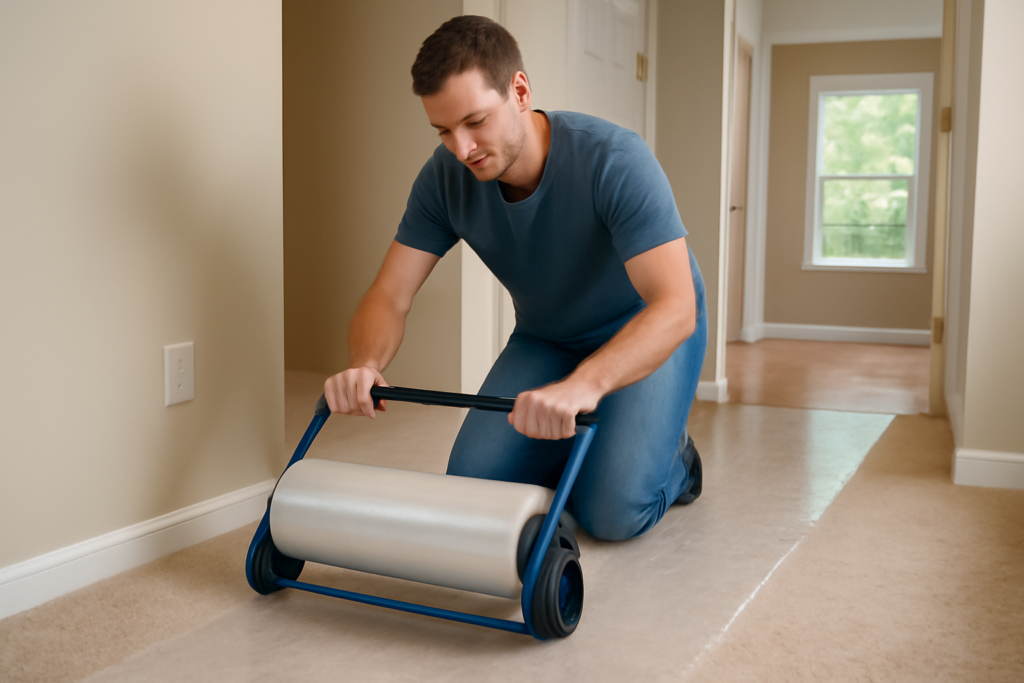
Anyone who has tried to roll out adhesive carpet protection film by hand knows the frustration: it bunches, wrinkles, sticks to itself, and takes twice as long as it should. The Trimaco carpet film applicator solves that headache by laying self-adhesive film in one smooth, wrinkle-free pass as you walk backward across a room. Painters, movers, and remodeling crews rely on this tool because clean, tight film means real protection instead of a peeling mess. If you are prepping a house for a renovation, a paint job, or a move-out, this guide explains how the applicator works, which model fits your project, and how to get professional results on your first try.
What the Trimaco Carpet Film Applicator Does
At its core, the tool is a wheeled dispenser that holds a roll of carpet protection film and unrolls it under controlled tension while a pressure roller presses the adhesive side into the carpet pile. Instead of crawling across the floor smoothing film with your hands, you load a roll, set the leading edge, and walk backward. The applicator lays the film flat and bonds it in a single motion.
Trimaco sells these under its Easy Mask and X-Board Kwik Cover lines, and the film itself is a low-tack polyethylene that clings to carpet fibers without leaving residue. The result is a taut, continuous barrier that shields carpet from paint drips, dust, foot traffic, and spills for up to 45 days, depending on the film grade.
Trimaco Applicator Models and Prices
Trimaco offers a few applicator styles, and the right one depends on how often you cover carpet and how large your jobs are.
- Trimaco Carpet Protection Film Applicator (around $40 to $60): The standard handheld wheeled dispenser sized for 21- to 24-inch-wide rolls. Lightweight and ideal for homeowners and occasional use.
- Trimaco Deluxe Applicator with adjustable handle (around $70 to $90): A sturdier frame with a telescoping handle so you can apply film standing fully upright, easier on your back over large areas.
- Trimaco film rolls (around $30 to $70 per roll): Common sizes run 24 inches by 200 feet up to 36 inches by 500 feet. A single 200-foot roll covers roughly 400 square feet of walkway.
For a one-room paint job, the basic applicator and one roll is plenty. If you protect whole houses regularly, the deluxe frame and a wider 36-inch film save time on every pass. Keep in mind that most applicators accept a range of roll widths, so buying a wider machine now does not lock you into oversized film for smaller jobs later.
One detail worth checking is roll compatibility. Trimaco applicators are sized around the brand’s own film cores, and while many generic rolls fit, an off-brand core that is too wide or narrow can wobble on the spindle and cause uneven laydown. Sticking with matched film and applicator saves you the aggravation of fighting a roll that will not track straight.
How to Use a Trimaco Carpet Film Applicator
The process is quick once you know the rhythm. A typical living room takes under ten minutes to cover.
- Vacuum first. Clean carpet lets the adhesive grip properly. Dust and debris weaken the bond and let film shift underfoot.
- Load the roll. Slide the film roll onto the applicator spindle so the adhesive side faces down toward the carpet.
- Anchor the start. Pull out about 12 inches of film, press it firmly into the carpet at your starting wall, and step on it to hold it in place.
- Walk backward slowly. Keep steady, even tension and let the pressure roller do the work. Move at a comfortable pace so the film lays flat without stretching.
- Cut and seal. At the end of each row, use the built-in cutter or a utility knife, then press the tail down. Overlap each new row by an inch or two for full coverage.
Keep rows straight and slightly overlapping so there are no exposed gaps where drips can sneak through. Press down any loose edges near doorways and baseboards.
Getting a Wrinkle-Free, Tight Application
Wrinkles are the enemy of good carpet protection, and they usually come from moving too fast or letting the film go slack. Maintain gentle, consistent tension the entire pass. If a bubble forms, stop, lift the film a few inches, and re-lay it rather than trying to smooth it forward.
On high-pile or plush carpet, press a bit harder on the roller so the adhesive reaches down into the fibers. Cold rooms below about 50 degrees Fahrenheit reduce tack, so let the film acclimate to room temperature before you start. A quick pass over the finished film with your foot or a hand roller along seams and edges locks everything down.
When to Use Carpet Protection Film
This tool earns its keep during any project that puts carpet at risk. Interior painting is the classic case, where a single drip can ruin an otherwise perfect floor. It is equally valuable during moving days, when dollies, boot traffic, and dropped boxes grind dirt into the pile.
Contractors use it during drywall work, flooring installation in adjacent rooms, and open-house staging. Real estate agents and stagers apply it to keep freshly cleaned carpet pristine for showings. For long jobs, check the film grade; standard film is rated for up to 30 to 45 days, and leaving it down much longer can make removal stickier.
Removal and Cleanup Tips
Removal is where a quality film pays off. Start at one corner and pull the film back over itself at a low angle, roughly 180 degrees, in a slow, steady peel. Yanking straight up can stress the carpet fibers, while a low peel releases the adhesive cleanly.
If any tackiness remains on the carpet, a light vacuum usually lifts it. Because Trimaco film is low-tack and residue-free when used within its rated window, you rarely deal with sticky spots. Ball up the used film as you go for easy disposal, and inspect the carpet afterward to confirm it looks exactly as it did before the project began.
Is the Trimaco Applicator Worth It?
For anyone covering more than a small closet, yes. Applying film by hand is slow and almost always leaves wrinkles that compromise protection. The applicator turns a ten-minute per-room chore into a two-minute walk, and the tighter, cleaner result actually protects better. At $40 to $90 for the tool, it pays for itself the first time you avoid replacing paint-splattered carpet.
There is also a labor angle that pros appreciate. Kneeling and crawling to smooth film by hand across a large house is hard on the knees and back, and it eats billable time. Standing upright behind an applicator with a telescoping handle, a two-person crew can protect a 2,000-square-foot home in well under an hour. For a homeowner tackling a weekend project, that same efficiency means less fatigue and more time for the actual paint or renovation work you set out to do.
Final Thoughts
A Trimaco carpet film applicator is a small investment that delivers professional-grade carpet protection with almost no learning curve. Vacuum first, load the roll adhesive-side down, walk backward with steady tension, and overlap your rows for gap-free coverage. When the job wraps, peel the film back at a low angle for clean, residue-free removal. Whether you are painting a bedroom or moving a whole household, this tool keeps your carpet looking new and saves you from an expensive replacement down the line.