If you want the look of grass or a tough outdoor floor that shrugs off rain and foot traffic, turf carpet is worth a serious look. This synthetic surfacing covers everything from a green artificial-grass patch on a balcony to durable indoor-outdoor turf on a porch, boat deck, or basement floor. It installs faster than sod, drains quickly, and holds up where ordinary carpet would rot.
What Turf Carpet Is
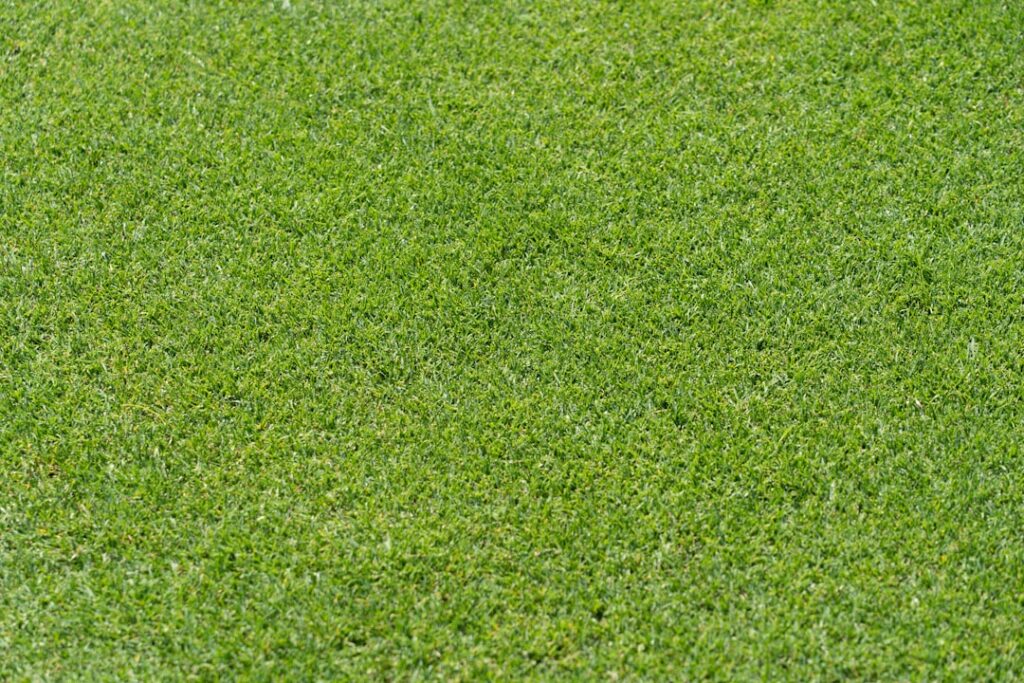
Turf carpet is a category of synthetic flooring made from polyethylene, polypropylene, or nylon fibers stitched into a backing. Some versions mimic real grass with tall green blades and a tan thatch layer, while others are short, dense, ribbed surfaces in green, gray, or brown that look more like traditional carpet. Both share the same advantages: they resist water, fade slowly under UV light, and stand up to heavy use. The short-pile style is often called indoor-outdoor turf or marine carpet.
Common Uses Around the Home
Because it tolerates moisture and sun, turf carpet goes places regular carpet cannot.
- Patios and decks: Softens hard concrete or wood and adds traction.
- Balconies and rooftops: A green, grass-like surface where planting is impossible.
- Play areas and putting greens: Cushioned, low-maintenance ground cover for kids and backyard golf.
- Boat docks and decks: Marine-grade turf resists salt water and grips wet feet.
- Garages and basements: Short-pile turf adds comfort to concrete while draining any spills.
- Pet runs: Easy to rinse and quick to dry between cleanings.
Choosing the Right Type
Start with the look you want. Tall artificial-grass turf reads as a lawn substitute and suits play areas, putting greens, and balconies. Short ribbed indoor-outdoor turf reads as practical flooring and suits porches, garages, and docks. Then check the backing. A permeable backing with drainage holes lets water pass straight through, which is essential outdoors. A solid rubber or marine backing keeps water on the surface, better for a covered porch or a boat deck where you want runoff to sheet off the edge.
Face weight tells you how dense the fibers are. Heavier face weights feel plusher and last longer under traffic, but cost more. For a high-use play area, lean toward a denser product even at a higher price.
Cost Expectations
Pricing varies widely by quality. Basic indoor-outdoor turf carpet runs roughly $1 to $4 per square foot, while premium artificial grass with realistic blades and infill can reach $5 to $12 per square foot before installation. Rolls are commonly sold in 6-foot and 12-foot widths. For a small balcony you might spend under $100, while a full backyard putting green with base prep and infill climbs into the thousands. Get a sense of total square footage and add 10 percent for trimming.
Installation Basics
Turf carpet installs over a clean, firm surface. The exact steps depend on whether you are covering a hard deck or bare ground.
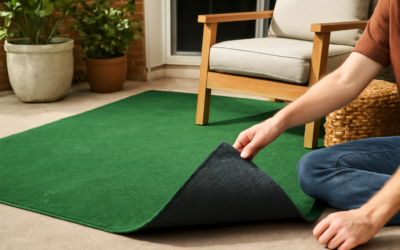
- Hard surfaces: Sweep the patio or deck clean, dry it fully, then roll out the turf and trim to fit with a utility knife. Glue down the edges with outdoor turf adhesive or secure with double-sided seaming tape.
- Bare ground: Excavate a few inches, lay and compact a crushed-stone base for drainage, add a weed barrier, then roll out the turf, secure the perimeter with landscape spikes, and brush in infill if the product calls for it.
- Seams: Butt panels tightly and join with seam tape and adhesive so the joint disappears.
Always allow for drainage. Pooling water under solid-backed turf invites mildew, so slope hard surfaces slightly or choose a permeable backing outdoors.
Pros and Cons to Weigh
Turf carpet earns its place, but it is not the right answer everywhere. Consider both sides before you commit.
- Pros: Waterproof, fast-draining, UV-resistant, low-maintenance, soft underfoot, and far cheaper to install than sod or stone.
- Cons: Synthetic fibers can heat up in direct summer sun, lower-quality products may flatten over time, solid-backed turf can trap water if drainage is poor, and the most realistic artificial grass is pricey.
For most patios, balconies, and play areas, the advantages clearly win. The main thing to plan for is drainage and sun exposure, both of which are easy to address with the right product choice.
Turf Carpet Versus Other Outdoor Flooring
Compared with outdoor tile or pavers, turf is softer, warmer underfoot in mild weather, and far less slippery when wet, which makes it a favorite around pools and on docks. Compared with real grass, it never needs mowing, watering, or fertilizing, and it stays green year-round. The tradeoff is that turf is synthetic and will eventually need replacement after a decade or more, while stone lasts indefinitely. If you want a soft, low-care surface that drains fast and grips wet feet, turf is the practical middle ground between hard flooring and a living lawn.
Maintenance and Care
Turf carpet is low-maintenance, not no-maintenance. Hose it off to clear dust and pollen, and rinse pet areas regularly. Brush tall artificial-grass fibers occasionally to keep them upright. Pull leaves and debris before they break down and stain. For indoor-outdoor turf, an occasional vacuum and a mild soap-and-water scrub keeps it fresh. With basic care, a quality turf surface lasts well over a decade outdoors.
Common Questions About Turf Carpet
Buyers weighing turf often have the same concerns. Does it get hot in the sun? Darker and denser turf can warm up in direct summer sun, so a lighter color or a shaded spot stays more comfortable underfoot. How long does it last? A quality outdoor turf typically holds up for ten to fifteen years before fibers flatten or fade enough to warrant replacement. Can you put it over grass or dirt? Yes, but you should excavate and build a compacted stone base first for drainage and a firm surface, or the turf will settle unevenly. Will it drain in heavy rain? Choose a permeable, hole-punched backing outdoors so water passes straight through rather than pooling.
Final Thoughts
Turf carpet bridges the gap between landscaping and flooring, giving you a durable, water-friendly surface for patios, play areas, docks, and more. Match the pile and backing to your space, plan for drainage, and prep the base properly. The result is a tough, good-looking floor that stays green or tidy with almost no upkeep.