
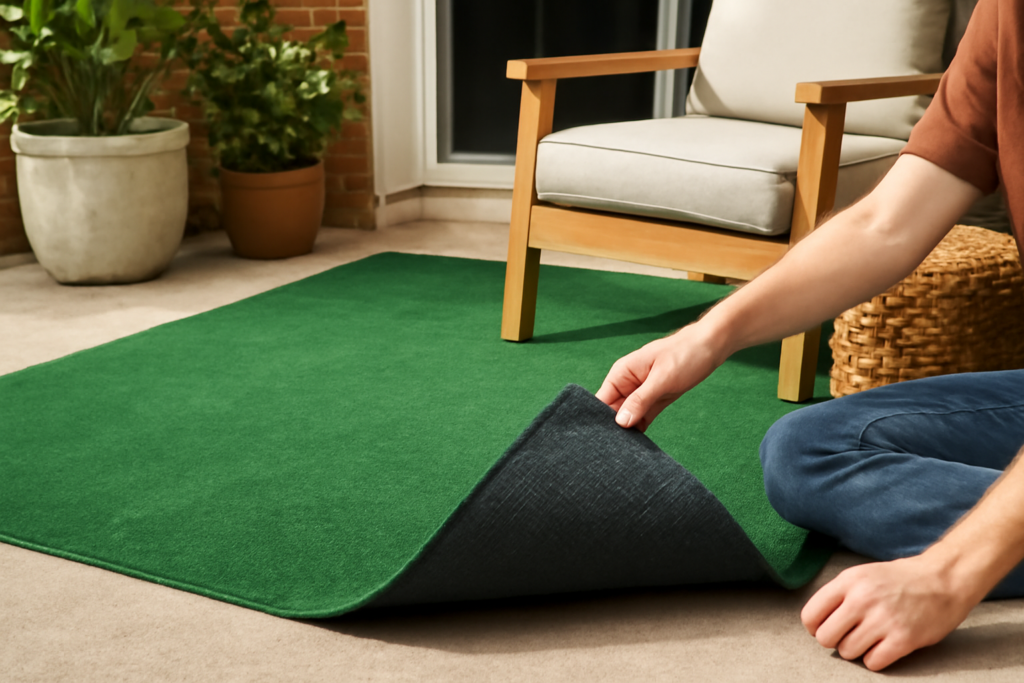
You can cover a patio or porch in soft, weather-ready flooring for less than the cost of a single restaurant dinner per square yard. Cheap outdoor carpet has come a long way from the scratchy green turf of decades past, and today’s budget options resist fading, mildew, and foot traffic while costing as little as $0.50 to $2 per square foot. The trick is knowing which materials hold up outdoors, which installation method fits your space, and where to spend versus where to save.
- What Makes Carpet “Outdoor” in the First Place
- Budget Material Options Compared
- Where to Buy Cheap Outdoor Carpet
- Choosing the Right Backing
- Installation: DIY to Keep Costs Down
- Making Cheap Carpet Last Longer
- Loop Pile vs. Cut Pile Outdoors
- Measuring and Estimating Your Needs
- Is Cheap Outdoor Carpet Worth It?
This guide breaks down materials, prices, and practical buying advice so you get durable outdoor flooring without blowing your budget.
What Makes Carpet “Outdoor” in the First Place
Indoor carpet falls apart outside. True outdoor carpet is built from solution-dyed synthetic fibers, usually polypropylene (olefin), with the color locked into the fiber itself rather than applied to the surface. That construction is what lets it survive UV rays, rain, and humidity without fading or rotting. Most outdoor carpets also use a permeable or marine-grade backing that lets water drain through instead of pooling underneath.
When shopping cheap, confirm the product is rated for outdoor or indoor-outdoor use. A bargain roll labeled for interior use will mildew and fall apart within a season once it gets wet.
Once your patio flooring is in place, think about how you’ll use the space. A gazebo adds shade and structure, while a good outdoor furniture set turns it into a spot you’ll actually want to hang out in. A deck box is also worth considering if you need somewhere to stash cushions and outdoor gear.
We may earn a commission when you purchase through our links.
Budget Material Options Compared
The fiber is the single biggest factor in both price and longevity. Here is how the affordable choices stack up:
- Polypropylene (olefin): The cheapest and most common outdoor fiber, roughly $0.50 to $1.50 per square foot. Resists moisture and fading well, though it crushes under heavy furniture over time.
- Polyester: Slightly pricier at $1 to $2 per square foot, softer underfoot, with good stain resistance and decent fade resistance.
- Nylon: The most durable but usually above the budget tier, often $2 to $4 per square foot. Worth it only for high-traffic commercial-style spaces.
- Artificial turf: A grass-look olefin product, $1 to $3 per square foot, great for play areas and pet runs.
For most homeowners on a tight budget, solution-dyed polypropylene delivers the best balance of price and weather resistance.
Where to Buy Cheap Outdoor Carpet
Big-box stores carry the most affordable rolls. Home Depot and Lowe’s both stock indoor-outdoor carpet by the linear foot off 6-foot and 12-foot-wide rolls, with house brands frequently under $1 per square foot. Remnant sections and end-of-roll deals can drop the price further, sometimes to $0.40 per square foot.
Online sellers like FlooringInc and Costco occasionally beat in-store pricing, especially on bulk rolls. Watch shipping costs, though; a heavy 12-by-15-foot roll can carry $50 or more in freight, which erases the savings. For small spaces, peel-and-stick outdoor carpet tiles run $2 to $4 per square foot and skip the cutting hassle entirely.
Choosing the Right Backing
Backing determines how the carpet handles water and where you can install it. Marine backing, made of rubber with drainage holes, is the gold standard for decks and pool areas because water passes straight through. Unitary or woven backings are more affordable and work well on covered porches that stay relatively dry.
Avoid foam or jute backing outdoors. Those absorb water, trap moisture, and rot quickly, which defeats the point of a weather-resistant floor.
Installation: DIY to Keep Costs Down
Labor is where outdoor carpet budgets balloon, so installing it yourself preserves your savings. The method depends on your surface:
- Loose-lay: For covered porches, simply cut the carpet to fit and let furniture hold it down. Free and removable.
- Double-sided tape: Best for renters and small areas. A roll of outdoor carpet tape costs about $15.
- Outdoor carpet adhesive: For permanent installs on concrete or wood. A gallon covers around 150 square feet and runs $30 to $40.
Always let concrete cure fully and ensure the surface is clean, dry, and free of debris before laying anything. Trapped grit telegraphs through thin budget carpet and wears it out faster.
Making Cheap Carpet Last Longer
Budget carpet survives longer with a little care. Sweep or hose it off regularly to keep grit from grinding down the fibers. Rotate or lift furniture occasionally so olefin doesn’t develop permanent crush marks. For mildew, a mix of one cup white vinegar per gallon of water scrubbed in and rinsed clean keeps growth in check without harsh chemicals.
In freezing climates, roll up loose-lay carpet for winter rather than letting it sit under snow and ice, which extends its life by years. Even a $0.50-per-square-foot product can give you five or six good seasons with this kind of maintenance.
Loop Pile vs. Cut Pile Outdoors
Beyond fiber, the way the carpet is constructed affects durability outdoors. Loop pile, where the yarn forms uncut loops, is the most common and hard-wearing choice for exteriors because it holds up to traffic and resists matting. Cut pile feels softer and more luxurious underfoot but crushes and shows wear faster outdoors.
For patios, decks, and high-traffic entries, lean toward a tight, low loop pile. Save plush cut pile for a covered, low-traffic spot like a screened porch where comfort matters more than ruggedness. The shorter and denser the pile, the easier it is to sweep clean and the longer a budget product lasts.
Measuring and Estimating Your Needs
Buying the right amount prevents both waste and the headache of mismatched dye lots later. Measure your space and follow a simple process:
- Multiply length by width to get square footage, then add 10 percent for cuts and waste.
- Note the roll width (usually 6 or 12 feet) so you can plan seam placement.
- For odd-shaped areas, sketch the space and break it into rectangles to total up.
- Order all your carpet from the same roll or dye lot to avoid color mismatches.
A 10-by-12-foot patio needs about 132 square feet with the waste factor, which at $1 per square foot costs roughly $130 in material, an easy weekend upgrade.
Is Cheap Outdoor Carpet Worth It?
For patios, three-season porches, screened rooms, and play areas, absolutely. You get a soft, slip-resistant, comfortable surface for a fraction of the cost of pavers, composite decking, or tile. Just match the fiber and backing to your conditions, install it yourself, and keep it clean. Spend wisely on solution-dyed polypropylene with a drainage backing and your inexpensive outdoor carpet will outlast and outperform its price tag.


