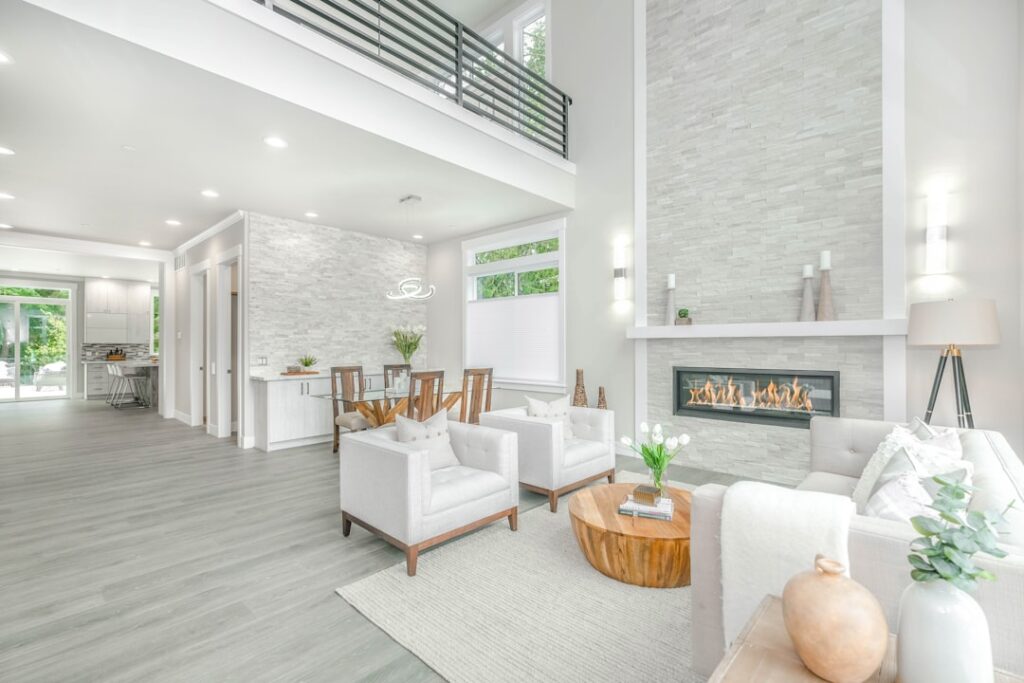
Here’s the good news most people don’t expect: putting a TV over electric fireplace setups is generally safe, and that sets electric units apart from gas and wood-burning ones. Electric fireplaces blow their heat forward or downward through a front vent rather than sending a column of hot air straight up the wall. That means the space directly above the unit stays relatively cool. Still, “generally safe” is not the same as “ignore everything,” so a little planning goes a long way.
- Why Electric Fireplaces Are Different From Gas and Wood
- Check the Heat and Clearance First
- Getting the Mount Height Right
- Cord and Cable Management
- Plan the Outlet and Power Load
- Mantels and Heat Deflection
- Step-by-Step Installation Overview
- When to Reconsider the Layout
- Recessed Built-In Walls and Heat Buildup
- Choosing the Right TV Size and Distance
- The Bottom Line
Why Electric Fireplaces Are Different From Gas and Wood
A wood-burning or gas fireplace produces real combustion. Heat, smoke, and combustion byproducts rise up the chimney and the wall above the firebox, often reaching temperatures that cook a TV’s internal components over time. Manufacturers of those systems usually demand a deep mantel and significant vertical clearance for exactly that reason.
Electric models work entirely differently. A heating coil warms air, and a small fan pushes that warm air out of a vent on the front or bottom of the unit. The flame effect you see is just LED lighting and a rotating reflector, producing essentially no heat. Because the warm air exits low and forward, the wall and mounting zone above stays close to room temperature, which is why so many manufacturers actually design these units to sit beneath a flat-screen.
Check the Heat and Clearance First
Even though the risk is low, confirm the specifics for your exact model. Run the heater on its highest setting for 15 to 20 minutes, then hold your hand on the wall directly above the unit. It should feel neutral or only faintly warm. If you feel real heat, you may have a top-venting model, which is less common but does exist.
- Read the manual. Most electric fireplace manuals list a minimum clearance to combustibles and to a mounted TV, often somewhere between 8 and 12 inches above the heat vent.
- Watch the vent direction. Front- or bottom-venting is ideal under a TV. Top-venting units need more space or a deflecting mantel.
- Mind ambient heat in tight cabinets. A recessed unit inside a sealed media wall traps more heat than one on an open wall.
Getting the Mount Height Right
Comfort matters more than people realize, and a fireplace pushes the TV higher than a standard setup. The center of a TV ideally sits around eye level when you’re seated, roughly 42 inches from the floor. With a fireplace beneath it, you’re often forced to mount higher, which can mean a sore neck during long viewing sessions.
To soften that problem, choose a full-motion or tilting mount. A tilt of 10 to 15 degrees angles the screen down toward your seating, cutting glare and neck strain. Measure your firebox height, add the required clearance, and only then decide whether the resulting viewing height is livable. If the TV would land above 65 inches to its center, consider a shallower fireplace or a recessed wall niche to drop everything down.
Cord and Cable Management
Nothing ruins a clean fireplace wall faster than a tangle of cables dangling down the middle. You have two solid options. The first is an in-wall cable management kit with two recessed plates, one behind the TV and one near an outlet below. Low-voltage HDMI and power cables route through the wall cavity between them. This gives the cleanest look but requires cutting drywall.
The second option is a paintable cord raceway, a slim plastic channel that surfaces-mounts to the wall and hides cables inside. It’s renter-friendly and installs in minutes. One caution: electric fireplaces often pull significant amperage on the heater setting, so plug the fireplace into its own dedicated outlet rather than daisy-chaining it through a power strip shared with the TV.
Plan the Outlet and Power Load
An electric fireplace heater commonly draws around 1,500 watts, which is roughly 12.5 amps on a standard 120-volt circuit. That’s most of what a typical 15-amp household circuit can handle. Add a TV and a soundbar and you can flirt with tripping a breaker if everything shares one outlet. Ideally, mount an outlet behind the TV for the screen and use a separate nearby outlet for the fireplace. If you’re framing a new media wall, ask an electrician to add a dedicated circuit for the fireplace heater.
Mantels and Heat Deflection
A mantel does more than look good above a TV over electric fireplace arrangement. On the rare top-venting unit, a mantel shelf with a few inches of overhang deflects rising warm air outward, protecting the screen. Even on front-venting models, a mantel creates a visual break that makes a high TV feel intentional rather than awkwardly stacked. Keep at least the manufacturer’s stated gap between the mantel and the heat vent.
Step-by-Step Installation Overview
- Confirm clearances in your fireplace manual and run the heater test described above.
- Locate wall studs with a stud finder and mark your mount height, accounting for firebox height plus clearance.
- Install a tilting or full-motion mount into at least two studs using the included lag bolts.
- Route cables through an in-wall kit or surface raceway.
- Plug the fireplace into a dedicated outlet and the TV into its own.
- Hang the TV, set the tilt, and test both the screen and the heater together for 20 minutes while checking wall temperature.
When to Reconsider the Layout
If your only mounting option forces the TV uncomfortably high, or your fireplace is a top-venting model in a sealed cabinet, think twice. Long-term neck strain is a real cost, and trapped heat in an enclosed niche can shorten electronics’ lifespan. In those cases, a console-style fireplace with the TV on a separate wall, or a wider wall that lets you drop the TV beside rather than above the unit, may serve you better.
Recessed Built-In Walls and Heat Buildup
The popular look right now is a fireplace and TV recessed into a built-out wall, often with shiplap, tile, or stone surrounding both. These media walls look stunning, but they also change the heat math. When you box a heater into a sealed niche with limited airflow, warm air has nowhere to escape and can collect around the TV. If you’re building one, leave a ventilation gap above the fireplace, or specify a unit designed for recessed installation that vents forward. Adding a slim mantel or a small return-air gap keeps the cavity from acting like an oven. For most front-venting units on an open wall this is a non-issue, but in a tight enclosure it’s worth designing for.
Choosing the Right TV Size and Distance
Mounting height isn’t the only comfort factor; screen size and seating distance matter too. A common rule of thumb is to sit roughly 1.5 to 2.5 times the screen’s diagonal away from the TV. A 65-inch screen, for example, is comfortable from about 8 to 11 feet. Because a fireplace pushes the TV higher, sitting a little farther back actually reduces the upward viewing angle and eases neck strain. If your seating is close to the wall, a smaller screen mounted with a strong downward tilt will feel far more comfortable than a giant panel craned up near the ceiling.
The Bottom Line
For the vast majority of front- and bottom-venting electric units, mounting a television above is a safe, attractive, space-saving choice. Verify clearances, keep viewing height reasonable with a tilting mount, give the heater its own outlet, manage your cables cleanly, and ventilate any recessed niche. Do those things and you’ll get a media wall that looks professionally finished and runs cool for years.