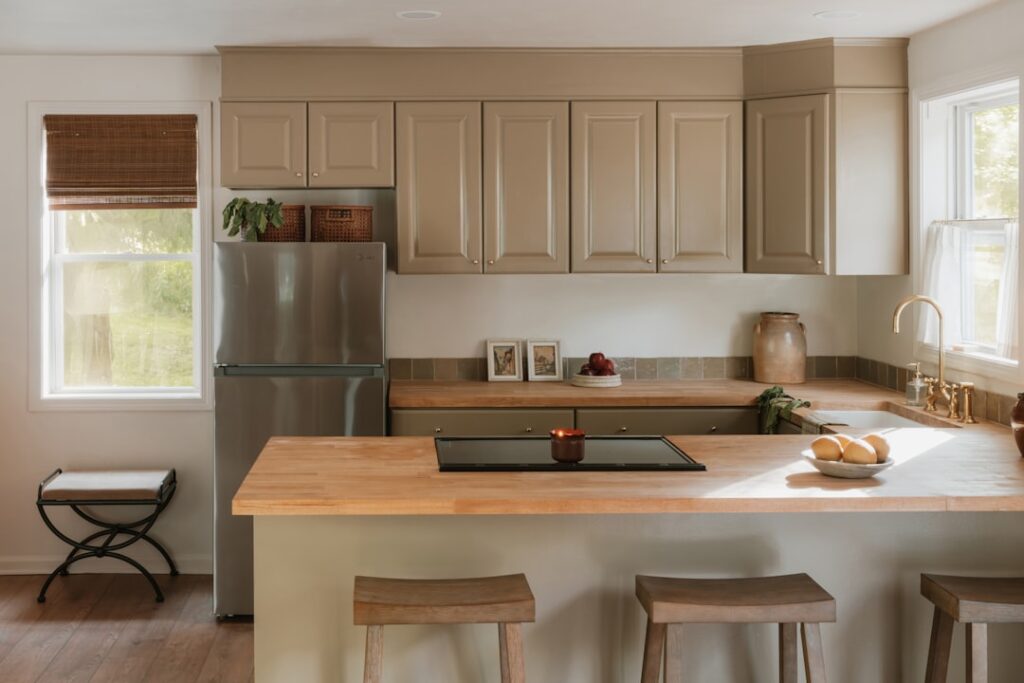
If you have ever watched water boil in 90 seconds while the surface next to the pan stayed cool enough to touch, you have seen the answer to what is induction cooktop technology in action. An induction cooktop uses a magnetic field to heat the pan directly instead of heating a burner that then heats the pan.
That one difference changes almost everything about how the appliance performs, what it costs to run, and which pots you can use on it. Here is the full breakdown from someone who installs and services these units.
How Induction Actually Heats Your Food
Under the glass-ceramic surface sits a tightly wound copper coil. When you turn on a burner, the cooktop pushes alternating current through that coil at roughly 20,000 to 100,000 Hz. This creates a rapidly flipping magnetic field just above the glass.
Set a magnetic pan on top and the field induces swirling electrical currents, called eddy currents, inside the metal of the pan itself. The pan’s own electrical resistance turns those currents into heat. In plain terms: the cookware becomes the burner. The glass only gets warm because the hot pan sits on it, not because the cooktop generated heat there.
Remove the pan and the field has nothing to work on, so heat production stops almost instantly. That is why you can put your hand near the “burner” seconds after cooking and feel little more than residual warmth.
The frequency also explains the safety behavior you will notice. Because the field needs a magnetic mass to work against, a fork or a small utensil dropped on the surface will not heat up, and most cooktops refuse to fire an element at all until they sense a pan of adequate size. That pan-detection sensor is doing a real job, not a gimmick, and it is why an empty element simply flashes an error rather than glowing red.
Induction vs. Electric vs. Gas
People lump induction in with “electric,” but the cooking experience is closer to gas in responsiveness and beats both on efficiency.
- Efficiency: Induction delivers about 85 to 90 percent of its energy into the food. A standard radiant electric coil runs closer to 65 to 70 percent, and gas is often only 40 percent because so much heat escapes around the pan.
- Speed: A strong induction element brings 6 cups of water to a rolling boil in 2 to 4 minutes. A gas burner takes 5 to 8 minutes for the same pot.
- Control: Power changes are instant, like gas. Turn the setting down and the boil calms immediately instead of coasting on stored heat.
- Cleanup: Spills land on cool glass, so they do not bake on. Wipe with a damp cloth once the pan is off.
What Cookware Works, and What Does Not
The catch with induction is simple: the pan has to be magnetic. If a refrigerator magnet sticks firmly to the bottom, the pan will work. If it slides off or only weakly grabs, it will not.
Materials that work include cast iron, enameled cast iron, carbon steel, and most stainless steel. Materials that do not work on their own include pure aluminum, copper, and glass. Some aluminum and copper pans now ship with a bonded magnetic base plate specifically so they run on induction, so check the manufacturer’s label rather than guessing.
If you are switching over, budget $150 to $400 for a solid replacement set, or test what you already own with a magnet before you spend anything. Warped pans also perform poorly because good contact with the flat glass matters.
Power, Amperage, and Wiring
A full-size 30-inch or 36-inch induction cooktop is a serious electrical load. Most require a dedicated 240-volt circuit rated at 40 or 50 amps, wired with the appropriate gauge cable and its own breaker. This is the same class of circuit a radiant electric range needs, so a home already set up for electric cooking is usually ready.
Individual burners are strong. A single high-power element can pull 3,000 to 3,700 watts on boost mode, which is why the boil times are so short. Because the draw is high, do not run one of these on a shared or undersized circuit. Have a licensed electrician confirm the breaker size and wire gauge if you are converting from gas, since a gas kitchen may have no 240-volt line at the range at all. That electrical run can add $500 to $1,500 to a conversion.
Portable single-burner countertop units are the exception. They plug into a standard 120-volt outlet and typically top out around 1,800 watts, which is fine for one pan on a 15-amp kitchen circuit.
What an Induction Cooktop Costs
Prices span a wide range depending on size and features.
- Portable single burner: $60 to $150. Great for testing the technology or adding a burner.
- 30-inch built-in cooktop: $1,000 to $2,200 for mainstream brands, more for premium.
- 36-inch built-in cooktop: $1,500 to $3,000 with five elements and bridge zones.
- Freestanding induction range: $1,200 to $3,500 including the oven below.
Installation of a built-in unit runs $150 to $400 if the circuit already exists, plus the cost of any electrical upgrade. Factor cookware into the total if your current pans fail the magnet test.
Living With the Glass Surface
The cooking surface is a single sheet of glass-ceramic, the same tough material used on radiant electric cooktops. It handles heat and thermal shock well, but it is not indestructible. Treat it like a phone screen: durable in normal use, vulnerable to a sharp impact.
Clean it with a dedicated cooktop cream and a soft cloth or razor scraper held at a low angle for stubborn spots. Avoid abrasive pads and never set a wet, gritty pan bottom down and drag it, because trapped grit under cast iron is what leaves fine scratches over the years. Sugar-based spills are the one thing to wipe up immediately, even while warm, since molten sugar can pit the glass if it cools and bonds. None of this is hard, and the payoff is a surface that wipes clean in seconds because burnt-on food never happens the way it does on a hot radiant coil.
The Real Pros and Cons
No appliance is perfect. Here is the honest balance sheet after living with and servicing these units.
Advantages: Fastest boil times of any home cooktop, precise instant control, a cool surface that resists baked-on spills, and lower energy use that trims your electric bill over the years. A cooler kitchen in summer is a real bonus because the appliance is not dumping heat into the room.
Drawbacks: Higher upfront price than radiant electric, the cookware requirement, and a faint electronic hum or buzz from some pans at high power. The glass surface can scratch or crack if you drop a heavy pan or drag cast iron across it, so lift rather than slide. Repairs to the control board also cost more than fixing a simple electric coil.
Is an Induction Cooktop Right for Your Kitchen?
Induction makes the most sense if you cook often, value speed and control, and either already have a 240-volt line at the range or are doing a remodel where adding one is easy. Households with small children appreciate the cool surface and the auto-shutoff that kills the element when no pan is detected.
Skip it if your kitchen is stuck with only a 120-volt outlet and you are not willing to run a new circuit, or if you own a large collection of non-magnetic aluminum or copper cookware you refuse to replace. In that case a portable burner lets you try the technology for under $150 before committing.
For most homeowners planning a kitchen update, the combination of speed, efficiency, and easy cleanup makes induction the strongest cooking option on the market today. Test your pans with a magnet, confirm your circuit, and you will have a clear picture of exactly what the switch involves.