Few kitchen looks have stayed as popular as two tone white and wood kitchen cabinets, a pairing that brightens a room while keeping the warmth and texture of natural wood. Designers estimate that a well-planned two-tone kitchen can deliver the visual impact of a full remodel for a fraction of the cost, since you are often simply changing finishes rather than the layout. This guide walks through the design choices that make the look feel intentional rather than accidental.
Why Two-Tone Works
An all-white kitchen can feel clean but flat, while an all-wood kitchen can feel heavy and dark. Combining the two gives you the best of both. The white reflects light and makes the room feel larger, while the wood grounds the space, adds warmth, and brings in natural grain that pure paint cannot match. The contrast also creates a sense of zones, helping the eye understand where the island, the perimeter, and the focal points are.
Popular Layout Combinations
There is no single correct way to split the two finishes, but a few arrangements have proven reliable:
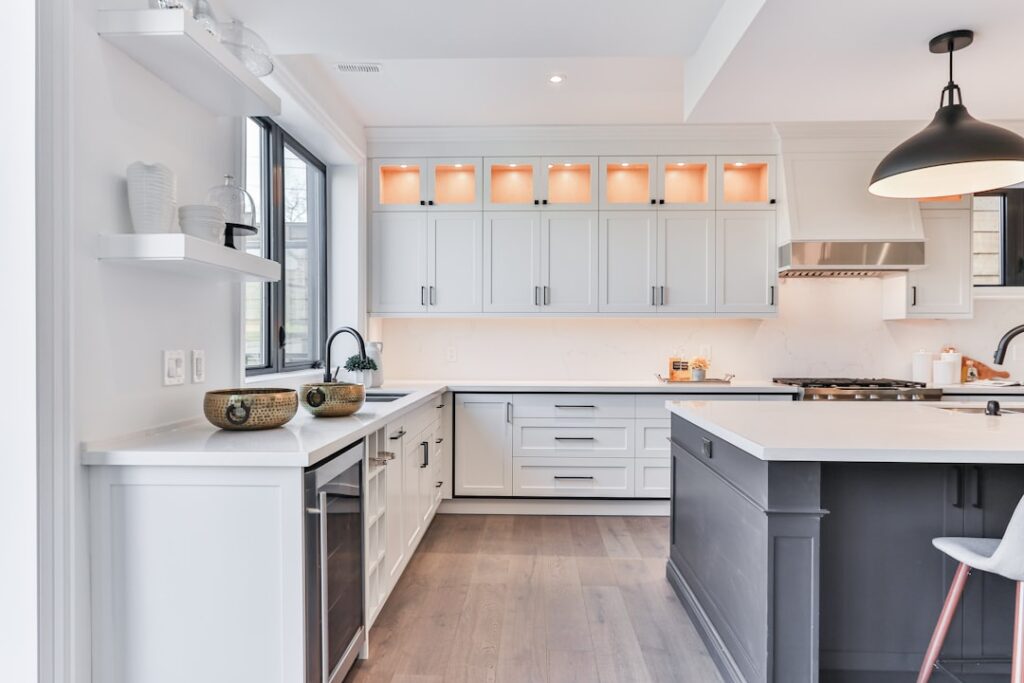
- White perimeter, wood island. The most common approach. White wall and base cabinets keep the room bright, while a wood island becomes a warm centerpiece.
- White uppers, wood lowers. White on top draws the eye upward and feels airy, while wood base cabinets hide scuffs and add grounding weight.
- Wood uppers, white lowers. A less common but striking reversal that puts the wood grain at eye level.
- Wood accent zone. Wood used only on a single run, a hutch, or the cabinetry around a range hood, with white everywhere else.
As a rule, put the lighter color where you want the room to feel taller and the wood where you want warmth and a focal point.
Choosing the Right Wood Tone
The wood you pair with white sets the entire mood of the kitchen. Light woods such as white oak, maple, and ash read fresh, Scandinavian, and modern. Medium tones like walnut-stained oak or natural cherry feel classic and balanced. Darker woods bring drama and a more traditional or moody feel. For most homeowners, a light to medium natural wood with visible grain is the safest and most timeless choice, because it complements white without fighting it.
Pay attention to undertones. Warm white paint pairs beautifully with warm honey and golden woods, while a cooler, crisper white looks best with grayer or more neutral wood tones. Mixing a very cool white with a very orange wood is the most common source of a kitchen that feels slightly off.
Countertops That Tie It Together
Countertops are the bridge between your two cabinet colors. A few approaches work especially well:
- White or light quartz on white cabinets, with a contrasting countertop or butcher block on the wood island to let each zone stand apart.
- One consistent stone across both, which calms the contrast and lets the cabinetry do the talking.
- Veined marble-look quartz, whose gray and warm threads can pick up both the white and the wood, unifying the palette.
If you want the wood island to be the star, give it a different, slightly more dramatic countertop than the perimeter. If you want a calmer room, keep the counters consistent.
Hardware and Fixtures
Hardware is where you set the metal tone for the whole kitchen. Matte black hardware adds crisp, modern contrast against both white and wood. Brushed brass or gold brings warmth that flatters natural wood especially well. Brushed nickel and stainless feel safe and neutral. The key is consistency: pick one finish for cabinet pulls, and ideally echo it in the faucet, lighting, and any open shelving brackets so the room feels coordinated.
Walls, Backsplash, and Flooring
With two cabinet finishes already in play, keep the surrounding surfaces relatively calm. A simple subway tile, a soft neutral backsplash, or a quiet quartz slab backsplash lets the cabinets remain the focus. For flooring, both wood-look floors and neutral tile work, but try to either match the cabinet wood tone closely or contrast it clearly. A floor that is almost but not quite the same as the wood cabinets can look like a mismatch rather than a choice.
Common Mistakes to Avoid
- Clashing undertones. The most frequent problem. Test your white paint and wood sample together in the actual kitchen light before committing.
- Too many competing finishes. Two cabinet colors plus a busy backsplash plus a bold floor plus mixed metals reads chaotic. Let the cabinets lead and keep the rest restrained.
- Ignoring lighting. Wood and white both shift dramatically under warm versus cool bulbs. View samples under your real fixtures at the time of day you use the kitchen most.
- Wood that is purely decorative. If a wood zone gets heavy use, make sure its finish is durable and sealed, not just pretty.
Budget and Practical Tips
If you are working with existing cabinets, you can often achieve a two-tone look by painting the perimeter white and refinishing or replacing only the island or lower cabinets in wood. This costs far less than a full cabinet replacement. When buying new, remember that real wood veneer fronts age more gracefully than printed wood-look laminate, though laminate is more budget-friendly and resists moisture. Always order a sample door and live with it for a few days before ordering the full kitchen.
Making the Look Timeless
To keep your two-tone kitchen from feeling dated in a few years, anchor it with classic elements: a true white rather than a trendy off-shade, a natural wood with honest grain, and simple hardware. Save the trend-driven choices, like a bold backsplash color or a statement faucet, for items you can change cheaply later. That way the bones of the kitchen stay current while the accents evolve.
Final Thoughts
Two tone white and wood kitchen cabinets remain popular because they solve a real design problem: how to keep a kitchen bright without losing warmth. Get the wood tone and white undertone working together, choose a layout that puts light where you want height and wood where you want a focal point, and keep the surrounding surfaces calm. Do that, and you will have a kitchen that feels custom, welcoming, and built to stay attractive for many years.