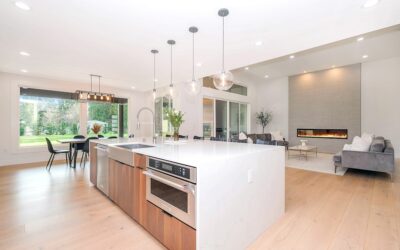
Choosing kitchen counters is the single most consequential decision in any remodel. Counters dominate sight lines, take the most daily abuse, and account for 8-15% of total kitchen budget. The types of countertops for kitchen have multiplied in the last decade, with engineered surfaces, sintered stone, and recycled glass joining the long-standing options of granite, marble, and laminate. Each material has a price, a performance profile, and a look that fits some kitchens better than others. Picking right means matching your lifestyle to the surface, not just falling for what looks great in a showroom.
Part of our Countertops guide — explore the full guide →
- Natural Stone Options
- Engineered Quartz
- Sintered Stone and Porcelain Slabs
- Wood and Butcher Block
- Solid Surface (Corian and Equivalents)
- Laminate Counters
- Concrete Counters
- Stainless Steel and Metal
- Tile Counters
- Recycled Glass and Eco-Surfaces
- Edge Profile and Thickness Choices
- Match the Material to Your Kitchen
Natural Stone Options
Three natural stones still dominate premium kitchens. Each has distinct trade-offs:
- Granite: $40-$100 per sq ft installed. Heat resistant, scratch resistant, requires resealing every 1-2 years. Distinct stone-to-stone variation
- Marble: $60-$150 per sq ft installed. Soft, beautiful, etches from acids (lemon, wine, tomato), patinas with age
- Soapstone: $70-$120 per sq ft installed. Soft, heat-immune, develops a darker patina over years
Quartzite (a metamorphic stone, not the engineered quartz) sits in this category too at $80-$200 per square foot. Often confused with marble visually but with much higher hardness.
Engineered Quartz
Quartz countertops are 90-95% crushed natural quartz bound with polymer resin. Major brands include Cambria, Caesarstone, Silestone, and MSI Q Premium. Pricing runs $55-$125 per square foot installed.
The advantages drive its dominance: zero sealing required, near-impervious to staining, consistent color and pattern, and the ability to mimic marble or concrete with no maintenance penalty. The trade-off is heat sensitivity. Hot pans (over 300°F) can damage the resin binder. Always use trivets.
Sintered Stone and Porcelain Slabs
The newest premium category. Brands like Dekton, Neolith, and large-format porcelain slabs from Italian and Spanish manufacturers create surfaces that handle heat, UV, scratches, and stains better than any other countertop. Pricing runs $80-$200 per square foot installed.
The downsides are limited to fabrication complexity (specialized equipment required) and cost. For outdoor kitchens and busy households, sintered stone has become the new top choice when budget allows.
Wood and Butcher Block
Maple, walnut, and cherry butcher block deliver warmth that stone cannot match. Pricing runs $35-$75 per square foot installed for edge-grain, $75-$150 for end-grain blocks.
Wood requires monthly oiling with food-safe mineral oil, periodic sanding to remove stains, and trivets for hot cookware. Best used as an island or coffee-prep station rather than primary cooktop counter.
Solid Surface (Corian and Equivalents)
Acrylic-based solid surface materials like Corian, Hi-Macs, and Avonite cost $40-$95 per square foot installed. Seamless construction is the standout feature; sinks, drainboards, and backsplashes can be integrated with no visible joints.
Solid surface scratches easily but can be sanded and repaired by the homeowner with a fine-grit sanding pad. Heat resistance is the main weakness; hot pans leave marks that require professional restoration.
Laminate Counters
Modern laminate from Wilsonart and Formica costs $20-$50 per square foot installed. Stone-look patterns, textured finishes, and edge profile options have made laminate competitive in budget remodels.
Limitations: knife cuts cannot be repaired, hot pans burn the surface, and visible seams are unavoidable in long runs. Best for rentals, basement kitchens, and starter homes where the buyer prioritizes upfront cost.
Concrete Counters
Custom-poured concrete runs $65-$135 per square foot installed (less for DIY). Color, texture, and embedded features (river stones, glass, metal flecks) make concrete one of the most personalizable options.
Concrete must be sealed annually and may develop hairline cracks over time, which most owners view as character. Heavy weight requires cabinet reinforcement during install.
Stainless Steel and Metal
Commercial-grade stainless steel counters cost $80-$220 per square foot installed. Heat-immune, hygienic, and durable, but show every fingerprint and water spot. More common in serious cooking enthusiasts’ kitchens than in resale-focused homes.
Copper and zinc counters offer the same durability with a patinated aesthetic. Pricing similar to stainless. Both develop natural antimicrobial properties.
Tile Counters
Large-format porcelain tile (24×24+ inches) has revived tile counters. Pricing runs $25-$60 per square foot installed. Heat-immune, scratch-resistant, and customizable.
Grout lines remain the weakness. Even with epoxy grout, tile counters require more cleaning attention than slab materials.
Recycled Glass and Eco-Surfaces
Brands like Vetrazzo and IceStone embed recycled glass chips in cement or resin matrices. Pricing runs $80-$140 per square foot installed. Distinct visual character with strong sustainability credentials.
Best for homeowners who want a conversation-piece counter and have the budget for premium pricing.
Edge Profile and Thickness Choices
Edge profile shapes the visual feel of any countertop. Eased (slightly softened square) edges read modern. Bullnose edges read traditional. Mitred 4cm edges look luxurious but cost 30-40% more. Standard slab thickness is 3cm in most stone and quartz categories; 2cm slabs are budget-friendly but require plywood substrate underneath, increasing total install thickness anyway.
Match the Material to Your Kitchen
For high-traffic family kitchens, quartz delivers the best balance of looks and zero maintenance. For serious cooks, sintered stone (Dekton, Neolith) handles heat and abuse without flinching. For period-appropriate or design-driven kitchens, marble and soapstone reward owners willing to live with patina. For rentals and budgets under $2,000, premium laminate or butcher block is the smart play.
The right types of countertops for kitchen come down to honest answers about budget, daily habits, and how long you plan to stay in the home. Get those three answers right and the material chooses itself. Always view full slabs (not 4×4 inch chips) before signing on natural stone, because veining and color variation are dramatic at full scale.