A puddle on the bathroom floor almost never means the door is broken. Nine times out of ten it means a $12 strip of clear plastic or vinyl has worn out, and swapping it takes fifteen minutes. Understanding the types of shower door seals is the fastest way to fix a leak yourself instead of paying a plumber to tell you the same thing. I have replaced hundreds of these over the years on framed, frameless, and sliding enclosures, and the confusion is almost always about naming — homeowners know something rubber-ish fell off, but not what it is called or where to buy the match.
This guide walks through every seal you will encounter, where each one lives on the door, and how to identify the exact profile you need before you order.
Why Shower Doors Need Seals at All
Glass and metal do not close against each other tightly enough to hold water on their own. The gaps left at the bottom, the sides, and where two panels meet are all wide enough to let water weep out onto the floor. Seals bridge those gaps. They also cushion glass-to-glass and glass-to-frame contact so the door does not chip or slam, and on some designs they create the magnetic latch that holds the door shut. A good seal system does three jobs at once: block water, quiet the closing action, and protect the tempered glass edge.
Most seals are made from clear PVC, flexible vinyl, or a translucent thermoplastic. They are considered wear parts. Chlorine, hard water, body oils, and daily flexing break them down, so plan on replacing them every three to five years even on a quality enclosure.
Bottom Sweep Seals
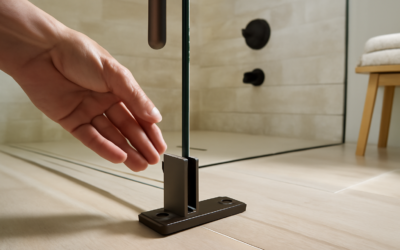
The most common seal, and the one that fails first, is the bottom sweep. It clips or slides onto the lower edge of the door glass and drags lightly against the shower curb or threshold, closing the gap where the majority of leaks happen. Sweeps come in two broad shapes. A fin or wipe sweep has one or two angled flaps that flex flat against the curb. A bulb sweep has a hollow tube along the bottom that squashes to fill an uneven gap — useful when your curb is not perfectly level.
Sweeps are sized by the glass thickness they grip and by the gap they need to close. The two numbers that matter are the glass thickness — commonly 3/16 inch, 1/4 inch, 5/16 inch, or 3/8 inch — and the sweep drop, meaning how far the flap hangs below the glass, typically 3/4 inch to 1-1/4 inch. Buy the sweep rated for your glass thickness or it will either fall off or refuse to seat.
Side and Jamb Seals
Where the hinge side of a swinging door meets the wall jamb, a side seal closes the vertical gap. On framed doors this is often built into the aluminum channel, but on frameless glass it is a separate clear strip that grips the glass edge and runs top to bottom. Side seals stop the sideways spray that a bottom sweep can never catch, and they are the seal most people forget exists until water starts tracking down the wall behind the enclosure.
These strips press onto a 3/16 to 3/8 inch glass edge and usually have a single soft fin. If your leak shows up along the hinge wall rather than the floor at the front, a worn or missing side seal is the culprit.
Bulb and Balloon Seals
Bulb seals deserve their own mention because they solve a specific problem: gaps that are inconsistent. The hollow bulb compresses more where the gap is tight and stays plump where the gap is wide, so it forgives a curb that is out of level or a door that hangs slightly crooked. You will see them used both as bottom sweeps and along the strike edge of some hinged doors. If you have chased a leak with flat sweeps and never fully solved it, a bulb-style replacement is often the fix.
Magnetic Seals for Hinged Doors
Swinging frameless doors close against either the wall or a fixed glass panel, and a magnetic seal does double duty there. A flexible strip runs down the strike edge of the swinging door with a thin magnet embedded inside it, and a matching magnet strip sits on the panel it closes against. The two snap together to latch the door and, at the same time, close the vertical water gap.
Magnetic seals come in matched pairs and are specific to the closing angle — a door that meets a wall at 90 degrees uses a different profile than one that meets a fixed glass panel at 180 degrees or at 135 degrees for a neo-angle shower. When you order a replacement, you must match both the glass thickness and the angle. Getting the angle wrong is the single most common ordering mistake I see.
Wipe and Fin Seals
Sliding and bypass doors use wipe seals — long flexible fins that ride against the adjacent panel or the frame track as the door slides. On a bypass enclosure, an interlocking pair of wipes on the two panels closes the vertical overlap where the doors pass each other. Wipes are also used at the top of some sliders to keep water from sheeting over the rail. They are low-profile, easy to overlook, and cheap, usually $8 to $15 for a full-height strip.
H-Jamb and Framed Channel Seals
Framed enclosures — the aluminum-surround style common in older homes and apartments — hide their seals inside the frame. Vinyl glazing runs in the U-channel around each glass panel, and a separate strike-jamb seal cushions where the door frame meets the fixed frame. These are less glamorous than frameless hardware but just as important. When a framed door starts to rattle or leak at the latch, the flat vinyl in the strike jamb has usually gone brittle. Replacement vinyl is sold by the foot at most glass shops.
How to Identify and Measure the Seal You Need
Ordering the wrong profile is the biggest time-waster in this job, so slow down here. Pull the old seal off — most slide off the end of the glass or peel out of a channel — and take it to the bench. Measure three things: the glass thickness the seal grips, the overall length you need, and the shape of the profile viewed from the end. Photograph the end profile against a ruler.
- Glass thickness: caliper the bare glass edge. 1/4 inch and 3/8 inch are the two most common frameless sizes.
- Length: measure the full glass edge; you can trim a long strip down but never stretch a short one.
- Profile: note whether it is a single fin, a double fin, a bulb, or a magnetic strip, and whether it clips over the glass or slides into a channel.
- Angle: for magnetic seals, confirm 90, 135, or 180 degrees.
If you cannot find a match, take the old piece to a local glass and shower company. Universal replacement kits from brands like Cardinal, DreamLine, and generic PVC strips cover most 1/4-inch and 3/8-inch doors for $10 to $25.
Replacing a Seal Step by Step
Most seals are a tool-free swap. Slide or peel the old one off. Clean the glass edge with rubbing alcohol to remove soap film so the new seal grips. Cut the new strip to length with sharp scissors or a utility knife, leaving it about 1/8 inch long so it seats snug. Slide it on from one end, working it down the full edge. For channel-mounted vinyl, push it into the groove with your thumb and seat the corners fully. Run the shower for a minute afterward and watch the former leak point before you call it done.
One field tip that saves callbacks: warm a stiff PVC sweep with a hair dryer for thirty seconds before installing. It becomes pliable, slides on without fighting you, and returns to shape as it cools.
Choosing the Right Seal for Your Enclosure
Match the seal to how your door moves. Swinging frameless doors want a bottom sweep plus side seals and, if they latch to glass, a magnetic pair. Sliding and bypass doors want wipe seals and a bottom sweep on each panel. Framed enclosures want channel vinyl and a strike-jamb seal. When in doubt, over-seal the bottom and the strike edge first, since that is where 90 percent of leaks originate.
Knowing the full range of shower door seals turns a frustrating floor puddle into a five-dollar, fifteen-minute fix. Keep a spare sweep on hand once you know your glass thickness — the day yours splits is never a convenient one, and a dry bathroom floor is worth the cost of a strip of vinyl.