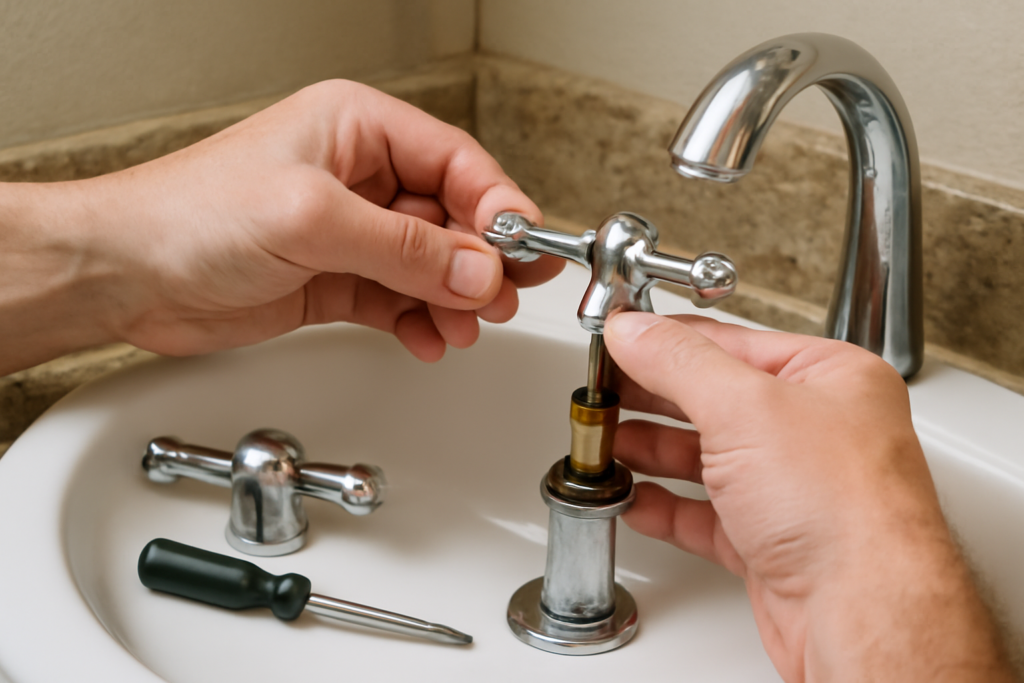
The handle is usually the first part of a faucet to die — cracked from decades of hand force, chrome peeling, or spinning uselessly on a stripped stem — while the valve underneath still works fine. Replacing the whole faucet over a $12 part makes no sense, which is where universal faucet handle replacement comes in. Universal handles are aftermarket knobs and levers machined to fit the splined stems of many faucet brands, and with the right broach match or adapter they rescue faucets whose original parts went obsolete decades ago. The catch is that “universal” is a hopeful word: success depends entirely on matching the spline pattern on your stem. Here is how the system works and how to get the right part the first time.
Why Handles Fail and Why Universal Exists
Most handle failures are the same story. Faucet stems end in a splined tip — a ridged cylinder like a tiny gear — and the handle’s socket grips those ridges. Handles were historically zinc or plastic while stems were brass, so fifty years of torque strips the softer socket until the handle spins without turning the stem. Meanwhile, thousands of mid-century faucet makers (Gerber, Central Brass, Sayco, Union Brass, Price Pfister’s older lines, and dozens of departed brands) either vanished or dropped their old patterns. The aftermarket answered with universal handles and broach adapter kits so a 1962 tub valve can wear a new handle without opening the wall.
Broach Patterns: The Spec That Decides Everything
The spline pattern — called the broach — is the whole ballgame. Plumbing suppliers identify broaches by spline count and diameter, and the common patterns cover most of the installed base:
- 12-point: Common on Gerber and many tub/shower stems.
- 16-point: The most widespread pattern; used by Price Pfister and many others, and the default socket on most “fits-all” handles.
- 17, 18, and 20-point: Central Brass, Sayco, Union Brass, and various legacy brands each favored their own counts.
- 22-point fine spline: Kohler and some American Standard stems.
- Square or D-shaped broach: Older compression stems, especially outdoor sillcocks and some tub valves.
Count the splines on your bare stem (a photo zoomed in makes this painless) and measure the tip diameter with calipers if you have them. Better aftermarket brands — Danco is the biggest name, with BrassCraft and Ace close behind — print the broach spec on the package, and Danco publishes cross-reference charts from faucet brand to handle SKU. When the pattern is odd, adapter kits like the Danco Universal Handle Adapter ($8 to $12) sleeve over a mismatched broach and present a standard socket to the new handle, solving most orphan-stem problems.
Removing the Old Handle
Getting the corpse off is often the hardest step, because decades of mineral scale effectively glue the socket to the stem.
- Kill the water if the valve must move. For a simple handle swap you can often work with the valve closed, but shutting the angle stops or house main is cheap insurance on tub valves where the stem might turn.
- Find the screw. Pry the decorative index button (the H/C cap) with a small flathead to expose the handle screw, or check for a setscrew under the lever’s base — usually 1/8 inch Allen. Corroded screws yield to a shot of penetrating oil and a properly sized driver; stripped ones need a screw extractor.
- Pull straight back. Wiggle and pull. If it will not budge, do not hammer sideways — you can snap a brass stem inside the cartridge. Use a handle puller ($10 to $20, and most hardware stores loan them): it braces against the stem tip and jacks the handle off cleanly. White vinegar dribbled around the base for ten minutes dissolves scale and often frees a stuck socket.
Choosing and Fitting the New Handle
With the stem exposed, match three things: broach (as above), stem length — deep-set tub valves may need the handle plus a longer sleeve or extension kit so the handle does not bottom out against the escutcheon — and function, meaning knob versus lever and clockwise-close versus reverse for hot-side stems on some old brands. Universal replacements come in every finish and style: clear acrylic knobs ($6 to $10 each), chrome or brushed nickel metal levers ($10 to $25), cross handles, and porcelain-look sets. Danco’s “Universal” tub/shower trim kits ($25 to $60) bundle handles, escutcheons, and sleeves for the common three-handle tub layout and are the standard rescue for 1970s bathrooms.
Fitting is the reverse of removal with two details worth doing right. Seat the handle on the splines by hand and check alignment — levers should point where you want them at the off position; pulling the handle and rotating it one or two splines clocks it correctly. Then snug the screw firmly but not gorilla-tight, since overtightening a zinc handle on a brass stem is how the next stripped socket starts. A dab of plumber’s silicone grease on the splines slows future corrosion and makes the next removal a two-minute job.
When Universal Will Not Work
Know the limits before ordering. Single-handle cartridge faucets — Moen 1225-style, Delta ball and cartridge models, and virtually all modern kitchen faucets — use proprietary handle geometries, and the correct move is the brand’s own replacement part, which Moen and Delta often ship free under their lifetime warranties. Likewise, if the stem splines themselves are worn shiny-smooth, no socket will grip; that calls for a new stem or cartridge ($10 to $30 for common patterns) rather than another handle. And ceramic-disc European faucets (Grohe, Hansgrohe) are proprietary throughout. Universal shines exactly where it was aimed: two- and three-handle American faucets with splined brass stems, which still describes tens of millions of bathrooms.
Matching Finishes Across an Old Faucet
A brand-new chrome handle on a 40-year-old faucet body can look like a dental crown that does not match — technically correct, visually wrong. If the faucet’s escutcheons and spout have dulled to a soft satin, you have three options. Replace the full visible trim: universal escutcheon-and-handle kits refresh everything the eye sees for $30 to $60, which is why plumbers push trim kits over single handles on old two- and three-handle sets. Or lean into the mismatch deliberately by choosing clear acrylic knobs, which read as neutral against any aged metal. Or polish the old trim to meet the new part — a few minutes with Bar Keepers Friend and a microfiber cloth revives most vintage chrome surprisingly well. Whichever route you choose, replace handles in pairs on two-handle faucets even if only one failed; the second is running on the same fifty-year-old zinc and will strip within a season or two, and buying both now guarantees they match.
Cost and Time Reality Check
Shower and tub handles deserve one extra caution before you start: many older tub stems sit deep behind the tile, reached through a sleeve, and the handle screw may be the only thing holding the escutcheon assembly together. Photograph the stack-up as you disassemble — sleeve, escutcheon, washer order — because reassembling a three-handle tub set from memory a week later, after the parts order arrives, is where spare parts appear and leaks begin. If the sleeve is corroded to the stem, the same vinegar soak and gentle twisting that frees handles frees sleeves; just never put channel-lock teeth directly on chrome you plan to keep.
A typical universal handle job costs $10 to $30 in parts and takes fifteen minutes to an hour, most of it spent on a stubborn old handle. Compare that with $150 to $400 for a plumber’s minimum call plus a new trim set, or four figures to open tile and replace a tub valve, and the economics are obvious. Buy from a seller with easy returns, order after you have counted splines rather than before, and keep the old handle in hand at the store — physically test-fitting the new socket onto memory is how wrong parts happen. Match the broach, and the humble universal handle is one of the highest-return fixes in home plumbing.