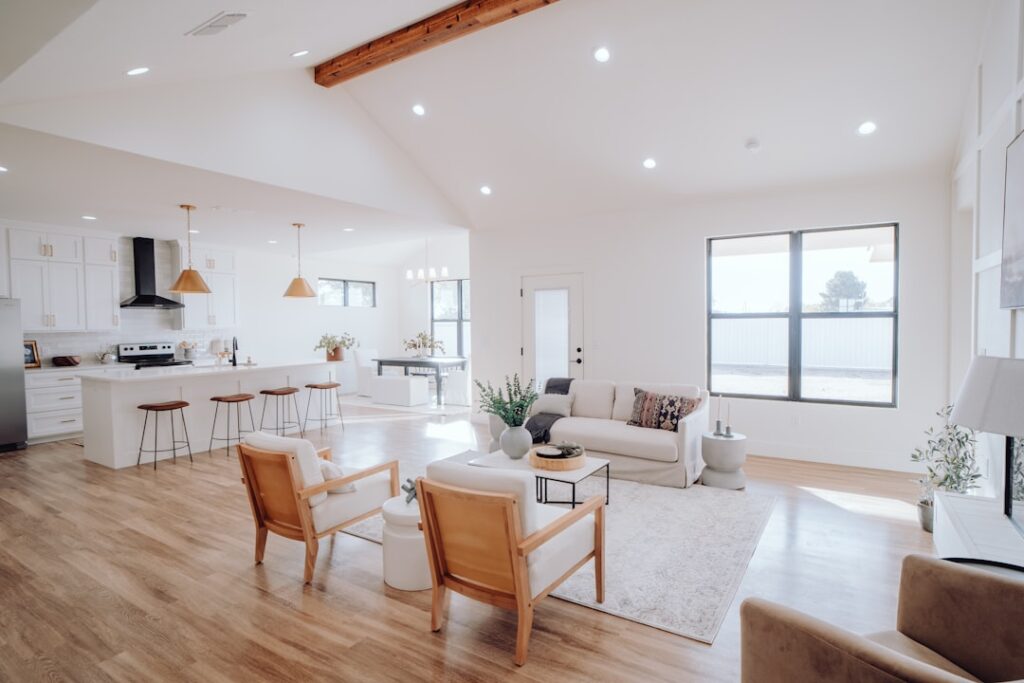
Searching for Vail flooring can lead you to a retailer, an installer, or a product line carried by a showroom, and the name alone does not tell you which. That ambiguity is exactly why a careful buyer slows down before committing. Whether you are looking at a company or a specific floor product, the smart move is to verify what you are actually buying, confirm the warranty, and compare it against the broader market. This guide gives you a practical framework for evaluating any flooring source by that name, plus the material knowledge you need to make a confident choice.
Start by Confirming What You Are Buying
The first step is figuring out whether “Vail flooring” refers to a store, a contractor, or a manufactured product. Each carries different questions. For a retailer or installer, you want licensing, insurance, references, and clarity on which brands they carry. For a product line, you want the manufacturer name, the material type, the wear layer or finish, and the warranty document. Verify any claim through the manufacturer’s official website rather than taking a salesperson’s word for it.
Reputable sources answer these questions readily and provide spec sheets on request. If you cannot pin down who makes the product or what the warranty covers, treat that as a reason to keep shopping rather than a detail to sort out later.
How to Vet the Source
A short, consistent checklist protects you regardless of what the company turns out to be.
- Legal name and history: Confirm the registered business name and how long it has operated.
- License and insurance: For installation work, verify state or local licensing and active liability coverage.
- Itemized estimates: Insist on quotes that separate material, labor, subfloor prep, and disposal.
- Reviews and references: Read recent reviews across multiple platforms and call two or three references.
- Sample policy: Good sellers let you take samples home to view in your own lighting.
Match the Material to Your Project
No matter which company you choose, the material drives the long-term result far more than the brand on the storefront. Here is how the main options compare.
Luxury Vinyl Plank
LVP is the go-to for households with kids, pets, or moisture-prone rooms. Expect roughly $3 to $7 per square foot for material, with a 20-mil wear layer signaling serious durability. It is waterproof and installs as a floating click-lock floor over most subfloors.
Engineered and Solid Hardwood
Engineered hardwood, at about $5 to $12 per square foot, offers real wood with better stability over concrete and in changing climates. Solid hardwood costs more and can be refinished multiple times, but it is more sensitive to moisture and humidity swings.
Laminate and Tile
Laminate delivers a wood look for $1 to $4 per square foot with strong scratch resistance. Porcelain tile, at $3 to $10 per square foot installed, is the most durable pick for bathrooms and entryways, though it is hard and cold underfoot.
Pros of Buying From a Dedicated Flooring Source
Working with a specialized retailer or installer rather than a general big-box store has clear upsides. You get hands-on samples, full-board displays, and advice tailored to your rooms and climate. A local installer can spot subfloor issues, recommend the right underlayment, and stand behind the labor with a warranty you can actually enforce nearby.
- Expert, climate-aware product guidance
- Take-home samples and realistic displays
- Accountable local installation and follow-up
- Manufacturer-authorized work that preserves warranties
Cons and Things to Watch
The downsides tend to come from inconsistency rather than the concept itself. Pricing can run higher than discount channels, and quality varies sharply between companies. Some operations subcontract installation to crews you never meet, and aggressive upselling toward high-margin products is common. Protect yourself by reading the contract closely, confirming who performs the work, and refusing to pay the full balance until a signed final walkthrough.
Questions to Ask Before You Buy
- Which manufacturers and product lines do you carry, and can I see the specs?
- Are your installers employees or subcontractors?
- What does the labor warranty cover and for how long?
- How are subfloor problems handled if discovered mid-job?
- Can you provide recent local references and take-home samples?
Red Flags to Avoid
A few warning signs should stop you cold. Be cautious of any seller who refuses to itemize a quote, cannot name the manufacturer behind a product, demands large upfront deposits, or pressures you to sign immediately to lock in a “today only” price. Quality floors and reputable installers do not rely on artificial urgency.
Comparing Material Options Side by Side
It helps to weigh the major materials against each other before settling on one. Each suits a different priority, and the best choice depends on your rooms, budget, and tolerance for maintenance.
- Best for moisture: Waterproof LVP and porcelain tile win in kitchens, baths, and basements.
- Best for resale value: Real engineered or solid hardwood adds the most perceived value in living areas.
- Best for budget: Laminate and basic vinyl stretch a tight remodel the furthest.
- Best for comfort underfoot: Wood and cushioned vinyl feel warmer than cold, hard tile.
- Best for durability: Porcelain tile and thick-wear-layer LVP handle the hardest use.
Planning Your Budget
Beyond the per-square-foot material price, build a realistic budget that includes the often-overlooked extras. Subfloor preparation, removal and disposal of old flooring, underlayment, transition strips, and trim all add to the total. A good rule is to add 7 to 10 percent to your square footage for waste and cuts, then collect itemized quotes so you can see exactly where the money goes. Comparing three bids on identical scope reveals which company is fair and which is padding the estimate. Never let a single low number tempt you without confirming what it leaves out.
The Bottom Line
Approach Vail flooring the way you would any unfamiliar source: confirm who they are, verify the product and warranty through the manufacturer, and gather several itemized quotes before deciding. The material you choose and the quality of installation will matter far more over the next 15 to 25 years than the name on the sign. Take samples home, ask the hard questions, and let clear answers, not sales pressure, guide your decision. A little diligence now buys you a floor you will be glad you chose every day you walk on it.
Prefer to explore on your own?
See how new flooring looks in your actual room in seconds — free, no signup.
Try the free Floor Studio →