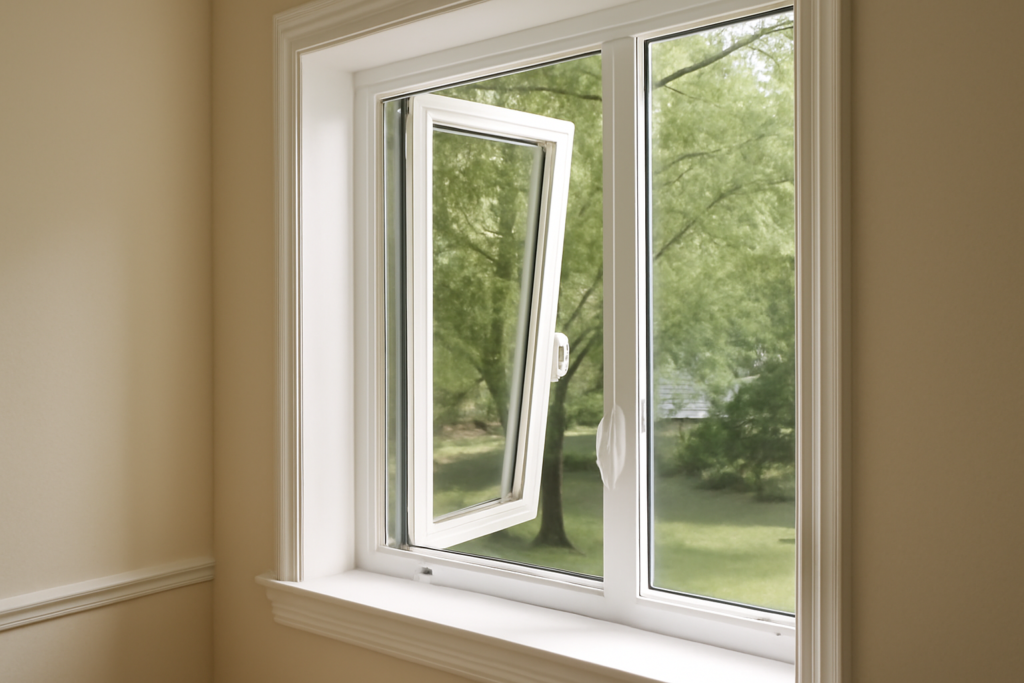
For a window that seals tight and catches a summer breeze, few designs beat the casement. Vinyl casement windows hinge on the side and swing open like a door using a hand crank, combining the energy efficiency and low maintenance of a vinyl frame with the airtight seal and wide ventilation that casements are known for. They are a popular replacement choice for kitchens, bedrooms, and anywhere you want a clear view and easy operation. Before you buy, it helps to understand how they work, where they shine, and where another style might serve you better.
How Casement Windows Work
A casement window is hinged on one side and opens outward, operated by a crank handle rather than sliding up or sideways. When you close it, the sash presses against the frame and the locking mechanism pulls it tight, creating a compression seal all the way around. That compression seal is the casement’s signature advantage: it blocks drafts far better than a sliding window, which relies on overlapping panels that can leak air.
Vinyl, made from rigid PVC, is the frame material here. It resists moisture, never needs painting, and insulates well because the hollow chambers in the frame trap air. Combine the frame with the casement design and you get one of the more energy-efficient operable window types available.
Advantages of Vinyl Casement Windows
These windows earn their popularity for several reasons:
- Excellent air sealing: The compression seal makes them among the most airtight operable windows.
- Wide ventilation: Because the entire sash swings open, you get the full opening for airflow.
- Unobstructed views: No center sash rail breaks up the glass like a double-hung window.
- Easy operation: A crank opens them with minimal effort, useful over a sink or counter.
- Low maintenance: Vinyl never needs paint and wipes clean easily.
- Energy efficiency: The tight seal plus an insulating frame helps lower heating and cooling costs.
The crank operation makes them especially handy in hard-to-reach spots like above a kitchen counter, where reaching across to lift a heavy sash would be awkward.
Drawbacks to Consider
No window is perfect, and casements have a few limits. They swing outward, so they can interfere with porches, walkways, or patios where the open sash would project into a path. They are also not ideal for window air conditioners, which need a sliding or double-hung opening to sit in.
The crank mechanism and hinges are moving parts that can eventually wear or need adjustment, unlike the simpler hardware on a fixed or double-hung window. And while quality vinyl is durable, very large casement sashes can be heavy on their hinges over time, so most manufacturers cap how wide a single casement can be. For very large openings, you may need a different style or a combination of units.
Energy Efficiency Features
If efficiency is a priority, look beyond the frame to the glass package. Key features to ask about include:
- Double or triple-pane glass: Multiple panes with insulating gas fills cut heat transfer.
- Low-E coatings: Thin metallic layers that reflect heat, keeping homes cooler in summer and warmer in winter.
- Insulating gas fill: Argon or krypton between panes for better insulation than plain air.
- ENERGY STAR rating: A certification that the window meets efficiency standards for your climate zone.
Check the window’s U-factor and Solar Heat Gain Coefficient on its label, and choose values suited to your climate. A well-specified vinyl casement can noticeably reduce drafts and energy bills compared with an old, leaky window.
Cost Considerations
Pricing varies widely with size, glass package, brand, and installation, so treat any figure as a general range. As a rough guide for U.S. homeowners, vinyl casement windows often run a few hundred dollars per window for the unit, with installed costs typically higher once labor, trim, and disposal of the old window are included. Larger windows, premium glass packages, and custom sizes push the cost up.
Get multiple quotes and ask each installer to itemize the unit price, labor, and any extra charges. Spending a bit more on a quality vinyl frame and a good glass package usually pays off in lower energy bills and fewer problems over the life of the window.
Casement vs Other Window Styles
Choosing a window style comes down to how you want it to open and where it sits in the house. Compared with double-hung windows, the most common style in American homes, casements seal tighter and ventilate better because the whole sash swings out, but double-hungs are easier to fit a window air conditioner into and do not project outward. Compared with sliding windows, casements again seal better and offer a clearer view without a center frame, though sliders are simpler with no crank to maintain.
Awning windows, hinged at the top and swinging outward at the bottom, are close cousins of casements and share the tight compression seal; they shed rain well and work above doors or low on a wall. Picture windows are fixed and do not open at all, so they offer the best efficiency and view but no ventilation. For a kitchen over a sink, a bedroom that needs egress, or any spot where you want maximum airflow and a tight seal, the casement is often the best operable choice. For a room that needs a window AC unit or where an outward-swinging sash would block a walkway, a double-hung or slider makes more sense. Matching the style to the room’s function and exterior space ensures you are happy with the window long after the install.
Care and Maintenance
One of vinyl’s best traits is how little it asks of you. Clean the frames with mild soap and water and a soft cloth; avoid abrasive cleaners that could scratch the surface. Wash the glass as you would any window, and because casements open fully, you can usually reach the exterior glass from inside for easy cleaning.
The moving parts deserve occasional attention. Once or twice a year, wipe debris from the hinge tracks and apply a light lubricant to the crank mechanism and hinges to keep operation smooth. Check the weatherstripping for wear and replace it if it gets brittle, since that seal is what makes the casement so airtight. With this simple routine, a quality vinyl casement window can serve reliably for decades while keeping your home comfortable and efficient.