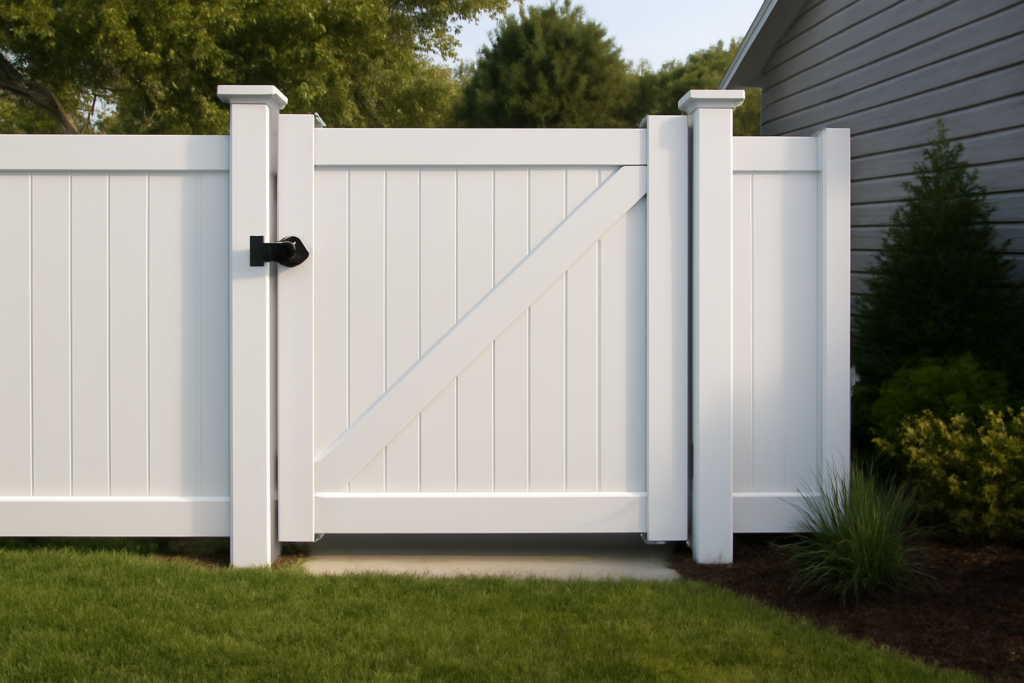
A failing gate is almost always the first part of a fence to give up, and a poorly built vinyl fence gate will sag, drag, or refuse to latch within a single season. The panels themselves are the easy part. The gate is where weight, hinges, and a swinging hole in an otherwise rigid fence line all meet, so it demands more planning than people expect. Get the framing and hardware right, though, and a vinyl gate will outlast most wood gates by years while never needing paint or stain.
Why Vinyl Gates Behave Differently Than Wood
Vinyl fence sections are made from hollow PVC rails and pickets, which keeps them light and rot-proof. That same hollow construction is a weakness at the gate, where concentrated stress at the hinge side wants to twist the frame out of square. Quality manufacturers solve this by inserting aluminum or galvanized steel stiffeners inside the gate’s vertical and horizontal rails. If you are buying a kit, confirm those internal reinforcements are included. A bare hollow vinyl frame with no metal inside is the single most common reason a gate starts sagging.
Because vinyl flexes slightly in heat and contracts in cold, leave consistent gaps. A typical gate gets about 3/8 to 1/2 inch of clearance at the latch side and a similar reveal under the bottom rail so it does not scrape the ground as the season shifts.
Standard Sizes and Sizing Your Opening
Walk gates usually run 36 to 48 inches wide, with 48 inches being the friendly size for moving a wheelbarrow or trash cans through. Drive gates for a yard or RV pad are often built as double gates, each leaf 60 inches wide for a 10-foot opening, or wider with a drop rod stabilizing the inactive leaf.
- Standard walk gate: 36 in. or 48 in. wide, 48 to 72 in. tall
- Double drive gate: two leaves spanning 8 to 16 ft total
- Post spacing: add gate width plus hinge and latch hardware allowance, often 1.5 to 2 in. extra
Measure the finished opening between the inside faces of the gate posts, not the post centers. That single mistake forces more do-overs than any other.
Choosing the Right Posts and Footings
Standard fence line posts are not strong enough to carry a swinging gate over time. Use heavier gate posts, ideally reinforced with an aluminum insert or a wood or steel core, and set them deeper. Plan on a footing roughly one-third the post height and at least below your local frost line. In most regions that means a hole 24 to 36 inches deep filled with concrete. Brace the posts plumb and let the concrete cure for a day or two before you ever hang the gate.
Hardware That Actually Holds Up
Hinges and latches make or break a gate. Skip the lightweight hardware bundled with bargain kits and choose self-closing or adjustable hinges rated for the gate’s weight. Stainless steel or powder-coated hardware resists the rust streaks that plague cheap zinc parts.
- Hinges: two minimum, three for tall or wide gates; adjustable models let you fine-tune sag
- Latch: gravity or magnetic latch; pool-code gates require a self-latching unit mounted high
- Drop rod: required for the stationary leaf of a double gate
- Anti-sag kit: a steel cable and turnbuckle running corner to corner straightens a drooping frame
Installation Steps in Order
Hang the gate only after the posts have fully set. Block the gate up to your desired bottom clearance with scrap wood, hold it level, then mark and attach the hinges. Test the swing before drilling the latch side. A gate that swings clean but will not latch usually just needs the latch shimmed a fraction of an inch.
- Confirm posts are plumb and concrete is cured
- Shim the gate to final height and check it is level
- Fasten hinges to the post, then to the gate frame
- Swing-test, then mount the latch to align with the catch
- Install an anti-sag cable as insurance on wider gates
Fixing a Sagging Gate
A gate that drags at the latch corner is the classic failure. First check the hinge screws, since loosened fasteners account for many droops. If the frame itself has racked out of square, install an anti-sag turnbuckle running from the top hinge corner down to the bottom latch corner, then tighten until the gate pulls back square. Confirm the internal metal reinforcement is intact, because a hollow gate that has lost its stiffener will keep sagging no matter how many cables you add.
Maintenance and Cost
Maintenance is refreshingly simple. Rinse the vinyl with a hose, scrub stubborn spots with mild soap and water, and lubricate hinges once or twice a year. Avoid abrasive pads that dull the finish.
For budgeting, a basic prefabricated walk gate kit typically runs about $100 to $300, while a reinforced double drive gate with quality hardware can reach $400 to $1,000 or more. Professional installation, including gate posts and concrete, often adds $200 to $600 depending on access and labor rates in your area. Treat these as general ranges, since local pricing and material grade swing the numbers considerably.
Common Mistakes to Avoid
Most gate failures trace back to a handful of avoidable errors, and knowing them in advance saves a frustrating do-over. The biggest is buying a hollow gate with no internal metal reinforcement, which guarantees sag over time. A close second is using standard fence-line posts instead of dedicated, deeper-set gate posts, since the load of a swinging gate quickly works ordinary posts loose. People also tend to hang the gate before the concrete footings have cured, which lets the posts shift under the new weight.
Two more pitfalls catch homeowners off guard. Forgetting to leave clearance gaps means the gate binds or scrapes once summer heat expands the vinyl. And skipping the swing test before mounting the latch leads to a gate that opens fine but never closes flush. Slow down, set the posts solidly, and dry-fit everything before committing to fasteners.
Choosing Between a Kit and Custom
Most homeowners do well with a prefabricated gate kit sized to match their existing fence line, since the components come matched and pre-reinforced. Custom-built gates make sense only for oversized openings, unusual angles, or a specific decorative style your fence brand does not offer. If you do go custom, insist on aluminum or steel framing inside the vinyl and oversized hinges. Either way, buy a gate from the same manufacturer or line as your fence so the color, picket style, and rail dimensions match seamlessly rather than standing out as an obvious add-on.
The Bottom Line
A vinyl fence gate rewards the homeowner who respects three details: metal-reinforced framing, oversized and deeply set gate posts, and hardware rated for the load. Nail those, leave proper clearance gaps for thermal movement, and add an anti-sag cable on anything wide, and you will have a gate that latches cleanly for many years with almost no upkeep.