After installing thousands of square feet of it across kitchens, basements, and rental units, I can tell you the honest truth about vinyl plank flooring pros and cons without the marketing gloss. This product has quietly become the most-installed floor in America for good reasons, but it is not the miracle material that some showroom salespeople make it out to be. Knowing where it shines and where it falls short will save you money and regret.
Vinyl plank, whether you are looking at luxury vinyl plank (LVP) or the newer rigid-core options like SPC (stone plastic composite) and WPC (wood plastic composite), sits in a sweet spot between price and performance. Before you put down a deposit, walk through the full picture with me.
- What Vinyl Plank Flooring Actually Is
- The Real Pros: Where Vinyl Plank Earns Its Keep
- The Real Cons You Should Not Ignore
- Resale Value and the Real-Wood Question
- Environmental and Indoor Air Considerations
- Installation: DIY or Hire a Pro
- Comparing Vinyl Plank to the Alternatives
- How to Shop Smart and Avoid Regret
- My Verdict After Years on the Job
What Vinyl Plank Flooring Actually Is
Vinyl plank is a multi-layer synthetic flooring designed to mimic hardwood. A typical plank runs 5 to 9 inches wide and 48 to 60 inches long, with total thickness ranging from about 4mm on budget lines to 8mm or more on premium rigid-core products. The magic is in the layers: a printed film layer photographs real wood grain, a clear wear layer protects it, and a rigid or flexible core provides stability underfoot.
The wear layer is the number that matters most. It is measured in mils (thousandths of an inch), and for a busy household you want at least 12 mil, ideally 20 mil. That single spec separates a floor that looks new in ten years from one that scuffs through in three. Brands like Shaw, Coretec, Mohawk, and Lifeproof from Home Depot all publish this number, so compare apples to apples.
The Real Pros: Where Vinyl Plank Earns Its Keep
Water resistance is the headline benefit, and it is genuine. Rigid-core SPC planks are effectively waterproof, meaning a spilled glass of wine, a leaking dishwasher, or a mopping accident will not swell or ruin the boards the way it destroys laminate or solid hardwood. This is why I recommend it constantly for kitchens, bathrooms, mudrooms, and below-grade basements where other floors simply cannot go.
The cost is another strong point. Material typically runs $2 to $5 per square foot, with professional installation adding another $1.50 to $4. Compare that to $8 to $15 per square foot installed for real hardwood, and the savings on a 1,000-square-foot main level are substantial. Many homeowners install it themselves because the click-lock joints snap together without glue, nails, or special tools beyond a tapping block and a utility knife.
Comfort and quiet round out the advantages. Vinyl plank is warmer and softer underfoot than tile or engineered wood, and rigid-core versions with an attached cork or foam pad deaden sound nicely. Maintenance could not be simpler either: sweep, damp-mop, and skip the wax and refinishing that hardwood demands.
The Real Cons You Should Not Ignore
Now for the honest part of the vinyl plank flooring pros and cons discussion. This floor cannot be refinished. Once the wear layer is compromised, your only option is replacement. Hardwood can be sanded and refinished five or six times over its lifetime, giving it a potential lifespan of 50 to 100 years. Vinyl plank realistically lasts 15 to 25 years before it looks tired.
It also dents and can be gouged. Drop a cast-iron skillet or drag a refrigerator across softer WPC planks and you may leave a permanent mark. Heavy furniture legs need felt pads, and I always warn clients that a floor with a thin wear layer will show scratches from a dog’s nails within a couple of years.
Heat and sunlight are the other enemies. Direct sun through a south-facing window can fade the print over time, and cheaper flexible vinyl can expand and contract enough to gap or buckle if the room swings between hot and cold. Rigid-core products handle temperature far better, which is one more reason to spend up rather than buy the bargain-bin box.
Resale Value and the Real-Wood Question
Here is something showrooms rarely mention. High-end buyers and appraisers still value genuine hardwood more than the best vinyl plank. If you are flipping a mid-market home or updating a rental, vinyl plank is a smart, cost-effective choice that photographs beautifully and appeals to renters. But in a luxury home where buyers expect solid oak or walnut, a synthetic floor can slightly undercut perceived value even when it looks convincing.
For most homeowners staying put for a decade, the resale nuance is irrelevant. You will enjoy the practicality and low maintenance far more than you will ever feel the resale difference.
Environmental and Indoor Air Considerations
Vinyl is a plastic product, primarily PVC, and it is not biodegradable. Some older or imported vinyl flooring released volatile organic compounds (VOCs) and, in a few cases, phthalates. The good news is that reputable North American brands now carry FloorScore certification, which caps VOC emissions to safe indoor levels. If air quality matters to you, look for that certification on the box and let a new floor off-gas with the windows open for a day or two after installation.
Installation: DIY or Hire a Pro
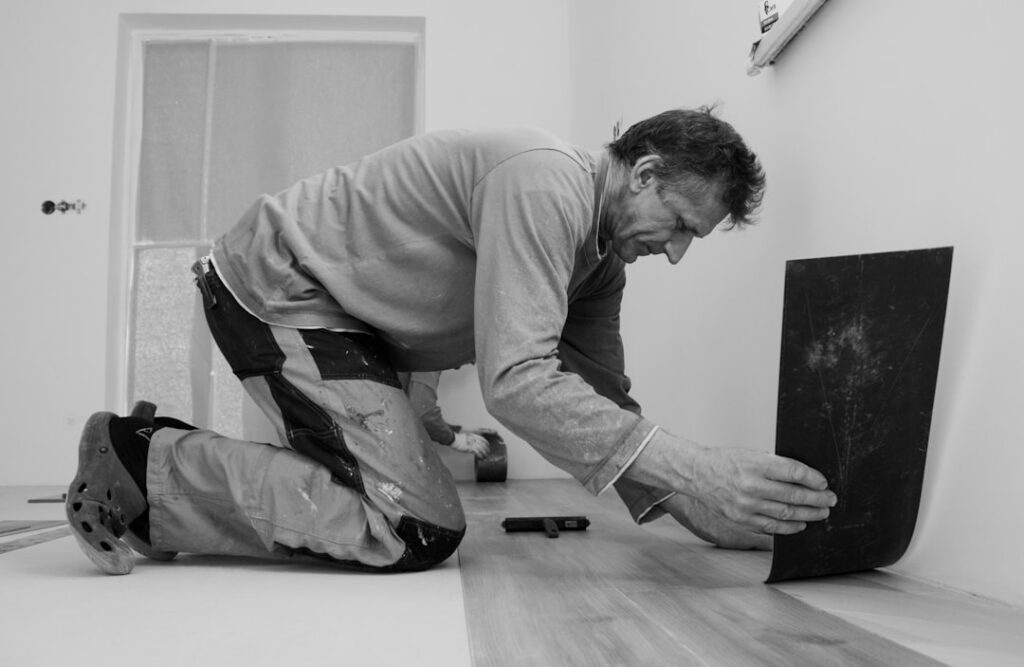
One of the genuine joys of this product is how forgiving it is to install. Floating click-lock planks do not need to be fastened to the subfloor, so they tolerate minor imperfections and can go right over existing tile or vinyl. That said, the subfloor still needs to be clean, dry, and flat within about 3/16 inch over 10 feet. Skip the prep and you will feel every hump and hollow underfoot, and the seams may eventually separate.
A confident weekend warrior can lay a 200-square-foot room in a day. For large open-concept spaces, stairs, or intricate layouts, a pro is worth the $1.50 to $4 per square foot because they will handle transitions, expansion gaps, and undercutting door jambs cleanly.
Comparing Vinyl Plank to the Alternatives
The clearest way to judge vinyl plank is to hold it against its rivals. Against laminate, vinyl plank wins decisively on water resistance, since laminate’s fiberboard core swells permanently when water reaches it, while a good SPC plank shrugs off standing water for hours. Laminate does, however, often produce a slightly crisper, more embossed wood texture and can feel harder underfoot, which some people prefer.
Against engineered hardwood, vinyl plank costs roughly half as much installed and handles moisture far better, but it gives up the authenticity and refinishing potential of a real wood veneer. Against ceramic or porcelain tile, vinyl plank is warmer, quieter, softer on dropped dishes, and dramatically cheaper to install, though tile still outlasts it and resists heat and scratching better. Seeing where vinyl plank lands in that lineup makes the tradeoffs concrete rather than abstract.
How to Shop Smart and Avoid Regret
When you walk into a showroom or scroll an online store, a handful of specs separate a floor you will love from one you will replace early. Beyond the wear layer I keep hammering on, check the total plank thickness, the core type, and whether an attached underlayment pad is included, since adding pad separately costs $0.30 to $0.60 a square foot.
- Wear layer: 20 mil for homes with kids or pets, 12 mil minimum for light traffic.
- Core: rigid SPC for stability and dent resistance, WPC for a softer, warmer feel.
- Thickness: 5mm or greater for a solid, quality feel underfoot.
- Warranty: reputable brands back residential use for 15 to 25 years; read what actually voids it.
One more practical tip: buy 10 percent extra and keep a box in the garage. Discontinued patterns are the bane of spot repairs, and having matching planks on hand means a gouged board can be swapped years later instead of forcing a whole-room replacement.
My Verdict After Years on the Job
Vinyl plank flooring is the right call for the vast majority of practical, budget-conscious households, especially anywhere water is a concern. It delivers a wood look, waterproof performance, and easy upkeep at roughly half the installed cost of hardwood. Just go in clear-eyed: buy a thick wear layer of at least 20 mil, choose rigid-core SPC over flexible planks, and accept that you are trading refinishing and multi-generational lifespan for convenience and value. Weigh those vinyl plank flooring pros and cons against how you actually live, and you will land on the right floor.
Prefer to explore on your own?
See how new flooring looks in your actual room in seconds — free, no signup.
Try the free Floor Studio →