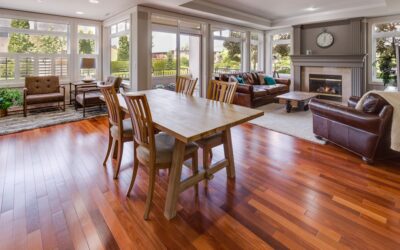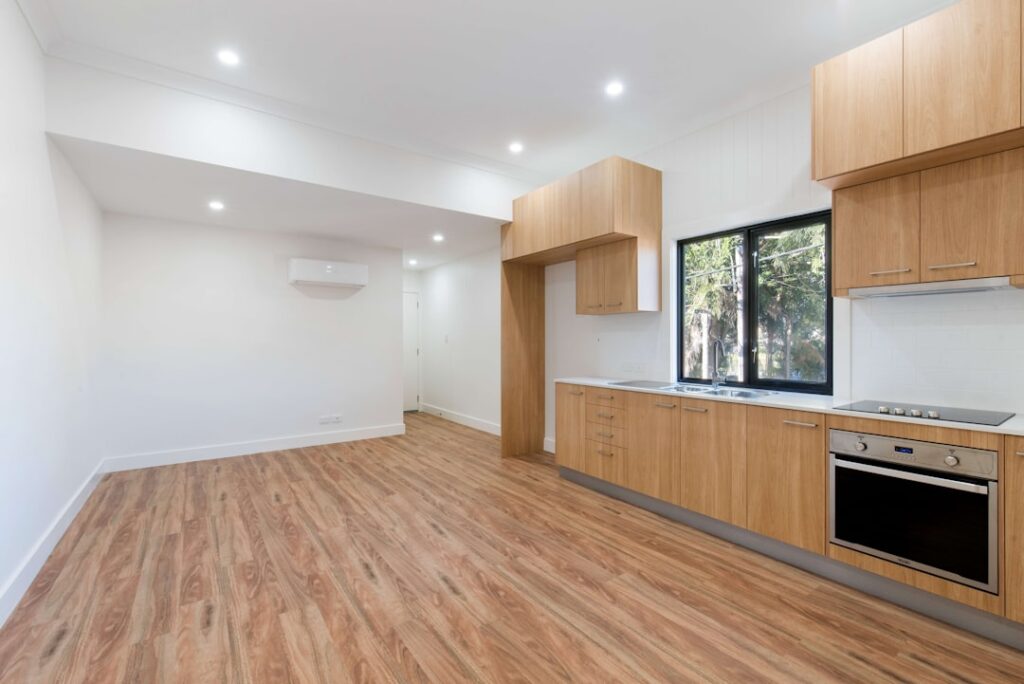
The single biggest mistake homeowners make is trying to match their floor to their cabinets exactly. When you pair vinyl plank flooring with oak cabinets, the goal is contrast and complementary undertones, not a perfect twin. Oak has a strong yellow-gold or orange bias that clashes badly with the wrong floor, and once the planks are down, you are stuck with the pairing for a decade or more. Get the undertone relationship right and even builder-grade oak looks intentional and warm.
Part of our Kitchen Remodeling guide — explore the full guide →
- Know Your Oak’s Undertone First
- Best Vinyl Plank Colors for Honey and Golden Oak
- Best Pairings for White and Cool Oak
- Should the Floor Be Lighter or Darker Than the Cabinets?
- Grain and Finish Matter as Much as Color
- Sample Before You Commit
- Popular Combinations That Work
- Coordinating Countertops and Wall Color
- Lighting Changes Everything
- The Bottom Line
Know Your Oak’s Undertone First
Before you shop for a single plank, identify what kind of oak you actually have. Honey oak and golden oak, common in kitchens built from the 1990s through the early 2000s, carry a warm orange-yellow cast. Red oak leans pink and rose. White oak, the current darling of new construction, has a cooler taupe-gray base with far less yellow. Weathered or limed oak sits somewhere neutral.
Hold a plain sheet of white printer paper against a cabinet door in daylight. If the wood looks orange next to the paper, you have warm oak and need to counterbalance it. If it looks brownish-gray, you have a cooler oak that gives you more freedom. This five-second test saves you from ordering the wrong floor.
Best Vinyl Plank Colors for Honey and Golden Oak
Warm oak is the trickiest to pair because its yellow-orange undertone can make a matching yellow floor look dated fast. Your best move is to cool the room down with the floor. Look for luxury vinyl plank in these directions:
- Greige and warm gray — planks with a gray base and a faint beige warmth read as neutral and keep the oak from looking orange
- Weathered or driftwood tones — muted brown-gray planks add contrast without fighting the cabinets
- Medium walnut browns — a brown a few shades darker than the oak grounds the room and reads richer
Avoid honey-toned, yellow, or reddish LVP with warm oak. Two competing warm woods in the same room create a muddy, mismatched look that most buyers read as “unrenovated.” A cooler floor does the opposite: it makes the oak feel deliberate.
Best Pairings for White and Cool Oak
White oak cabinets are forgiving. Their neutral base plays well with warm and cool floors alike, which is why designers love them. Natural oak-look vinyl plank in a light-to-medium tone creates a seamless, airy Scandinavian feel. If you want more definition, a mid-brown or smoky gray plank gives contrast while staying in the same cool family.
One caution: if your cabinets and floor are both very light oak with identical grain, the kitchen can feel flat and washed out. Introduce contrast through a darker island, black hardware, or a bolder countertop so the eye has somewhere to land.
Should the Floor Be Lighter or Darker Than the Cabinets?
As a rule of thumb, keep at least two to three shades of separation between your oak cabinets and the floor. Same-value pairings blur together and make a space feel smaller. You have two safe directions:
- Floor darker than cabinets — a medium-to-dark plank under honey oak grounds the room and hides dirt and pet hair well
- Floor lighter than cabinets — a pale greige plank brightens a small or north-facing kitchen and makes the cabinets the visual anchor
Darker floors show dust and footprints more readily, especially in matte finishes. Lighter floors hide dust but reveal crumbs and hair. Neither is wrong, but factor in how much you want to sweep.
Grain and Finish Matter as Much as Color
Color gets all the attention, but the surface texture of your vinyl plank changes the whole pairing. Oak cabinets have a pronounced open grain. A high-gloss, smooth LVP next to textured oak looks cheap and mismatched. Instead, choose planks with an embossed-in-register (EIR) texture that mimics real wood grain and a low-sheen matte or satin finish. The subtle texture ties the floor to the cabinetry even when the colors differ.
Plank width also sends a signal. Wide planks, 7 inches and up, read modern and pair well with updated white oak. Narrower 5-inch planks feel more traditional and suit older honey oak kitchens. Match the plank’s formality to the cabinet’s vibe.
Sample Before You Commit
Never choose a floor from an online swatch or a tiny store chip. Order full-size sample planks, typically $2 to $5 each or free from many retailers, and lay them directly on your existing floor next to the cabinets. View them at three times of day: morning light, harsh afternoon sun, and warm evening bulbs. Vinyl that looks neutral gray in the showroom can flash purple or green under your kitchen’s lighting.
Tape three or four candidate planks side by side and live with them for a few days. Take phone photos, which flatten color and often reveal a clash your eye missed in person. This $15 experiment prevents a $3,000 mistake.
Popular Combinations That Work
If you want proven starting points, these pairings consistently look intentional:
- Honey oak cabinets + warm greige LVP — the most reliable fix for dated kitchens without repainting
- White oak cabinets + natural light oak LVP — clean, current, and bright
- Red oak cabinets + smoky gray-brown LVP — the gray tempers the pink undertone
- Golden oak cabinets + medium walnut LVP — rich, grounded, and forgiving with dirt
Expect quality luxury vinyl plank to run $2.50 to $5.50 per square foot for the material, with rigid-core SPC options in the higher range. Budget another $1.50 to $4 per square foot for professional installation if you are not doing it yourself.
Coordinating Countertops and Wall Color
The floor and cabinets don’t live in isolation. Your countertop and wall color either resolve the pairing or sabotage it. With warm honey oak cabinets and a cool greige floor, a white or light-gray quartz counter bridges the two temperatures and keeps the room balanced. Avoid a beige or gold-flecked granite that doubles down on the oak’s warmth, which is what makes so many older kitchens read as dated.
Wall color does heavy lifting too. A soft warm white like a creamy off-white flatters honey oak without competing, while a cool gray-blue can help a greige floor feel intentional. Paint a poster board in your candidate color and prop it against the cabinets and a floor sample before you commit a whole room to it.
Lighting Changes Everything
Two identical planks can look like different products depending on the bulbs overhead. Warm 2700K bulbs push a greige floor toward beige and amplify oak’s orange; cooler 3500K to 4000K bulbs pull the same floor toward gray and calm the oak down. North-facing kitchens receive cool, flat daylight that makes floors look grayer, while west-facing rooms get warm afternoon light that intensifies yellow tones.
Before you finalize a pairing, view your samples under the exact bulbs your kitchen uses, at the times of day you use the room most. If you’re mid-renovation, decide on bulb color temperature and floor at the same time, because changing one shifts the other.
The Bottom Line
Choosing vinyl plank flooring with oak cabinets comes down to reading the wood’s undertone and then deliberately contrasting it. Cool the room with greige or gray under warm honey oak, lean into natural light tones with white oak, and always keep two to three shades of separation between floor and cabinet. Add texture through an EIR matte plank, sample in your own light, and you will land on a pairing that looks like a designer planned it, not an accident of what was on sale.
Prefer to explore on your own?
See how new flooring looks in your actual room in seconds — free, no signup.
Try the free Floor Studio →