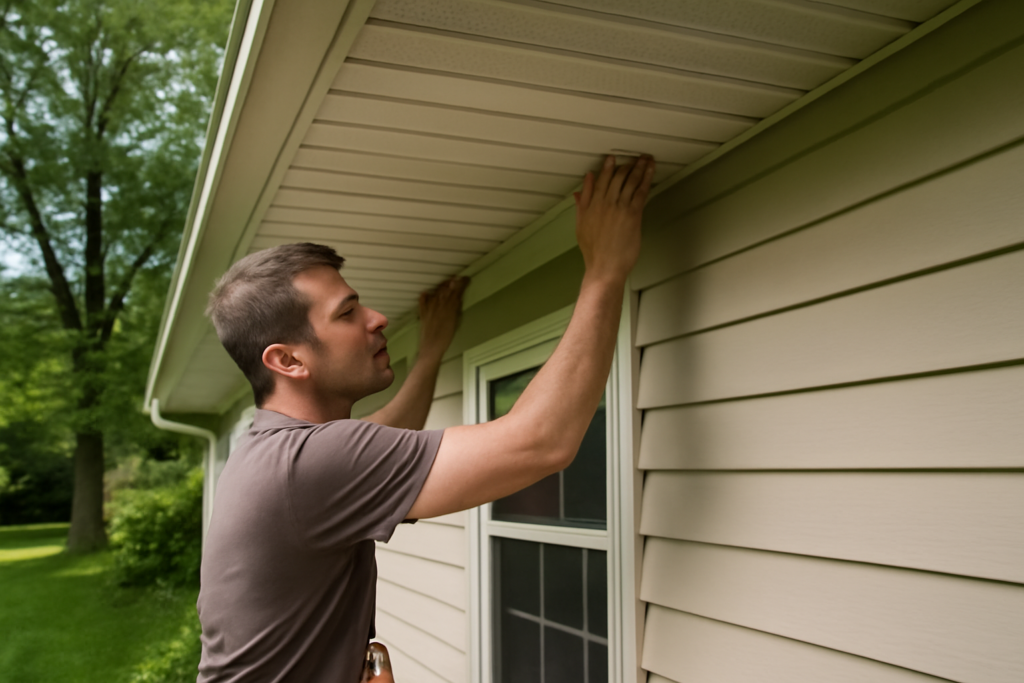
Look up at the underside of your roof’s overhang and you are looking at the soffit, an easy-to-overlook component that quietly does a critical job. Vinyl soffit is the most popular material for finishing and protecting these eave undersides because it is durable, low-maintenance, and built to ventilate your attic. It seals out pests and weather while letting air flow into the attic to prevent moisture and heat buildup. Whether you are building, re-siding, or repairing damage, understanding vinyl soffit helps you make the right call.
What a Soffit Does
The soffit is the finished surface on the underside of your roof overhang, spanning from the edge of the roof back to the exterior wall. It serves two main purposes. First, it closes off the open space under the eaves, keeping out birds, insects, rodents, and wind-driven rain. Second, and just as important, vented soffit allows fresh air to enter the attic at the eaves, working with ridge vents to create the airflow that keeps your roof system healthy.
Without proper soffit ventilation, attics trap heat and moisture, which can lead to mold, rot, ice dams in cold climates, and a shorter roof lifespan.
Why Choose Vinyl
Vinyl has become the default soffit material for good reasons. It resists moisture, so it will not rot or warp the way wood can. It never needs painting, holds its color, and wipes clean easily. It is lightweight, relatively inexpensive, and straightforward to install. Compared with aluminum, vinyl will not dent and tends to cost less, though aluminum has its own advantages in certain applications.
For most homeowners, vinyl strikes the best balance of durability, appearance, and value for finishing the eaves.
Vented vs. Solid Soffit
Choosing the right type is the most important decision, because it directly affects attic ventilation:
- Vented soffit: Has perforations or slots that let air flow into the attic. Use it along the eaves to provide the intake ventilation your attic needs.
- Solid soffit: Has no openings and is used where ventilation is not needed, such as on gable ends, porch ceilings, or areas with no attic space behind them.
- Center-vented panels: Combine a solid look with a vented strip down the middle for a balanced appearance with airflow.
Getting the vented-to-solid balance right ensures your attic breathes properly without over- or under-ventilating.
Installation Basics
Vinyl soffit installs into a channel system. A receiving channel, often called an F-channel or J-channel, is attached to the wall (the fascia or wall side), and the soffit panels slide into the channels and run perpendicular to the wall. Panels should be cut to allow for vinyl’s expansion and contraction with temperature, leaving a small gap so they do not buckle in heat or pull apart in cold.
While a handy DIYer can install soffit, working safely at height on ladders or scaffolding is a real consideration. Many homeowners hire a siding or roofing contractor, especially when the work ties into new siding, fascia, and gutters. Proper flashing and integration with the fascia and drip edge keep water out.
What Vinyl Soffit Costs
As a general range, vinyl soffit material runs roughly $1 to $5 per square foot, with the associated fascia, channels, and trim adding to the total. Professional installation typically brings the installed cost to roughly $6 to $12 or more per linear foot of eave depending on overhang width, height, accessibility, and whether fascia and gutters are part of the job. Replacing soffit as part of a larger re-siding project is usually more cost-effective than doing it alone.
Maintenance and Longevity
One of vinyl soffit’s biggest selling points is how little it asks of you. Rinse it occasionally with a garden hose or wipe it with a soft brush and mild soapy water to remove dirt, cobwebs, and pollen. Inspect it once or twice a year for cracks, gaps, loose panels, or signs of pest intrusion, and clear any vents that have become blocked by dirt or paint overspray, which would choke off attic airflow. Quality vinyl soffit can last several decades with this minimal care.
Vinyl vs. Aluminum Soffit
Vinyl’s main competitor is aluminum, and each has trade-offs worth weighing. Vinyl will not dent, never needs painting, holds color well, and usually costs less, but it can become brittle in extreme cold and may sag over very wide spans if not properly supported. Aluminum is rigid and strong, performs well in harsh climates, and resists fire, but it dents easily, can corrode over time, and typically costs more.
- Vinyl soffit: Affordable, dent-proof, low-maintenance, color-stable; can get brittle in deep cold.
- Aluminum soffit: Rigid and durable in tough climates, fire-resistant; dents and costs more.
For most homes in most climates, vinyl offers the best value, though aluminum has a place in extreme-weather regions and on very wide overhangs.
Signs Your Soffit Needs Attention
Soffit problems often signal bigger roof or moisture issues, so it pays to know the warning signs. Watch for cracked, broken, or sagging panels, peeling paint on adjacent fascia, water stains, and any gaps where pests could enter. Inside the attic, signs of poor soffit ventilation include excessive heat, condensation, musty smells, or mold near the eaves. Birds, wasps, or rodents getting into the eaves usually mean a panel has failed somewhere. Addressing these promptly prevents rot in the roof structure and keeps your attic ventilation working as intended.
How Soffit Works With Fascia and Gutters
Soffit does not act alone; it works as part of the roof edge system alongside the fascia and gutters. The fascia is the vertical board that runs along the roof edge, carrying the gutters and capping the ends of the rafters, while the soffit closes off the underside beneath it. When you replace soffit, it often makes sense to address the fascia and gutters at the same time, since they all tie together and share the same access challenges. Proper integration, with the soffit tucked into channels and the fascia and drip edge directing water into the gutters, keeps moisture out of the roof structure and ensures the whole system sheds water as designed.
Is Vinyl Soffit Right for Your Home?
For nearly all homes, vinyl soffit is a durable, affordable, low-maintenance way to finish the eaves and ventilate the attic. Choose vented panels where airflow is needed and solid panels where it is not, install with proper expansion gaps and flashing, and keep the vents clear over time. Done correctly, vinyl soffit protects your roof structure, improves attic health, and gives your home’s exterior a clean, finished edge for decades to come.
Prefer to explore on your own?
See how new flooring looks in your actual room in seconds — free, no signup.
Try the free Floor Studio →