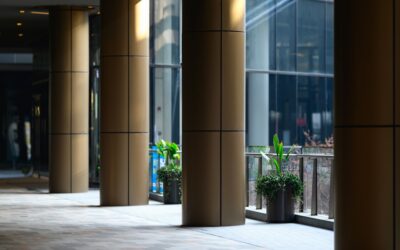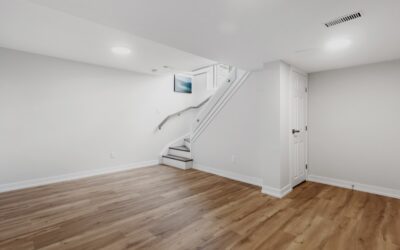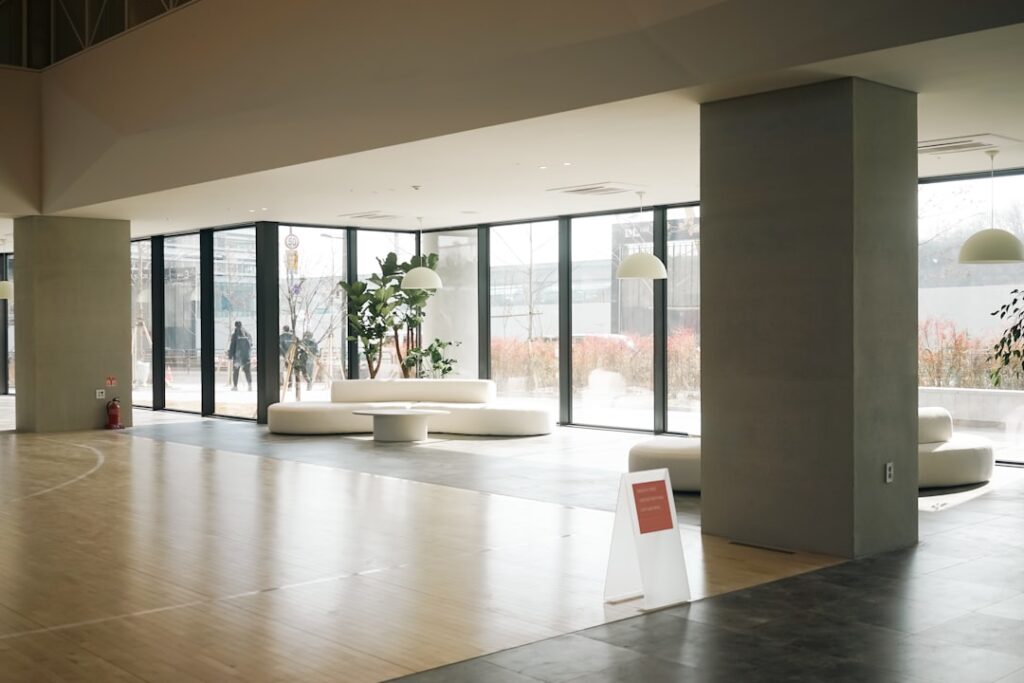
Walk into any hospital, retail store, school, or modern office and look down — there is a strong chance you are standing on commercial grade vinyl flooring. It dominates the commercial flooring market for good reason: it handles punishing foot traffic, resists stains and chemicals, meets stringent hygiene standards, and costs significantly less than stone, hardwood, or ceramic tile at scale.
This guide covers everything you need to know about commercial vinyl, from wear layer thickness and traffic classifications to sector-specific requirements and pricing. For general information about vinyl as a material, our vinyl flooring guide provides foundational knowledge.
- What Makes Vinyl “Commercial Grade”?
- Types of Commercial Vinyl Flooring
- Wear Layer Ratings Explained
- Traffic Classifications
- Healthcare Flooring Applications
- Retail and Hospitality Applications
- Office and Corporate Applications
- Education and Institutional Applications
- Installation Methods
- Maintenance and Lifecycle
- Pricing Guide
- Frequently Asked Questions
- What is the difference between commercial and residential vinyl flooring?
- Can I use commercial grade vinyl in my home?
- How long does commercial vinyl flooring last?
- Is commercial vinyl flooring waterproof?
- What is the best commercial vinyl for high-traffic areas?
- Does commercial vinyl flooring need waxing?
What Makes Vinyl “Commercial Grade”?
Commercial grade vinyl flooring differs from residential vinyl in several critical ways. The term is not just marketing — it reflects measurable performance characteristics that determine whether a floor can withstand the demands of high-traffic, high-abuse environments.
Wear Layer Thickness
The single most important distinction is wear layer thickness. Residential vinyl typically features a wear layer of 6 to 20 mils (0.006 to 0.020 inches). Commercial grade vinyl starts at 20 mils and ranges up to 40 mils or more. This thicker wear layer directly translates to longer service life under heavy foot traffic, rolling loads, and abrasive conditions.
Surface Treatments
Commercial vinyl includes enhanced surface treatments that residential products lack. Polyurethane (PU) coatings resist scuffing, staining, and bacterial growth. Some products feature ceramic-bead reinforcement in the wear layer for superior scratch resistance. These coatings also reduce maintenance requirements — a critical cost factor in commercial facilities where floors cover thousands of square feet.
Fire and Safety Ratings
Commercial vinyl must meet building code requirements for flame spread (ASTM E648) and smoke generation (ASTM E662). Products carry a Critical Radiant Flux (CRF) rating — Class I (0.45 watts/cm2 or greater) is required for corridors and exits in most commercial buildings. Residential vinyl is rarely tested to these standards.
Chemical Resistance
Healthcare, laboratory, and industrial commercial vinyl resists a broad range of chemicals including cleaning agents, disinfectants, solvents, and biological fluids that would damage or discolor residential products. This chemical resistance is built into both the wear layer formulation and the surface coating.
Types of Commercial Vinyl Flooring
Commercial vinyl is available in several formats, each suited to different applications and performance requirements.
Sheet Vinyl
Commercial sheet vinyl comes in 6-foot or 12-foot-wide rolls, creating seamless or near-seamless floors with minimal joints. This makes it the preferred choice for healthcare, clean rooms, and food processing facilities where hygiene and seamless surfaces are critical. Seams can be heat-welded to create a completely monolithic, watertight surface. Sheet vinyl thickness ranges from 2mm to 3.5mm, with homogeneous (same material throughout) and heterogeneous (layered construction) options.
Luxury Vinyl Tile (LVT)
Commercial LVT offers the widest range of design options — realistic wood, stone, concrete, and abstract patterns in tile or plank formats. It uses a click-lock or glue-down installation and provides excellent dimensional stability. Commercial LVT typically features a 20 to 40 mil wear layer and SPC (stone polymer composite) or WPC (wood polymer composite) cores for rigidity and moisture resistance.
Vinyl Composition Tile (VCT)
VCT is the traditional commercial flooring workhorse, found in schools, hospitals, and retail stores for decades. Made from a mixture of natural limestone, vinyl, and pigments throughout its thickness, VCT is extremely durable and can be stripped, refinished, and recoated multiple times over its 20 to 30-year lifespan. Its main drawback is higher maintenance requirements — regular waxing and buffing are necessary to maintain appearance.
Rubber-Backed Commercial Vinyl
Some commercial vinyl products feature an integrated rubber backing for enhanced acoustic performance, comfort underfoot, and impact resistance. These products are popular in healthcare settings where noise reduction and comfort for staff who stand for long shifts are priorities.
Wear Layer Ratings Explained
The wear layer is the transparent top coating that protects the decorative print layer from scratches, scuffs, stains, and wear. Understanding wear layer ratings is essential for selecting the right commercial grade vinyl flooring for your application.
Wear Layer Thickness by Application
| Wear Layer | Classification | Best For | Expected Lifespan |
|---|---|---|---|
| 12 – 20 mil | Light commercial | Small offices, boutiques, residential | 10 – 15 years |
| 20 – 28 mil | Commercial | Retail, restaurants, general offices | 15 – 20 years |
| 28 – 40 mil | Heavy commercial | Healthcare, schools, airports | 20 – 30 years |
| 40+ mil | Industrial/specialty | Warehouses, factories, labs | 25 – 35+ years |
Surface Coating Types
PUR (Polyurethane Reinforced): The most common commercial coating. PUR-treated vinyl resists scuffing, staining, and bacterial growth. It eliminates the need for polish or wax, reducing lifecycle maintenance costs by 30 to 50 percent compared to untreated products.
Ceramic-Bead Enhanced: Some manufacturers embed microscopic ceramic beads in the wear layer for extreme scratch resistance. This is common in healthcare and education products where wheeled equipment, chairs, and high grit loads test the floor surface constantly.
UV-Cured Coatings: Factory-applied UV-cured polyurethane provides a harder, more durable surface than air-dried coatings. Most premium commercial vinyl uses UV-cured finishes.
Traffic Classifications
Commercial flooring is classified by traffic intensity, and selecting the right classification prevents premature wear and costly replacement.
ASTM F1700 Classifications
The ASTM F1700 standard classifies vinyl flooring into three types based on composition and two classes based on performance. Class 1 is for moderate commercial traffic, and Class 2 is for heavy commercial traffic. These classifications consider abrasion resistance, dimensional stability, flexibility, and residual indentation from heavy loads.
EN 685 (European Classification)
The European EN 685 system uses a two-digit number where the first digit indicates the sector (2 = domestic, 3 = commercial, 4 = industrial) and the second indicates intensity (1 = light, 2 = moderate, 3 = heavy, 4 = very heavy). A Class 34 product handles very heavy commercial traffic — airports, transit stations, and busy retail corridors.
Matching Classification to Environment
Selecting the correct classification is critical. Under-specifying results in premature wear and expensive replacement. Over-specifying wastes budget on performance you do not need. A small dental office needs Class 31 or 32; a hospital corridor needs Class 34; a warehouse with forklift traffic needs Class 42 or 43.
Healthcare Flooring Applications
Healthcare is the most demanding sector for commercial vinyl, with requirements that go far beyond durability.
Infection Control
Healthcare vinyl must support rigorous infection control protocols. Sheet vinyl with heat-welded seams creates an impervious surface where bacteria, viruses, and fluids cannot penetrate joints. Coved base — where the sheet vinyl is turned up the wall — eliminates the wall-floor junction where pathogens accumulate. The surface must withstand aggressive disinfectants including bleach solutions, quaternary ammonium compounds, and hydrogen peroxide cleaners without degradation.
Slip Resistance
Patient falls are a critical safety concern in healthcare. Commercial healthcare vinyl is formulated with specific surface textures that maintain traction when wet while remaining easy to clean. A DCOF (Dynamic Coefficient of Friction) rating of 0.42 or higher is the ADA minimum, but most healthcare specifications require 0.50 or higher.
Acoustic Performance
Noise reduction in patient areas is increasingly specified. Rubber-backed or foam-backed commercial vinyl reduces impact sound transmission by 10 to 20 dB compared to hard-backed products. This directly improves patient rest and recovery outcomes while reducing staff fatigue from working in noisy environments.
Static Control
Operating rooms, imaging suites, and equipment-intensive areas require static-dissipative or conductive vinyl to protect sensitive electronic equipment and prevent static discharge near flammable anesthetics. These specialty products carry specific electrical resistance ratings measured in ohms.
Retail and Hospitality Applications
Retail and hospitality environments balance aesthetics with extreme durability — floors must look beautiful while absorbing thousands of footsteps daily.
Design Flexibility
Commercial LVT gives retail designers enormous creative freedom. Wood looks create warmth in boutiques and restaurants. Stone and concrete patterns establish modern, industrial aesthetics. Custom printing enables branded patterns, wayfinding elements, and zone delineation using different floor designs. High-end retailers increasingly use LVT to create luxury wood and marble looks at a fraction of the cost of real materials.
Durability Requirements
Retail floors face unique abuse: shopping cart wheels, high heels, grit tracked from parking lots, product spills, and constant foot traffic concentrated along specific paths. A minimum 28-mil wear layer is recommended for general retail; high-traffic zones (checkout areas, main aisles) benefit from 40-mil products. Rolling load resistance ratings should be checked for environments with carts, pallet jacks, or wheeled displays.
Quick Installation and Renovation
Retail spaces cannot afford extended closures for flooring replacement. Click-lock commercial LVT can be installed overnight in sections, with the store reopening the next morning. Loose-lay commercial vinyl tiles with pressure-sensitive adhesive backing allow even faster installation and the ability to replace individual damaged tiles without disturbing surrounding flooring.
Office and Corporate Applications
Modern offices are shifting from carpet tile to commercial grade vinyl flooring for a cleaner aesthetic, improved hygiene, and easier maintenance.
Open Office Considerations
Open-plan offices benefit from vinyl’s ability to create visual zones without physical barriers. Different LVT patterns or colors can delineate work zones, collaboration areas, and circulation paths. The acoustic challenge of hard-surface flooring in open offices is addressed with rubber-backed products and acoustic underlayments that reduce footfall noise.
Chair Castor Resistance
Office chairs with casters are brutal on flooring. Commercial office vinyl must resist the repeated rolling, pivoting, and pressure point loading that office chairs create. EN 425 tests castor chair resistance specifically — look for products rated EN 425 compliant. Chair mats are not necessary with properly rated commercial vinyl, which improves aesthetics and eliminates a trip hazard.
Underfloor Services
Raised access floors in modern offices require special consideration. Loose-lay or magnetic-backed vinyl tiles allow easy access to underfloor cabling, power, and data services. These tiles can be lifted and replaced individually without adhesive damage.
Education and Institutional Applications
Schools, universities, and government buildings require flooring that balances budget constraints with long-term performance.
Budget and Lifecycle Cost
Education budgets favor low initial cost and long service life. VCT remains popular in schools because it is inexpensive ($1 to $3 per square foot), extremely durable, and can be refinished repeatedly. However, LVT is gaining ground because its lower maintenance requirements (no stripping, waxing, or buffing) reduce lifecycle costs despite a higher initial investment.
Indoor Air Quality
Schools require flooring with low VOC emissions to protect student health. Look for FloorScore certification (SCS-EC10.3-2014 compliance) or Greenguard Gold certification. These certifications verify that the flooring meets strict indoor air quality standards for formaldehyde, phthalates, and total VOC emissions.
Maintenance Simplicity
School custodial staff need flooring that is simple to maintain with standard equipment and cleaning chemicals. PUR-coated commercial vinyl requires only daily dust mopping and periodic damp mopping — no specialized equipment or chemicals needed. This simplicity reduces training requirements and cleaning costs.
Installation Methods
Commercial vinyl installation methods vary by product type and application requirements.
Full-Spread Adhesive
The traditional method for commercial sheet vinyl and LVT. A pressure-sensitive or wet-set adhesive is troweled over the entire subfloor, and the vinyl is rolled into the adhesive. This provides the most stable, permanent installation and is required in most healthcare and heavy commercial applications. Subfloor moisture testing (calcium chloride or relative humidity probe) is critical — vinyl adhesive bonds fail over wet concrete.
Click-Lock Floating
Commercial LVT with click-lock connections can be floated over prepared subfloors without adhesive. This method is faster, allows for easier replacement, and does not require adhesive curing time. It works well in office and light commercial environments but is not recommended for heavy rolling loads or healthcare applications requiring seamless surfaces.
Loose-Lay
Loose-lay commercial vinyl tiles use weight, friction backing, or minimal adhesive to stay in place. They are designed for applications requiring frequent access to the subfloor (raised access floors, underfloor services) or rapid installation and replacement. Individual tiles can be lifted and replaced in minutes.
Heat Welding
Sheet vinyl seams in healthcare and clean room applications are heat-welded using a specialized welding rod that is melted into the seam with a hot-air welding gun. The welded seam is then trimmed flush to create a smooth, impervious joint that prevents moisture, bacteria, and contaminants from penetrating below the surface.
Maintenance and Lifecycle
Proper maintenance dramatically extends the service life and appearance of commercial vinyl flooring.
Daily Maintenance
Dust mop or vacuum daily to remove grit and debris that cause micro-scratches. In high-traffic entries, use walk-off mats (minimum 6 feet of mat coverage) to capture 80% of incoming grit before it reaches the vinyl surface. This single measure can extend floor life by years.
Periodic Maintenance
Damp mop with a pH-neutral cleaner weekly or as needed based on traffic. For PUR-coated products, no additional treatments are necessary. For VCT and uncoated vinyl, periodic stripping and recoating with commercial floor finish maintains the protective surface layer and restores shine.
Lifecycle Costs
When evaluating commercial vinyl, consider the total lifecycle cost, not just the purchase price. A PUR-coated LVT at $5 per square foot that needs only mopping over a 20-year life costs significantly less overall than a VCT at $2 per square foot that requires annual stripping and recoating at $0.50 to $1.00 per square foot per year.
End of Life
Most commercial vinyl can be recycled through manufacturer take-back programs. Companies like Armstrong, Tarkett, and Mannington operate recycling programs that reclaim old vinyl flooring and incorporate recycled content into new products. This aligns with sustainability requirements in LEED and WELL building certifications.
Pricing Guide
Commercial grade vinyl flooring pricing varies significantly by product type, wear layer, and installation method.
Material Costs
| Product Type | Price Per Sq Ft | Wear Layer |
|---|---|---|
| VCT (12×12 tiles) | $1.00 – $3.00 | Through-body |
| Commercial sheet vinyl | $2.00 – $5.00 | 20 – 40 mil |
| Commercial LVT (glue-down) | $3.00 – $7.00 | 20 – 40 mil |
| Commercial LVT (click-lock) | $3.50 – $8.00 | 20 – 40 mil |
| Specialty (static-dissipative, acoustic) | $5.00 – $12.00 | 28 – 40+ mil |
Installation Costs
Commercial vinyl installation runs $2 to $6 per square foot depending on the method, subfloor condition, and complexity. Heat-welded sheet vinyl installation is at the upper end due to the specialized equipment and skill required. Click-lock LVT installation is the most affordable. Subfloor preparation (moisture mitigation, leveling, old flooring removal) can add $1 to $4 per square foot to total project costs.
Total Project Budgeting
For a 10,000-square-foot office installation using commercial click-lock LVT, budget $5 to $12 per square foot all-in (materials, installation, subfloor prep, transitions, and waste). For a hospital wing using heat-welded sheet vinyl with coved base, budget $8 to $18 per square foot all-in. These figures include typical subfloor preparation but not removal of existing flooring.
Frequently Asked Questions
What is the difference between commercial and residential vinyl flooring?
The primary differences are wear layer thickness (20+ mils for commercial vs 6-20 mils for residential), surface coating durability (PUR or ceramic-enhanced coatings for commercial), fire safety ratings, and chemical resistance. Commercial vinyl is engineered to maintain appearance and performance under vastly higher traffic loads and more demanding maintenance regimes than residential products.
Can I use commercial grade vinyl in my home?
Absolutely. Commercial vinyl used in residential settings will outlast residential-grade products by years. The only trade-off is that commercial products sometimes offer fewer design options or less realistic wood and stone visuals compared to premium residential lines. If longevity is your priority and you find a design you like, commercial grade is an excellent home investment.
How long does commercial vinyl flooring last?
With proper maintenance, commercial vinyl lasts 15 to 30 years depending on the product type, wear layer thickness, traffic intensity, and maintenance program. VCT with regular refinishing can exceed 30 years. PUR-coated LVT in moderate commercial settings typically delivers 20 to 25 years of service life.
Is commercial vinyl flooring waterproof?
Commercial sheet vinyl and SPC-core LVT are waterproof. VCT is water-resistant but not waterproof — water can penetrate seams and damage the subfloor if not properly maintained. For wet environments like commercial kitchens or healthcare facilities, sheet vinyl with heat-welded seams provides the most reliable waterproof performance. For residential-level waterproofing needs, see our waterproof flooring guide.
What is the best commercial vinyl for high-traffic areas?
For the highest traffic areas (airports, transit stations, big-box retail), choose a 40-mil wear layer LVT or sheet vinyl with PUR coating rated for Class 34 (EN 685) traffic. Heterogeneous sheet vinyl with a ceramic-bead enhanced wear layer offers the ultimate combination of durability and low maintenance for extreme traffic applications.
Does commercial vinyl flooring need waxing?
PUR-coated commercial vinyl does not need waxing — this is one of its biggest advantages over VCT. The factory-applied polyurethane finish provides permanent protection that only requires regular cleaning. VCT does require periodic stripping and re-waxing to maintain its appearance and protective surface layer.
Prefer to explore on your own?
See how new flooring looks in your actual room in seconds — free, no signup.
Try the free Floor Studio →