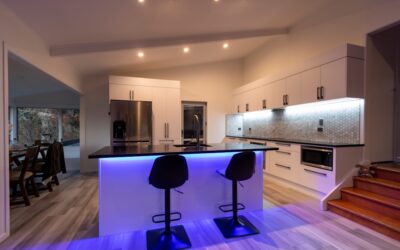
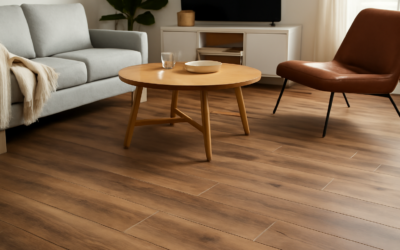
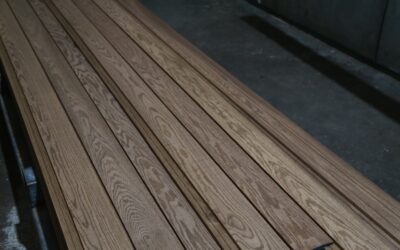
Wood-look vinyl flooring gives you the hardwood aesthetic with waterproof performance, easy maintenance, and a budget-friendly price. Modern manufacturing has made vinyl wood flooring so realistic that most people can’t tell the difference from across a room. Here’s everything you need to know about choosing, installing, and maintaining wood-look vinyl.
Types of Wood-Look Vinyl
Luxury Vinyl Plank (LVP)
LVP is the most popular wood-look vinyl format. Rigid core planks (SPC or WPC) click together for floating installation. Planks typically measure 6 to 9 inches wide and 36 to 72 inches long — close to real hardwood dimensions. LVP offers the most realistic wood appearance thanks to embossed-in-register (EIR) technology that aligns surface texture with the printed grain.
Sheet Vinyl
Rolls of flexible vinyl (6 or 12 feet wide) with wood-grain printing. Sheet vinyl is the most affordable option and creates a seamless, waterproof surface with no seams in most rooms. However, the visual realism is lower than LVP — the surface is flat without dimensional texture. Best for laundry rooms, utility areas, and budget renovations.
Vinyl Tile (LVT)
While LVT typically mimics stone and ceramic, some manufacturers offer wood-look LVT in plank-shaped tiles. These install similarly to LVP but may come in peel-and-stick, glue-down, or click-lock formats.
Popular Wood Species Looks
Oak
The most common wood-look in vinyl. Available in white oak, red oak, natural oak, gray oak, and weathered oak variations. Oak-look vinyl works in every room and design style — from modern farmhouse to contemporary.
Walnut
Rich, dark brown tones with flowing grain patterns. Walnut-look vinyl creates a warm, sophisticated atmosphere in bedrooms, dining rooms, and home offices.
Hickory
Dramatic grain variation with light and dark streaks. Hickory-look vinyl suits rustic, farmhouse, and transitional interiors. The bold grain pattern helps disguise minor imperfections.
Maple and Birch
Light, clean appearances with subtle grain. These light wood looks brighten rooms and pair well with Scandinavian and minimalist designs.
Reclaimed and Weathered Wood
Distressed, weathered, and barnwood-look vinyl captures the character of aged timber with knots, saw marks, and varied coloring. Popular in coastal, rustic, and industrial spaces.
Vinyl Wood vs Real Wood
- Cost: Vinyl wood costs $3 to $9 per square foot installed vs $8 to $20 for real hardwood — a 50% to 70% savings
- Waterproof: Vinyl is 100% waterproof; real wood is damaged by moisture
- Durability: Real hardwood lasts 50-100+ years with refinishing; vinyl lasts 15-25 years and cannot be refinished
- Installation: Vinyl is easy DIY (click-lock); hardwood typically requires professional nail-down
- Maintenance: Vinyl needs only sweeping and damp mopping; hardwood requires specific cleaners, humidity control, and periodic refinishing
- Resale value: Real hardwood adds more resale value, though quality vinyl is increasingly accepted
- Feel: Real wood is warmer and more natural to the touch; vinyl is softer but can feel slightly synthetic up close
How to Make Vinyl Wood Look More Realistic
- Choose EIR embossing: Embossed-in-Register technology aligns the surface texture with the printed grain pattern — the single biggest realism upgrade
- Go wider and longer: 7 to 9-inch wide by 48 to 72-inch long planks match real hardwood proportions
- Pick matte or low-sheen finishes: Glossy surfaces immediately look synthetic; matte looks like natural wood
- Look for plank variation: Products with 10+ unique designs per box avoid visible pattern repetition
- Use random stagger: Avoid uniform step patterns during installation — real wood uses random board lengths
- Select beveled edges: Micro-bevels between planks create defined plank lines like real hardwood
Best Rooms for Wood-Look Vinyl
- Kitchens: Waterproof, comfortable for standing, handles spills and traffic
- Bathrooms: Wood look without moisture anxiety
- Basements: Wood aesthetic over concrete without moisture damage risk
- Living rooms: Whole-home consistency with hardwood appearance
- Bedrooms: Warm wood look with softer, quieter surface than real hardwood
- Laundry rooms: Attractive flooring that handles washer leaks
Installation
Most wood-look vinyl installs as a floating floor with click-lock connections:
- Ensure subfloor is clean, dry, and flat (3/16 inch over 10 feet)
- Install underlayment if not pre-attached to the planks
- Start along the longest wall with 1/4-inch spacers
- Click planks together at an angle and press down
- Stagger end joints by at least 6 inches between rows
- Cut planks with a utility knife (score and snap) or saw
- Install transitions and baseboards to cover expansion gaps
Most rooms can be completed in 4 to 8 hours by a single person.
Cost
- Budget LVP: $1.50 to $3.00 per square foot
- Mid-range LVP: $3.00 to $5.00 per square foot
- Premium LVP: $5.00 to $8.00 per square foot
- Sheet vinyl: $0.50 to $3.00 per square foot
- Professional installation: $1.50 to $3.00 per square foot
For a 500-square-foot project, expect $1,500 to $5,500 fully installed with mid-range LVP.
Maintenance
- Sweep or vacuum with a soft-bristle attachment regularly
- Damp mop with warm water and mild cleaner
- Avoid steam mops and abrasive cleaners
- Use felt pads under furniture and avoid dragging heavy items
- Place doormats at entrances to reduce grit
Wood-look vinyl has reached a level of realism that makes it the practical choice for most homeowners who love the hardwood aesthetic. It removes the anxiety of water damage, eliminates refinishing costs, and delivers a beautiful wood floor at a price that works for any budget.
Prefer to explore on your own?
See how new flooring looks in your actual room in seconds — free, no signup.
Try the free Floor Studio →