A walk-in shower is the centerpiece of a modern bathroom, and the tile you choose defines its entire look and feel. The right walk in shower tile selection balances aesthetics with critical functional requirements — slip resistance on the floor, waterproof performance behind the walls, and grout lines that resist mold in a permanently wet environment. Getting these decisions right creates a shower that is both beautiful and built to last.
- Best Tile for Walk-In Shower Walls
- Best Tile for Walk-In Shower Floors
- Curbless Walk-In Shower Design
- Linear Drain Considerations
- Glass Panel Considerations
- Waterproofing — The Most Critical Step
- Trending Walk-In Shower Designs for 2026
- Walk-In Shower Tile Material Comparison
- Walk-In Shower Tile Cost
- Frequently Asked Questions
This guide covers the best tile choices for walk-in shower walls and floors, curbless shower design considerations, waterproofing requirements, trending designs for 2026, and practical installation tips.
Best Tile for Walk-In Shower Walls
Shower wall tile is the most visible element and drives the overall design. In 2026, the dominant trend is large format tile with minimal grout lines — creating a clean, spa-like aesthetic that is also easier to maintain.
Large format porcelain (24″ x 48″ or larger): These oversized tiles create a dramatic, nearly seamless wall surface. Fewer grout lines mean less grout to clean and a more luxurious appearance. Marble-look, concrete-look, and solid-color porcelain are the most popular choices. Installation requires a perfectly flat wall surface and large-format tile adhesive — this is a professional-only installation.
Subway tile (3″ x 6″ or 4″ x 12″): The classic subway tile remains one of the most popular shower tile choices because of its timeless appeal, accessibility, and design versatility. In 2026, the elongated 4″ x 12″ format is trending over the traditional 3″ x 6″ size. Stacked bond (horizontal, no offset) installation has become more popular than the classic brick pattern, creating a modern, clean-lined look.
Natural stone (marble, travertine): Real marble walls deliver unmatched luxury. Carrara, Calacatta, and Statuario marble are the most sought-after varieties for shower applications. Natural stone requires sealing before grouting and periodic resealing (every 6 to 12 months in a shower environment) to prevent staining and water infiltration. Book-matched marble — where two adjacent slabs are opened like a book to create a mirrored veining pattern — is a high-end design statement.
Zellige tile: Handmade Moroccan zellige tiles with their slightly irregular surfaces and color variations create a warm, artisanal texture on shower walls. The natural imperfections reflect light at different angles, adding depth and visual interest that machine-made tiles cannot match. Zellige is typically available in small formats (4″ x 4″ or 2″ x 6″) and is best used as an accent or feature wall.
Best Tile for Walk-In Shower Floors
Shower floor tile has one non-negotiable requirement: slip resistance. A wet, soapy shower floor is inherently slippery, and the tile choice must prioritize safety without sacrificing aesthetics.
Mosaic tile (1″ x 1″ or 2″ x 2″): Small mosaic tiles are the gold standard for shower floors. Their small size means more grout lines, and grout lines provide texture and grip underfoot. Porcelain, ceramic, glass, and natural stone mosaics are all available in sheet-mounted formats that simplify installation. The abundant grout lines also allow the tile to conform to the gentle slope toward the drain.
Penny round tile: Circular penny tiles (typically 3/4″ to 1″ diameter) offer excellent slip resistance due to their rounded edges and numerous grout lines. They are available in porcelain, ceramic, marble, and glass. Penny rounds create a classic, distinctive look that works with both modern and traditional shower designs.
Hexagonal mosaic: 2-inch hexagonal tiles provide a geometric look with adequate grout lines for slip resistance. Marble hexagons are particularly popular for upscale shower floors. The hexagonal shape adds visual interest compared to standard square mosaics.
Textured porcelain: Some large-format porcelain tiles are manufactured with anti-slip textures rated for wet environments (DCOF 0.42 or higher). These allow you to use fewer, larger tiles on the shower floor, but they must be specifically rated for wet-area use. Check the Dynamic Coefficient of Friction (DCOF) rating — anything 0.42 or higher is considered safe for showers.
| Shower Floor Tile | Slip Resistance | Aesthetics | Grout Maintenance | Cost (per sq ft) |
|---|---|---|---|---|
| 1″ x 1″ mosaic | Excellent | Classic, versatile | High (many grout lines) | $5 – $15 |
| Penny round | Excellent | Distinctive, timeless | High | $6 – $18 |
| 2″ hexagonal | Very good | Geometric, upscale | Moderate | $8 – $20 |
| Textured porcelain (large) | Good (must be DCOF rated) | Modern, minimal | Low (few grout lines) | $5 – $12 |
| Pebble/river rock | Very good | Natural, spa-like | Very high | $8 – $15 |
Curbless Walk-In Shower Design
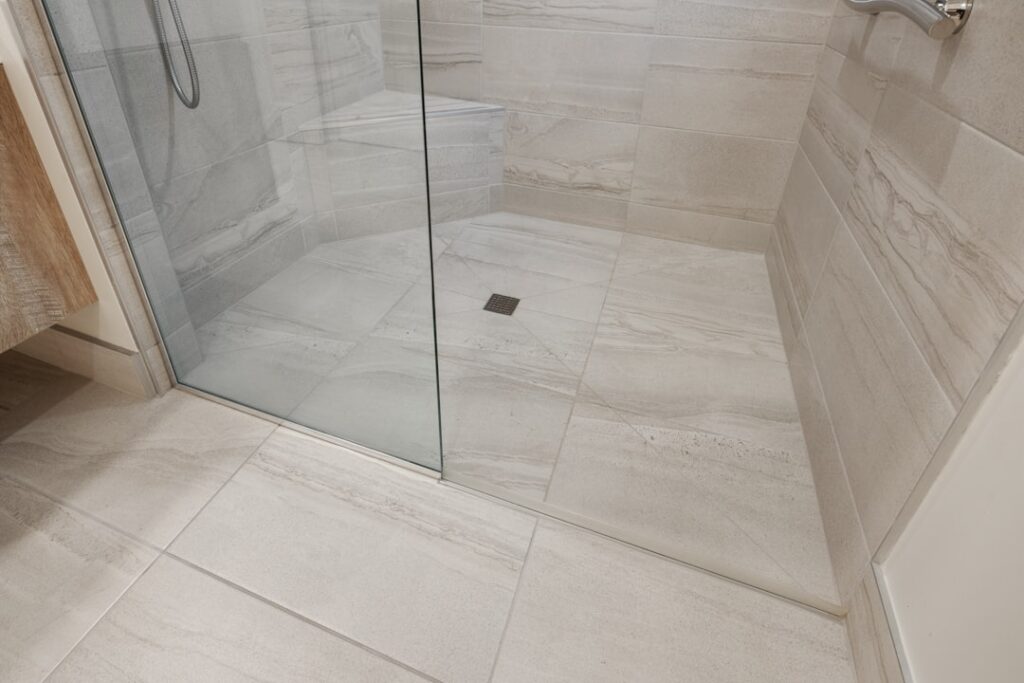
Curbless (also called barrier-free or zero-threshold) showers eliminate the raised curb at the shower entry, creating a seamless transition from the bathroom floor into the shower. This design trend has moved from accessible/ADA applications into mainstream luxury bathroom design.
How curbless works: The entire bathroom floor is sloped gently toward the shower drain, or a recessed shower pan (sometimes called a “wet room” approach) is created within the framing. The floor tile inside and outside the shower can be the same material, creating a unified, spacious look. A linear drain at the shower threshold or against the back wall collects water.
Requirements for curbless showers:
- Structural modification — the floor framing must be modified to create a gentle slope toward the drain (typically 1/4″ per foot). This often requires lowering floor joists or building up surrounding areas.
- Full waterproofing — the entire bathroom floor (not just the shower area) must be waterproofed because water can flow beyond the shower zone.
- Linear drain — a linear drain installed at the shower entry point or along a wall is the most effective water management solution for curbless designs.
- Tile continuity — the same floor tile should extend from the bathroom into the shower for the seamless effect. This means the bathroom floor tile must be slip-rated for wet conditions.
Cost premium: A curbless shower typically adds $1,000 to $3,000 to the shower construction cost compared to a standard curbed shower, primarily due to the structural modifications and additional waterproofing required.
Linear Drain Considerations
Linear drains have become the preferred drain type for walk-in showers in 2026, replacing traditional center-point drains in most new construction and high-end renovations.
Advantages over center drains: A linear drain allows the shower floor to slope in one direction only (toward the drain channel), rather than sloping from all four sides toward a center point. This single-direction slope accommodates large-format floor tiles that would crack or tent on a four-way slope. Linear drains also look more modern and can be nearly invisible with tile-insert covers.
Placement options: Linear drains can be installed at the shower threshold (common for curbless designs), against the back wall (most popular in 2026), or along a side wall. Back-wall placement keeps the drain away from the entry and creates the cleanest floor appearance.
Popular brands: Schluter Kerdi-Line, Infinity Drain, QuickDrain, and Laticrete Hydro Ban linear drains are widely available and well-supported by the tile industry. Costs range from $200 to $800 for the drain unit, plus $100 to $300 for professional installation.
Glass Panel Considerations
Walk-in showers typically use glass panels instead of shower curtains or framed glass doors. The glass treatment affects both aesthetics and maintenance.
Frameless glass panels: A single fixed panel of 3/8″ or 1/2″ tempered glass is the most popular walk-in shower enclosure in 2026. No door, no frame, no hardware beyond wall-mount clips. This creates the most open, minimalist look. The panel extends 24″ to 36″ from the wall, leaving an open entry.
Glass coating: Treat glass panels with a hydrophobic coating (like EnduroShield or Rain-X for shower glass) to prevent hard water spots and soap scum buildup. Factory-applied coatings last 3 to 5 years. Without coating, glass requires frequent squeegee use to prevent mineral buildup.
Tile integration: The tile pattern on walls visible through the glass becomes part of the overall design. Book-matched marble, bold accent tiles, and feature niches are all enhanced by clear glass that puts the tile work on full display.
Waterproofing — The Most Critical Step
Waterproofing is the single most important element of any walk in shower tile installation. Tile and grout are not waterproof — water passes through grout and through the micro-pores of many tiles. Without a waterproof membrane behind and beneath the tile, water will infiltrate the wall and floor structure, causing mold, rot, and structural damage.
Two primary waterproofing systems:
Sheet membrane (Schluter Kerdi, Laticrete Hydro Ban Sheet): A thin, waterproof polyethylene sheet bonded to the substrate with thinset mortar. The membrane is installed on walls and floors before tiling. Seams are overlapped and sealed with Kerdi-Band or similar products. Corners and curb areas use preformed corner pieces to ensure watertight transitions. Sheet membrane is the most popular system among professional tile installers.
Liquid membrane (RedGard, Laticrete Hydro Ban Liquid, Mapei AquaDefense): A liquid waterproofing compound applied with a roller or brush directly to the cement board or concrete substrate. Two coats are applied, creating a continuous rubber-like membrane when cured. Liquid membrane is easier for DIY application but requires careful attention to thickness (typically 50 mil wet) and coverage at corners and transitions.
| Waterproofing System | Method | Cost (per sq ft) | DIY Friendly | Reliability |
|---|---|---|---|---|
| Schluter Kerdi (sheet) | Thinset-bonded membrane | $1.50 – $3.00 | Moderate | Very high |
| RedGard (liquid) | Roller-applied liquid | $0.50 – $1.50 | Yes | High |
| Laticrete Hydro Ban (liquid) | Roller-applied liquid | $0.75 – $2.00 | Yes | High |
| Wedi board (foam panel) | Waterproof backer board | $3.00 – $5.00 | Moderate | Very high |
Critical areas: Shower niches, bench seats, curbs, corners, and valve penetrations are the most common failure points. Every transition from horizontal to vertical, every penetration (shower valve, showerhead pipe), and every corner requires special attention with preformed accessories or additional membrane layers. A properly tiled shower begins with flawless waterproofing at every detail.
Trending Walk-In Shower Designs for 2026
These are the most popular shower tile design trends in 2026.
Floor-to-ceiling marble-look porcelain. Large format (24″ x 48″ or 48″ x 48″) marble-look porcelain tiles covering the shower from floor to ceiling with minimal grout lines. This creates a slab-like appearance that mimics real marble at a fraction of the cost. Calacatta and Statuario patterns with dramatic veining are most popular.
Mixed material combinations. Combining two or three complementary tile types in a single shower — for example, large format porcelain on the main walls, zellige tile on an accent wall or niche, and marble mosaic on the floor. This layered approach adds visual depth without being overwhelming.
Vertical stacked subway tile. Subway tiles installed vertically (stacked bond, no offset) rather than the traditional horizontal brick pattern. Vertical installation draws the eye upward, making showers feel taller, and creates a distinctly modern look. Elongated formats (4″ x 12″ or 3″ x 12″) enhance the vertical effect.
Niche as design feature. Shower niches (recessed shelves for shampoo and soap) have evolved from utilitarian to decorative. Accent tile in the niche — a contrasting color, a metallic tile, or a patterned tile — creates a focal point. Multiple niches at different heights and sizes add both function and visual rhythm.
Warm neutrals replacing cool grays. The cool gray palette that dominated shower design for the past decade is giving way to warmer tones — warm whites, creamy beiges, soft taupes, and earthy terracotta. This shift reflects a broader design movement toward warmer, more inviting bathrooms.
Matte finishes over glossy. Matte and honed tile finishes are overtaking high-gloss polished finishes in 2026. Matte surfaces hide water spots, feel more natural, and create a softer, more contemporary aesthetic. Matte tiles also tend to be less slippery when wet.
Walk-In Shower Tile Material Comparison
| Material | Best Use | Cost (per sq ft) | Maintenance | Durability |
|---|---|---|---|---|
| Porcelain | Walls and floors | $3 – $15 | Low | Excellent |
| Ceramic | Walls only (less dense) | $1 – $8 | Low | Good |
| Marble (natural) | Walls, accent floors | $10 – $40 | High (sealing required) | Good (softer stone) |
| Glass mosaic | Accent walls, niches | $10 – $30 | Low (non-porous) | Good (can chip) |
| Zellige | Accent walls | $12 – $25 | Moderate (sealing) | Good |
| Slate | Floors (natural texture) | $5 – $15 | Moderate (sealing) | Good |
Walk-In Shower Tile Cost
A fully tiled walk-in shower is a significant investment. Here is a realistic cost breakdown.
| Component | Cost Range |
|---|---|
| Wall tile (materials, 80-120 sq ft) | $400 – $2,400 |
| Floor tile (materials, 12-20 sq ft) | $100 – $400 |
| Waterproofing system | $200 – $500 |
| Thinset, grout, backer board | $150 – $300 |
| Linear drain | $200 – $800 |
| Glass panel (frameless) | $400 – $1,200 |
| Professional tile installation labor | $1,500 – $4,000 |
| Total (standard walk-in shower) | $3,000 – $9,500 |
Premium materials (real marble, custom glass), curbless design, and additional features (bench, multiple niches, body sprays) can push the total cost to $10,000 to $20,000+ for high-end walk-in showers.
Frequently Asked Questions
What is the best tile for a walk-in shower?
For walls, large format porcelain tile (24″ x 48″ or larger) in a marble or stone look is the best all-around choice — it is waterproof, low-maintenance, and creates a luxury spa aesthetic. For floors, 1-inch or 2-inch mosaic tiles (porcelain or marble) provide the slip resistance needed in a wet environment while conforming to the drain slope.
Can you use large tiles on a shower floor?
Large tiles on shower floors are difficult because the floor must slope toward the drain, and large rigid tiles resist conforming to the slope. If you use a linear drain (which allows a single-direction slope), larger tiles become feasible. The tile must also have a DCOF rating of 0.42 or higher for wet-area slip resistance. For center drains with four-way slopes, stick with mosaic tiles 2 inches or smaller.
Is marble good for walk-in showers?
Marble is beautiful in showers but requires ongoing maintenance. It must be sealed before installation, resealed every 6 to 12 months, and cleaned with pH-neutral products (acidic cleaners etch marble). Marble is also softer than porcelain and can scratch more easily. If you love the marble look but want less maintenance, marble-look porcelain tile achieves a similar aesthetic with virtually zero maintenance.
How do you waterproof a walk-in shower?
Apply a waterproof membrane to all shower walls and floors before tiling. The two main options are sheet membrane (Schluter Kerdi) bonded with thinset, and liquid membrane (RedGard, Hydro Ban) applied with a roller. All corners, transitions, and penetrations (valve holes, pipe openings) must be sealed with additional membrane pieces or liquid coating. Waterproofing is not optional — it prevents structural damage and mold growth behind the tile.
What size tile is best for shower walls?
Large format tiles (12″ x 24″ and larger) are the most popular for shower walls in 2026 because they create a clean, modern look with fewer grout lines. Subway tiles (3″ x 6″ or 4″ x 12″) remain a timeless, affordable option. The best size depends on your design goal — large tiles for modern and minimalist, smaller tiles for classic and detailed designs.
Do walk-in showers need a door?
No. Walk-in showers are designed to function without a door. A fixed frameless glass panel (typically extending 24″ to 36″ from the wall) prevents most water from splashing outside the shower zone. For curbless designs, proper floor slope and a linear drain manage water containment. Some walk-in showers use no glass at all — relying on the shower layout and drain placement to contain water.