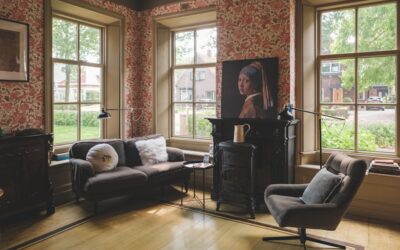
Walk into a poorly lit kitchen and everything looks dingy. Step into a bedroom that feels like a hospital exam room and no amount of decor can warm it up. Ninety percent of the time, the culprit is bulb color temperature. Understanding warm light vs cool light — and how to use each intentionally — is one of the cheapest, most dramatic upgrades you can make to any room. Here is the complete breakdown.
- What Color Temperature Actually Measures
- How Warm and Cool Light Affect You Physiologically
- Best Rooms for Warm Light
- Best Rooms for Cool Light
- Mixing Temperatures in One Home
- Tunable and Smart Bulbs
- CRI: The Other Number That Matters
- How Bulb Technology Affects Color Temperature
- Choosing the Right Bulb for a Fixture
- Common Mistakes to Avoid
- Quick Decision Framework
What Color Temperature Actually Measures
Color temperature is measured in Kelvin (K) and describes whether a light source looks yellow, neutral, or blue. The scale runs counter-intuitively: lower Kelvin numbers are warmer (more yellow), higher numbers are cooler (more blue).
- 1,800 to 2,200 K: Candlelight. Very warm amber glow.
- 2,700 to 3,000 K: Warm white. Traditional incandescent bulb appearance.
- 3,500 to 4,000 K: Neutral white or bright white. Balanced.
- 5,000 to 6,500 K: Cool white or daylight. Bluish, like overcast sky.
- 6,500 K+: True daylight, often used in surgical suites or industrial inspection.
How Warm and Cool Light Affect You Physiologically
The science here is settled. Blue-rich cool light (5,000 K+) suppresses melatonin, a hormone that signals your brain it’s time to sleep. That’s why staring at a phone screen at midnight wrecks your sleep cycle. Conversely, warm light (2,700 K) allows melatonin to rise naturally in the evening.
Cool light also increases alertness and cognitive performance by roughly 8 to 12 percent in controlled studies, making it appropriate for work areas but problematic in bedrooms or TV rooms.
Best Rooms for Warm Light
Warm light in the 2,700 to 3,000 K range works beautifully anywhere the goal is relaxation, intimacy, or flattering atmosphere.
Living rooms: Creates a welcoming glow for conversation and movies. Stick to 2,700 K.
Bedrooms: Preserves your circadian rhythm. Consider 2,200 K bedside lamps for evening reading.
Dining rooms: Warm light flatters skin tones and makes food look appetizing. Many restaurants use 2,400 to 2,700 K.
Hallways and foyers: Feels more inviting than sterile cool light.
Bathrooms with mood lighting: Separate warm bulbs on a dimmer for relaxing baths.
Best Rooms for Cool Light
Cool light earns its place where you need to see clearly, work precisely, or stay alert.
Kitchens (prep areas): 3,500 to 4,000 K helps you see true colors in food. Many chefs prefer 4,000 K under-cabinet lighting.
Home offices: 4,000 to 5,000 K supports focus during work hours. Avoid 5,000 K+ past 7 p.m.
Bathroom vanities: 3,500 to 4,000 K for accurate makeup and shaving.
Garages and workshops: 5,000 K daylight shows details and hazards clearly.
Laundry rooms: 4,000 K helps spot stains before clothes go in the wash.
Mixing Temperatures in One Home
Most homes look best with deliberately different temperatures in different rooms. That doesn’t mean chaos — it means intention. A common approach is 2,700 K throughout living spaces and bedrooms, 3,500 to 4,000 K in kitchens and bathrooms, and 4,000 to 5,000 K in offices and garages.
Within a single room, keep all bulbs within 300 K of each other. A 2,700 K ceiling fixture mixed with a 5,000 K table lamp looks disjointed and unprofessional.
Tunable and Smart Bulbs
Smart bulbs like Philips Hue, LIFX, and Govee let you adjust color temperature from 2,200 K to 6,500 K on demand. This solves the kitchen paradox — bright 4,000 K for morning prep, warm 2,700 K for a late dinner — from a single bulb.
Tunable white bulbs without the full RGB spectrum cost $12 to $20 each. Full-color smart bulbs run $30 to $55. Over a whole house, the cost adds up quickly, but the flexibility is transformative for rooms with multiple uses.
CRI: The Other Number That Matters
Color temperature tells you the tint. The Color Rendering Index (CRI) tells you how accurately the bulb shows the true colors of objects it illuminates. CRI runs from 0 to 100, with natural sunlight at 100.
Look for bulbs with CRI 90 or higher for any room where color accuracy matters — kitchens, bathrooms, art display, closets, and anywhere you apply makeup or fold laundry. Budget LED bulbs often have CRI ratings of 80 to 82, which makes red tones look duller and skin look sallow.
How Bulb Technology Affects Color Temperature
Different bulb technologies produce color differently.
- Incandescent: Always warm, typically 2,700 K. Inefficient and mostly phased out.
- Halogen: Slightly whiter than incandescent, around 3,000 K.
- Compact fluorescent (CFL): Available in multiple temperatures but slow to warm up.
- LED: Available across the full spectrum, instant-on, efficient. The default choice today.
Choosing the Right Bulb for a Fixture
Think about three things when picking a bulb: the room’s primary use, the time of day you’ll use it most, and the fixture type. A pendant light over a dining table should use 2,700 K for evening meals. A semi-flush mount in a kitchen needs 3,500 to 4,000 K for daytime cooking. A ceiling fixture in a garage benefits from 5,000 K for workbench visibility.
Check the fixture’s maximum wattage rating and pick an LED that delivers the lumens you need at well under that limit.
Common Mistakes to Avoid
The warm light vs cool light choice trips up a lot of homeowners. Here are the most frequent errors.
- Buying whichever bulb is on sale without checking Kelvin.
- Using 5,000 K daylight bulbs in bedrooms — then wondering why sleep quality dropped.
- Mixing wildly different temperatures in a single room.
- Ignoring CRI and ending up with accurate color temperature but distorted rendering.
- Installing non-dimmable bulbs in dimmer-switched fixtures (they flicker or buzz).
Quick Decision Framework
When in doubt, ask yourself: am I relaxing or working here? Relaxing rooms use 2,700 K warm light. Working rooms use 3,500 to 4,000 K neutral to cool. Dial in this simple rule across your home and every room will instantly feel more intentional, more comfortable, and more like a professionally designed space.