The term water proof flooring gets thrown around loosely in marketing materials. Every flooring aisle at every home improvement store has products labeled “waterproof” — but the reality is that some floors are genuinely impervious to water while others merely resist surface moisture for a limited time before damage occurs.
Part of our Roofing guide — explore the full guide →
This guide separates truly waterproof flooring from water-resistant pretenders. We cover the five best waterproof flooring types in detail — SPC vinyl, porcelain tile, sheet vinyl, epoxy, and rubber — along with how to evaluate manufacturer claims, which product works best in each wet area of your home, and what to watch out for before you buy.
- Waterproof vs Water-Resistant: The Critical Difference
- SPC Vinyl Flooring
- Porcelain Tile
- Sheet Vinyl
- Epoxy Flooring
- Rubber Flooring
- Flooring That Claims Waterproof but Is Not
- How to Test Waterproof Claims
- Best Waterproof Flooring by Room
- Subfloor Moisture Protection
- Cost Comparison
- Frequently Asked Questions
Waterproof vs Water-Resistant: The Critical Difference
Understanding this distinction can save you from an expensive mistake.
Waterproof flooring will not be damaged no matter how long water sits on it or how much water it is exposed to. The material itself does not absorb water, swell, warp, or degrade. Porcelain tile, SPC vinyl planks, and rubber are examples.
Water-resistant flooring can handle occasional splashes and brief contact with water but will suffer damage if water sits on it for extended periods or penetrates the seams. Laminate with water-resistant coatings, WPC vinyl with exposed HDF edges, and some engineered hardwoods fall into this category.
The problem is that many manufacturers market water-resistant products as “waterproof” because there is no industry-wide standard for the term. A laminate plank that survives a 24-hour puddle test in a lab can technically be called waterproof — even though the same plank will swell and buckle if a dishwasher leaks overnight in a real kitchen.
SPC Vinyl Flooring
SPC (Stone Plastic Composite, also called Stone Polymer Composite) vinyl is the most popular water proof flooring choice for residential use, and for good reason.
Why SPC Is Truly Waterproof
The core of an SPC plank is made from limestone powder and PVC — both completely inorganic materials that cannot absorb water. Unlike WPC vinyl (which contains wood-plastic composite and can absorb small amounts of moisture through exposed edges) or laminate (which has an HDF core that swells when wet), SPC is impervious at every layer.
Key Features
- 100% waterproof core — can be submerged without damage
- Rigid core construction provides dimensional stability
- Click-lock installation for easy DIY
- Available in wood, stone, and tile looks
- Wear layer options from 12 mil to 28 mil
- Compatible with underfloor heating
- Thin profile (3.5 to 6 mm) fits under door frames
Where SPC Works Best
Bathrooms, kitchens, laundry rooms, mudrooms, basements — any area where water is present. SPC is the most versatile waterproof option because it combines true waterproofing with a wood or stone aesthetic and easy installation.
Limitations
While SPC planks are waterproof, click-lock seams are not perfectly sealed. Water can seep through joints during a major flood or prolonged standing water event. For maximum protection, some homeowners apply a bead of silicone sealant at seams in high-risk areas like bathrooms.
For a detailed look at SPC products, visit our SPC flooring guide.
Porcelain Tile
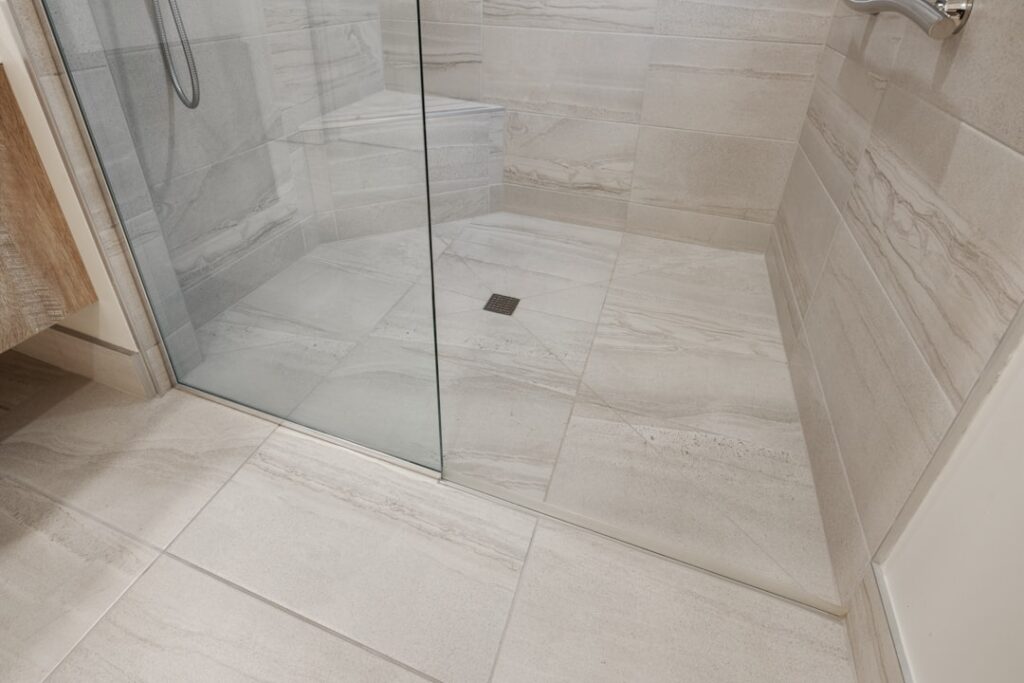
Porcelain tile is the gold standard for water proof flooring in wet areas. It has been used in bathrooms, kitchens, and pool decks for centuries because the material is essentially impervious to water.
Why Porcelain Is Truly Waterproof
Porcelain is fired at extremely high temperatures (over 2,200 degrees Fahrenheit), which vitrifies the clay body and reduces its water absorption rate to less than 0.5 percent. This makes it virtually non-porous. Water, stains, and chemicals sit on the surface and can be wiped away.
Key Features
- Absorption rate below 0.5% — the most waterproof hard flooring material
- Extremely durable — rated for heavy commercial traffic
- Available in wood, stone, concrete, and decorative looks
- Compatible with heated floors
- Stain-proof and chemical-resistant
- Will not fade, warp, or degrade from water exposure
Where Porcelain Works Best
Bathrooms (especially shower floors and walls), kitchens, laundry rooms, outdoor patios, pool surrounds, and any commercial wet area. Porcelain is the top choice when maximum water protection is non-negotiable.
Limitations
Porcelain is hard, cold, and unforgiving underfoot. It requires professional installation with mortar and grout, which adds cost and time. Grout lines need sealing and periodic maintenance to prevent staining and mildew. Cracked tiles require skilled repair.
For more on tile options, see our tile flooring guide.
Sheet Vinyl
Sheet vinyl is an often-overlooked waterproof flooring option that deserves more respect.
Why Sheet Vinyl Is Truly Waterproof
A single roll of sheet vinyl can cover an entire room with zero seams. The material itself — PVC — is 100% waterproof. With no joints for water to penetrate and full-spread adhesive bonding the sheet to the subfloor, a properly installed sheet vinyl floor is one of the most waterproof surfaces you can install.
Key Features
- Seamless installation in rooms up to 13 feet wide
- 100% waterproof PVC material
- Soft and warm underfoot (cushioned backing options)
- Extremely affordable ($1 to $5 per square foot)
- Easy to clean
- Wide range of designs including wood, stone, and tile looks
Where Sheet Vinyl Works Best
Bathrooms, kitchens, laundry rooms, and basements — especially where budget is a priority. Sheet vinyl is the most cost-effective waterproof flooring available.
Limitations
Sheet vinyl can be punctured by sharp objects, dented by heavy furniture, and is difficult to repair if damaged. Professional installation is recommended because cutting and fitting a large sheet requires skill. It does not add real estate value the way tile or hardwood does.
Epoxy Flooring
Epoxy is a seamless, monolithic coating applied directly over concrete. It is the ultimate waterproof solution for garages, basements, commercial kitchens, and industrial spaces.
Why Epoxy Is Truly Waterproof
Cured epoxy forms a non-porous, continuous film over the concrete substrate. There are no seams, joints, or edges for water to penetrate. The epoxy bond to the concrete creates a sealed surface that resists water, chemicals, oil, and stains.
Key Features
- 100% seamless — no joints or seams anywhere
- Extremely chemical-resistant (gasoline, oil, brake fluid, bleach)
- Customizable aesthetics (solid colors, flake, metallic, quartz)
- Extremely durable under heavy loads
- Easy to clean — mop or squeegee
Where Epoxy Works Best
Garages, basements, commercial kitchens, laundry rooms, workshops, and industrial facilities. Epoxy is not commonly used in residential living spaces due to its hard, industrial appearance, though decorative metallic epoxy is gaining popularity in modern lofts and basements.
Limitations
Epoxy requires extensive surface preparation (grinding, acid etching). It takes 3 to 7 days to fully cure. It is slippery when wet unless anti-slip additives are mixed in. Epoxy can yellow with UV exposure and is difficult to remove once applied.
For a complete overview, visit our epoxy flooring guide.
Rubber Flooring
Rubber flooring is inherently waterproof and offers the added benefits of cushion, noise reduction, and slip resistance.
Why Rubber Is Truly Waterproof
Rubber — whether natural or synthetic — does not absorb water. It is the same material used in rain boots, gaskets, and waterproof membranes. The material itself will never swell, warp, rot, or degrade from water exposure.
Key Features
- 100% waterproof material
- Cushioned and comfortable underfoot
- Slip-resistant even when wet
- Excellent sound absorption
- Available in rolls, interlocking tiles, and mats
- Extremely durable under heavy use
Where Rubber Works Best
Home gyms, garages, commercial gyms, playgrounds, laundry rooms, and mudrooms. Rubber is also used in commercial kitchens and hospitals where slip resistance and cushion are critical.
Limitations
Limited aesthetics — rubber is mostly available in black with colored flecks. It has a strong smell when new. Seams between tiles or mat edges can allow water to reach the subfloor. Not suitable for living rooms or bedrooms where appearance matters.
For more on rubber options, visit our rubber flooring guide.
Flooring That Claims Waterproof but Is Not
Several popular flooring types are marketed as waterproof but have significant limitations.
Laminate Flooring
Even “waterproof” laminate has an HDF (High-Density Fiberboard) core made from wood fibers. Wood fibers absorb water. While the surface may resist splashes, water that penetrates through joints or sits against exposed edges will cause the core to swell, buckle, and permanently deform. Laminate is water-resistant at best.
WPC Vinyl Plank
WPC (Wood Plastic Composite) vinyl is mostly waterproof, but the core contains some organic material (wood flour) that can absorb water over time if exposed through cuts, edge damage, or prolonged submersion. SPC is the fully waterproof alternative.
Engineered Hardwood
Some engineered hardwood products claim water resistance, and the plywood core does resist moisture better than solid hardwood. But no wood-based product is truly waterproof. Prolonged water exposure will damage the veneer and delaminate the layers.
Bamboo Flooring
Bamboo is grass, not wood, but it absorbs water similarly. Even strand-woven bamboo will swell and warp with prolonged water exposure. It is not a waterproof flooring option.
How to Test Waterproof Claims
Before trusting a “waterproof” label, take these steps:
- Check the core material. If the core contains wood, HDF, MDF, or wood-plastic composite, the product is not fully waterproof regardless of what the marketing says.
- Look for the absorption rate. Truly waterproof products (porcelain, SPC, rubber) have water absorption rates near 0%. Products with rates above 1% can absorb meaningful amounts of water.
- Read the warranty fine print. Many “waterproof” warranties exclude damage from flooding, standing water, or water entering through seams. If the warranty has these exclusions, the product is water-resistant, not waterproof.
- Submerge a sample. Request a sample piece and submerge it in water for 24 to 48 hours. Measure its thickness before and after. A truly waterproof product will show zero swelling.
- Consider the seams. Even if the material is waterproof, the seams between click-lock planks or tiles may not be. In wet areas, seam integrity matters as much as the material itself.
Best Waterproof Flooring by Room
Bathroom
Best choice: Porcelain tile. The bathroom is the wettest room in the home. Porcelain tile with sealed grout provides the most reliable waterproof surface. SPC vinyl is a strong alternative for a warmer, softer feel. Sheet vinyl is the budget option.
Kitchen
Best choice: SPC vinyl plank. Kitchens need water protection from splashes and leaks but also benefit from comfort during long standing periods. SPC vinyl offers both. Porcelain tile works well if you prefer the look and do not mind the harder surface.
Laundry Room
Best choice: Sheet vinyl or SPC vinyl. Laundry rooms face washing machine overflows and detergent spills. Sheet vinyl’s seamless surface provides maximum protection. SPC vinyl is easier to install yourself.
Basement
Best choice: SPC vinyl or epoxy. Basements are prone to moisture from below (vapor transmission through concrete). SPC vinyl over a vapor barrier is the most popular solution. Epoxy coating creates a seamless waterproof surface directly on the slab.
Mudroom/Entryway
Best choice: Porcelain tile or SPC vinyl. Mudrooms collect snow, rain, and mud. Porcelain tile handles it all effortlessly. SPC vinyl is a warmer, less expensive alternative.
Garage
Best choice: Epoxy or rubber. Garages need chemical resistance and durability alongside water protection. Epoxy provides a seamless surface; rubber provides cushion and easy installation.
Subfloor Moisture Protection
Even with waterproof surface flooring, moisture from below can cause problems. This is especially important in basements and ground-floor rooms on concrete slabs.
- Vapor barrier. Install a 6-mil polyethylene vapor barrier over concrete before laying floating floors (SPC, LVP). This blocks moisture vapor from reaching the flooring from below.
- Moisture testing. Test concrete moisture using a calcium chloride test (ASTM F1869) or relative humidity test (ASTM F2170) before installation. Readings above acceptable limits require a moisture mitigation system before any flooring is installed.
- Drainage. In basements prone to water intrusion, address the water source first (exterior grading, sump pump, drainage system). No floor surface can protect against actual flooding.
- Raised subfloor systems. Products like DRIcore provide a raised plywood subfloor with a built-in moisture barrier, creating an air gap between the concrete and the flooring. These add $2 to $4 per square foot but provide excellent moisture protection.
Cost Comparison
Here is how the truly waterproof options compare on total installed cost per square foot.
- Sheet vinyl: $2 to $8 per square foot installed
- SPC vinyl plank: $4 to $10 per square foot installed
- Porcelain tile: $8 to $20+ per square foot installed
- Rubber (interlocking tiles): $3 to $8 per square foot (DIY)
- Epoxy: $4 to $15 per square foot (professional)
Sheet vinyl is the most affordable, porcelain tile is the most expensive, and SPC vinyl hits the sweet spot of affordability, aesthetics, and performance for most residential applications.
For a broader look at all waterproof options, see our waterproof flooring guide.
Frequently Asked Questions
What is the most waterproof flooring available?
Porcelain tile is the most inherently waterproof flooring material, with a water absorption rate below 0.5%. When installed with sealed grout and a waterproof membrane underneath, it creates a virtually impenetrable surface. For non-tile options, sheet vinyl with full-spread adhesive is the most waterproof because it eliminates seams entirely.
Is waterproof laminate really waterproof?
No. Waterproof laminate is more accurately described as water-resistant. The surface may repel water, but the HDF core is wood-based and will absorb moisture through joints, cut edges, or if the surface is compromised. For true waterproofing, choose SPC vinyl instead.
Can waterproof flooring handle flooding?
The material itself can survive flooding (SPC, porcelain, rubber), but water that gets underneath the flooring — between the planks and the subfloor — can cause mold, mildew, and damage to the subfloor. After a flood, even waterproof flooring usually needs to be removed so the subfloor can dry completely.
Is SPC better than WPC for wet areas?
Yes. SPC has a fully inorganic stone-plastic core that absorbs zero water. WPC contains wood fiber in its core, which can absorb small amounts of moisture over time. For bathrooms, kitchens, and basements, SPC is the better choice.
Do I still need a vapor barrier with waterproof flooring?
Yes, if installing over concrete. A vapor barrier protects against moisture migrating upward through the concrete slab. Even though the flooring surface is waterproof, trapped moisture underneath can cause mold, odor, and adhesive failure.
What is the best waterproof flooring for a bathroom?
Porcelain tile is the best overall for bathrooms due to its zero-absorption rate, durability, and compatibility with shower areas. SPC vinyl is the best alternative if you want a warmer, softer surface that is easier and faster to install. Both are significantly better than any wood-based product in a bathroom environment.
Prefer to explore on your own?
See how new flooring looks in your actual room in seconds — free, no signup.
Try the free Floor Studio →