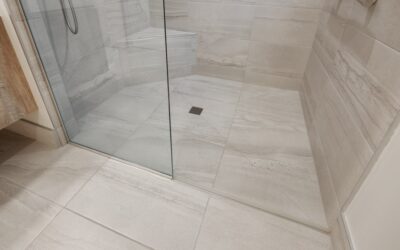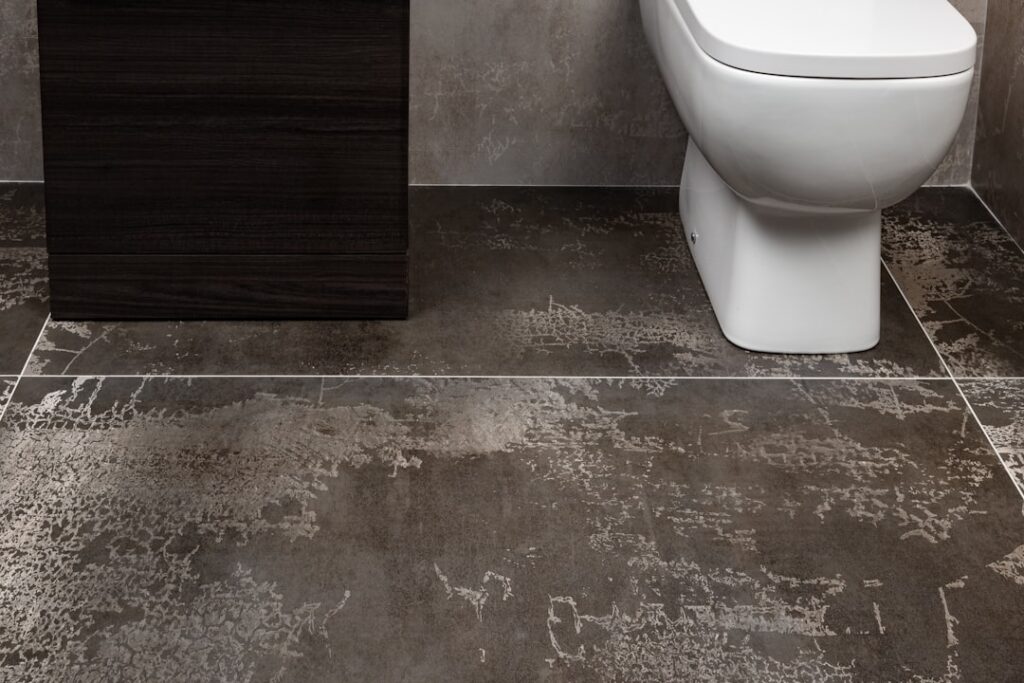
Standing water is the enemy of every wood floor, and a bathroom is the one room where water pools, splashes, and lingers as steam for hours. That is why waterproof wood flooring for bathrooms is less about a single magic product and more about choosing the right construction for a wet, humid space. Real solid oak swells and cups when it soaks up moisture, so the answer usually lives in engineered wood, rigid-core wood-look planks, or a properly sealed engineered board. Get the material and the subfloor prep right, and a bathroom floor can look like hand-scraped hickory while shrugging off a overflowing tub.
Part of our Roofing guide — explore the full guide →
Why Solid Hardwood Fails in a Bathroom
Solid hardwood is a single piece of wood roughly 3/4 inch thick. Wood is hygroscopic, meaning it absorbs and releases water with the surrounding humidity. In a bathroom where relative humidity can swing from 40% to 90% during a hot shower, solid planks expand across the grain, press against each other, and eventually cup or crown. Gaps open in the dry season. Even a well-finished solid floor is only surface-sealed, so any water that finds a seam wicks straight into the raw wood underneath.
Manufacturers know this, which is why nearly every solid hardwood warranty specifically excludes full bathrooms. A powder room with only a sink might squeak by, but a full bath with a tub or shower is a warranty voider. That single fact steers most homeowners toward engineered or rigid-core options.
Engineered Wood: The Real-Wood Compromise
Engineered wood gives you a genuine hardwood surface with far more dimensional stability. Each plank is built from a thin hardwood veneer (called the wear layer) bonded over a plywood or high-density core running in cross-directional layers. That cross-ply construction resists the swelling and shrinking that wrecks solid wood.
Pay attention to the wear layer thickness. A cheap engineered board carries a 0.6 mm to 1 mm veneer that cannot be refinished and offers little water margin. Bathroom-grade engineered wood should have a 2 mm to 3 mm veneer, which can be sanded once and tolerates minor moisture better. Expect to pay $4 to $9 per square foot for material, plus $3 to $6 per square foot for installation.
Engineered wood is water-resistant, not waterproof. For a bathroom, glue it down over a moisture-cured subfloor, seal every perimeter and penetration with 100% silicone, and treat any standing water quickly. It is the right pick for a homeowner who insists on real wood underfoot.
WPC and SPC Wood-Look Planks: Truly Waterproof
If you want a floor that survives a leaking supply line while you are on vacation, rigid-core luxury vinyl is the practical champion. These planks photograph and emboss so convincingly that guests assume they are wood, yet the core is 100% waterproof polymer.
WPC (Wood Plastic Composite)
WPC cores blend PVC with a wood-flour filler and foaming agents. The result is a thicker, warmer, softer-underfoot plank, usually 5.5 mm to 8 mm. WPC feels cushioned and quiet, making it comfortable for bare feet on a cold bathroom morning. Material runs $3 to $6 per square foot.
SPC (Stone Plastic Composite)
SPC cores swap wood filler for powdered limestone, producing a denser, thinner, and more dent-resistant plank, typically 3.2 mm to 5 mm. SPC handles heavy fixtures and dropped hair dryers better and is dimensionally rock-steady under temperature swings. Material runs $2.50 to $5 per square foot. Both WPC and SPC install as floating click-lock floors, so a confident DIYer can lay a small bathroom in a weekend.
Look for a wear layer of at least 12 mil (0.3 mm) for a residential bath and 20 mil for anything high-traffic. The wear layer is the clear top coat that resists scratches and scuffs; it has nothing to do with the waterproof core but everything to do with how long the finish lasts.
Sealing, Humidity, and Real-World Protection
No wood-look floor is a substitute for good bathroom habits. Even a waterproof SPC floor can let water reach the subfloor if the perimeter is open. When you install any of these floors in a bath, follow a few non-negotiables:
- Run a bead of 100% silicone caulk (not acrylic latex) around the tub, toilet flange, vanity, and along the baseboard-to-floor line.
- Leave the manufacturer-specified expansion gap, usually 1/4 inch to 3/8 inch, then hide it with baseboard and a caulked shoe molding.
- Run the bathroom exhaust fan during and for 20 minutes after every shower to keep relative humidity under 60%.
- Wipe standing water promptly; waterproof means the plank survives, not that the grout-free seams should sit in a puddle for days.
For engineered wood specifically, a penetrating hardwax-oil or a marine-grade polyurethane topcoat adds a meaningful water margin at the seams. Reapply hardwax oil every couple of years in a busy bath.
Subfloor Prep Matters More Than the Plank
Half of bathroom flooring failures trace back to the subfloor, not the finish floor. Concrete slabs must test under 3 pounds per 1,000 square feet per 24 hours on a calcium chloride test, or under 75% relative humidity with an in-situ probe. Over a slab, add a 6-mil poly vapor barrier or a rigid-core plank with an attached pad rated as a moisture barrier.
Over a plywood subfloor, verify it is flat within 3/16 inch over 10 feet and screwed down tight to eliminate squeaks. Any hump or dip telegraphs through a floating floor and stresses the click joints. If the existing subfloor is water-damaged particleboard, replace it with exterior-grade plywood before you spend a dollar on the new floor.
Choosing the Right Option for Your Bathroom
Match the floor to how the room gets used. A busy family bath with kids, a soaking tub, and daily showers is a clear case for SPC rigid core: fully waterproof, dent-tough, and forgiving of standing water. A primary suite where you want the warmth and resale appeal of genuine wood, and where you will keep humidity controlled, justifies a 3 mm engineered oak glued and sealed. A guest powder room with only a sink can even take engineered wood at a lower spec because splash exposure is minimal.
Budget shoppers gravitate to SPC for its low material cost and DIY-friendly install, while homeowners chasing a high-end look often accept the added care that engineered wood demands. Whichever you choose, waterproof performance comes from the whole system: the plank, the sealed perimeter, a sound subfloor, and a working exhaust fan.
Frequently Asked Questions
Is engineered wood truly waterproof in a bathroom?
No. Engineered wood is water-resistant thanks to its cross-ply core, but the hardwood veneer will still stain and swell if water sits in a seam. It works in bathrooms only when glued down, sealed at the perimeter, and paired with humidity control. For true waterproofing, use an SPC or WPC wood-look plank.
How much does waterproof wood flooring for a bathroom cost?
Rigid-core wood-look planks run $2.50 to $6 per square foot for material and $2 to $4 per square foot installed. Engineered wood runs $4 to $9 for material plus $3 to $6 for labor. A typical 40 to 60 square foot bathroom lands between $300 and $900 all in.
Can I install it myself?
Floating click-lock SPC and WPC are among the friendliest floors for DIY, needing only a tapping block, spacers, and a jamb saw. Glue-down engineered wood is more demanding and unforgiving of mistakes, so many homeowners hire that one out.
Do I still need an exhaust fan?
Yes. Even a waterproof floor cannot protect the walls, subfloor edges, or your fixtures from chronic high humidity. Running the fan keeps mold at bay and protects the whole room, not just the floor.
Prefer to explore on your own?
See how new flooring looks in your actual room in seconds — free, no signup.
Try the free Floor Studio →