You spot a tiny, oval, speckled beetle on a windowsill, then later find small bare patches in a wool rug, and the connection finally clicks. Understanding what causes carpet beetles comes down to two things: a food source they love and an easy way to get inside. These insects do not feed on the carpet pile so much as on the natural fibers, lint, hair, and other protein-rich debris that collect in your home. The larvae do the damage, quietly chewing through fabrics for weeks before anyone notices. Knowing why they show up is the first step to keeping them out for good.
- What Carpet Beetles Actually Eat
- How Carpet Beetles Get Into Your Home
- Why Infestations Take Hold
- Signs You Have Carpet Beetles
- How to Prevent Carpet Beetles
- Carpet Beetles vs. Clothes Moths
- Where to Inspect First
- Cleaning Up an Existing Problem
- The Carpet Beetle Life Cycle
- When to Call a Professional
- The Bottom Line
What Carpet Beetles Actually Eat
Carpet beetle larvae feed on materials rich in a protein called keratin and on other organic debris. That is why they are drawn to natural fibers far more than synthetics. Common food sources include:
- Wool, silk, felt, and cashmere in rugs, clothing, and blankets.
- Animal hides, leather, and fur.
- Pet hair, human hair, and dander that accumulate in corners and under furniture.
- Lint, dust, and dead insects trapped in vents and baseboards.
- Dried food, pantry grains, and pet food in some cases.
Pure synthetic carpet is rarely eaten, but blends and soiled synthetic fibers can still attract larvae because of the food debris woven into them.
How Carpet Beetles Get Into Your Home
Adult carpet beetles fly, and they are the main way an infestation starts. Outdoors, adults feed on pollen and nectar, so they often enter through several routes:
- Open windows and doors, especially without tight screens.
- Cracks and gaps around vents, foundations, and utility penetrations.
- Cut flowers and plants carried in from the garden.
- Secondhand furniture, rugs, and clothing that already harbor eggs or larvae.
- Bird and rodent nests in attics or wall cavities, which are a hidden food source.
Once inside, females lay eggs near a food source, and the cycle begins. A single overlooked wool item in a dark closet can sustain a population for a long time.
Why Infestations Take Hold
Carpet beetles thrive where food and quiet coexist. Undisturbed areas are the key risk factor: under heavy furniture, inside closets, along baseboards, in air ducts, and beneath area rugs that rarely get lifted. Soiled fabrics are especially vulnerable, because sweat, food spills, and body oils add the protein the larvae crave. Homes with pets generate steady hair and dander, which feeds populations even on synthetic carpet. Clutter compounds the problem by giving larvae endless dark hiding spots.
Signs You Have Carpet Beetles
Because the larvae work slowly and out of sight, the evidence often appears before the bugs do. Look for:
- Irregular bare spots or holes in wool rugs, sweaters, and upholstery.
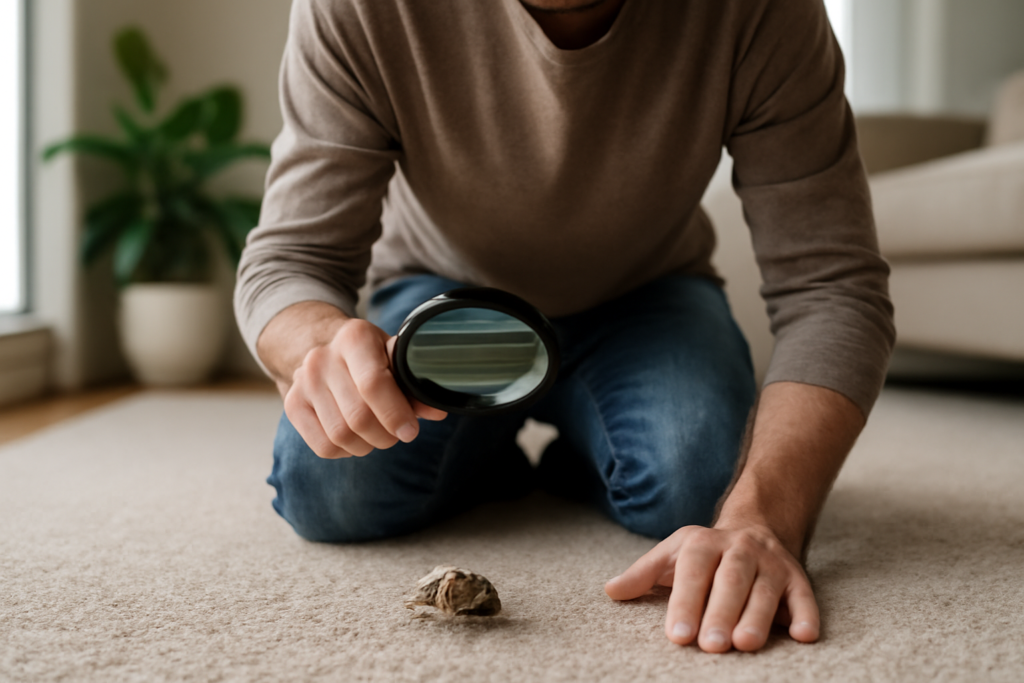
- Shed larval skins, which look like tiny brown, bristly husks.
- Small fecal pellets about the size of a grain of salt near damaged items.
- Live larvae: small, carrot-shaped, and covered in bristles or hairs.
- Adult beetles near windows, since they are drawn to light.
How to Prevent Carpet Beetles
Prevention is mostly about removing food and cutting off access. The most effective steps:
- Vacuum thoroughly and often, reaching edges, under furniture, and along baseboards to remove hair, lint, and debris.
- Clean natural-fiber items regularly and store off-season wool and silk in sealed containers or garment bags.
- Seal entry points, repair screens, and close gaps around windows, vents, and the foundation.
- Inspect secondhand goods before bringing them inside, and clean them immediately.
- Address bird and rodent nests, which are a common hidden source.
- Reduce clutter so there are fewer undisturbed hiding spots.
Carpet Beetles vs. Clothes Moths
Carpet beetles are often confused with clothes moths because both damage natural fibers, but the culprits and the clues differ. Clothes moths leave silky webbing and cocoon-like cases on damaged fabric, while carpet beetles leave behind bristly shed skins and tiny pellets. You will often see adult carpet beetles near windows, since they are drawn to light, whereas adult clothes moths avoid light and flutter in dark closets. Telling them apart matters because the control steps overlap but are not identical. Either way, the damage to wool and silk is done by the larvae, not the adults.
Where to Inspect First
If you suspect carpet beetles, start your search in the quiet, protected spots they favor. Pull back area rugs and check the edges where they meet the wall. Look under and behind heavy furniture that rarely moves. Open closets and inspect stored wool sweaters, blankets, and the dark corners of shelves. Check around air vents and along baseboards where lint and hair collect. Inspect window sills for adult beetles. Attics with old bird or rodent nests are a frequent hidden source, so investigate those if you have access. Finding the exact location of the larvae is the key to stopping the cycle.
Cleaning Up an Existing Problem
If you already have carpet beetles, start with deep cleaning. Vacuum every affected area meticulously and discard the vacuum bag or empty the canister outside right away. Launder washable infested fabrics in hot water, or have delicate items dry-cleaned, since heat kills all life stages. Freezing small items for several days is another option. Wipe down closets and drawers, and store cleaned natural fibers in airtight containers. Persistent or widespread infestations, especially those tied to wall voids or nesting animals, are best handled by a licensed pest control professional who can treat the source safely.
The Carpet Beetle Life Cycle
Understanding the timeline explains why infestations seem to appear out of nowhere and why they are stubborn to clear. An adult female lays dozens of tiny eggs in a hidden spot near a food source, often deep in a closet, under a baseboard, or inside a duct. Those eggs hatch into larvae in one to several weeks depending on temperature, and the larval stage is both the longest and the most destructive part of the cycle. Depending on conditions and species, larvae can feed for several months to well over a year, molting repeatedly and leaving behind the bristly shed skins that are a telltale sign. Only after this extended feeding do they pupate and emerge as adults, which live just a few weeks, mate, and start the cycle again. Because the damage happens during that long, quiet larval phase, you often see holes and bare patches long before you ever spot a beetle, and a single missed cluster of larvae can keep a population going for many months.
When to Call a Professional
Light, isolated activity is usually something you can handle yourself with thorough vacuuming, hot-water laundering, and sealed storage. But some situations call for help. If you keep finding larvae after repeated cleaning, if the damage is spreading across multiple rooms, or if the source appears to be inside wall voids, ductwork, or an attic with old bird or rodent nests, a licensed pest control professional is the right move. Pros can identify the species, locate hidden breeding sites you cannot reach, and apply targeted treatments safely and to label, which matters in homes with children or pets. They can also advise on whether nesting animals need to be removed first, since treating the carpet beetles without eliminating that hidden food source rarely solves the problem for good. For a serious or persistent infestation, hiring a professional is the most reliable path to stopping the cycle.
The Bottom Line
Carpet beetles are caused by a reliable food supply of natural fibers and debris combined with easy indoor access through windows, gaps, and infested items. They are common, manageable, and largely preventable with consistent vacuuming, smart storage, and sealed entry points. Catch the early signs, remove the food source, and you can stop these quiet fabric-eaters before they do real damage to your rugs and wardrobe.
Prefer to explore on your own?
See how new flooring looks in your actual room in seconds — free, no signup.
Try the free Floor Studio →