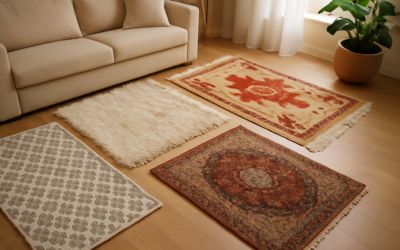
Most homeowners overthink carpet color and underthink everything else. Carpet in room selection should start with how the space is used — kids playing, adults sleeping, dogs sprinting, or guests passing through — because that single factor determines pile height, fiber, and density more than any color or style consideration. A plush saxony that feels luxurious in a master bedroom would look matted and gross in six months in a family room. A commercial Berber that performs brilliantly in a basement would feel rough and cheap in a primary bedroom. This guide walks room by room through what actually works, what it costs, and the most common mistakes that lead to early carpet replacement.
Bedrooms
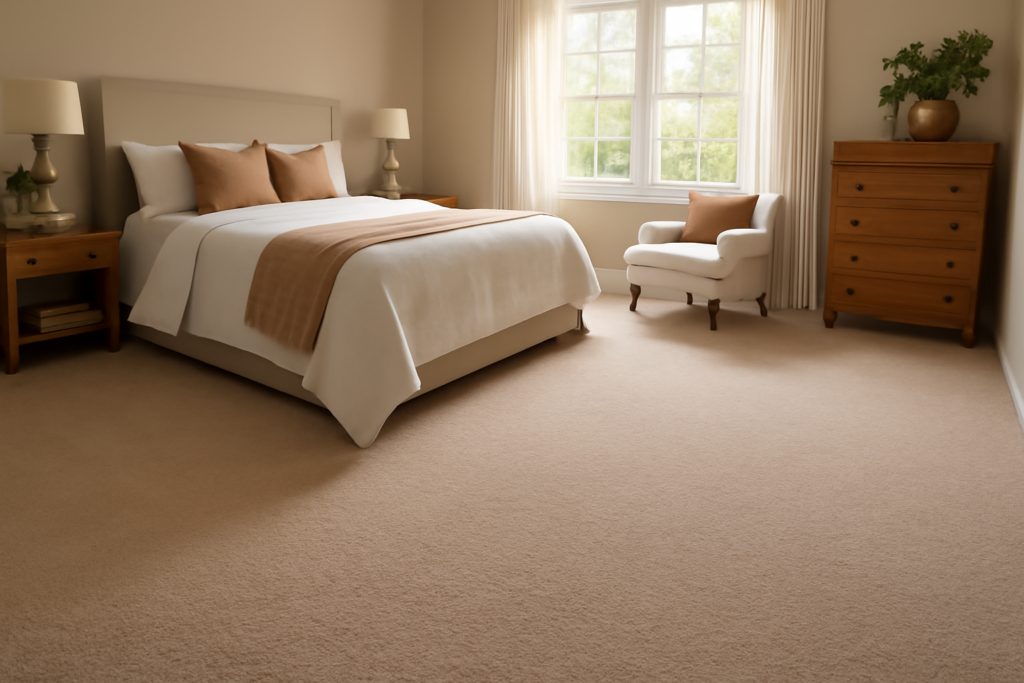
Bedrooms are the easiest room for carpet selection because traffic is light and comfort matters most. The best fiber is nylon (Stainmaster, Anso, Mohawk SmartStrand) for resilience and stain resistance. Pile height of 1/2 to 5/8 inch in a saxony or textured construction balances feel and appearance retention.
Master bedrooms typically need 250 to 350 square feet of carpet, costing $750 to $2,500 installed at $3 to $7 per square foot for material plus $1.50 to $2.50 for pad and labor. Stainmaster PetProtect and Mohawk Air.O are popular bedroom picks at $4.99 to $7.49 per square foot.
Living Rooms
Living rooms see more traffic than bedrooms but less than family rooms. The right product is mid-density nylon or polyester in a textured cut-pile or twist construction. Pile height of 3/8 to 1/2 inch maintains appearance better than deeper plush styles.
- Mohawk Continuum nylon — $4.99 to $6.99 per sq ft, 25-year warranty
- Stainmaster Stay Clean — $5.99 to $7.99, excellent stain release
- Shaw Anso Nylon — $5.49 to $7.99, durable for entertaining homes
- Engineered Floors PureColor — $4.49 to $5.99, solution-dyed PET
Avoid plush saxonies in living rooms — they show every footprint and vacuum line. Textured cut-pile (frieze) hides traffic patterns much better.
Family Rooms and Bonus Spaces
The family room is where carpet selection actually matters. High traffic, food spills, kid and pet activity, and rolling toys all attack the carpet daily. The right pick is solution-dyed nylon or olefin in a Berber or low-pile loop construction.
Solution-dyed fibers have color throughout the strand (not just on the surface), so spills and bleach-based cleaners cannot strip the color. Mohawk SmartStrand, Stainmaster PetProtect, and Lifeproof PetProof are all solution-dyed options designed for exactly this use.
Pile height under 3/8 inch handles wheeled toys, vacuum traffic, and crawling kids without matting. Multi-color or heathered patterns hide the inevitable spots and crumbs that solid colors highlight.
Stairs
Stair carpet sees more abrasion per square inch than any other space in the house. The standard recommendation is dense, low-pile nylon or wool with a tight twist construction. Anything over 1/2-inch pile catches feet and looks worn within months.
Wool stair carpet remains the gold standard for premium homes — naturally stain-resistant, fire-resistant, and durable for 30+ years. Expect $9 to $20 per square foot installed. Synthetic alternatives like Stainmaster Stay Clean Berber or Mohawk PetProtect Frieze deliver good performance at $5 to $9 per square foot.
Stairs require more material than the visible surface — figure 1.5 square feet per stair for a wrap-around installation, plus extra for waterfall, Hollywood, or French-cap finish styles.
Basements
Basement carpet faces unique challenges: moisture from below, occasional flooding risk, and often less natural light than upstairs spaces. The right product is olefin or solution-dyed nylon in a low-pile Berber or loop construction with a synthetic backing (avoid jute or natural backings).
Carpet tile is increasingly popular for basements specifically because individual tiles can be replaced when damaged or moisture-affected. Flor, Lifeproof tiles, and Mohawk Group commercial-grade tiles all work well in basements.
Always install a vapor barrier under basement carpet pad on concrete subfloors. The $40 vapor barrier prevents the $3,000 carpet from absorbing slab moisture and developing mildew odor.
Hallways
Hallway carpet sees concentrated traffic — every person walking from one room to another crosses the same narrow strip. Use the same products you would for stairs: dense, low-pile, tight-twist construction. Patterned or heathered carpets hide the inevitable wear path far better than solid colors.
For hallways longer than 12 feet, plan seam locations carefully. A seam in the middle of a 20-foot hallway becomes a permanent visual line as traffic patterns develop. Better to seam at room transitions where furniture or thresholds break the visual line.
Home Offices
Home office carpet faces a specific challenge — rolling chairs. Standard cut-pile carpet wears under chair casters in months. The right pick is either commercial-grade low-pile loop carpet (under 1/4 inch pile) or a chair mat over standard residential carpet.
Solution-dyed PET or nylon in a level-loop construction at 1/4 inch pile handles chair traffic well. Brands like Engineered Floors, Mohawk Group, and Shaw Contract sell residential-friendly versions of their commercial product lines.
Children’s Rooms
Kid rooms benefit from soft, cushioned carpet. The right pick is nylon or wool in a saxony or cut-pile construction at 1/2 to 5/8 inch pile. Premium pad (8 lb density rebond, 7/16 inch thick) makes the floor feel even softer.
Skip white, cream, or pale carpet anywhere a child plays. Even with stain-resistant fiber, accumulated grime turns light carpets gray within two years. Mid-tones, multi-color patterns, or heathered grays hide normal kid-room wear remarkably well.
Sizing and Estimating Material
For any carpet in room project, measure the longest and widest dimensions of the space, including closets and doorways. Add 6 to 10% for waste, more for irregular shapes or pattern matching. A typical 12 by 14-foot bedroom needs 168 square feet of usable carpet — order 185 square feet to allow for cuts and seam alignment.
Carpet comes in 12-foot or 15-foot rolls (some specialty products in 13.5-foot). Plan room dimensions to minimize seams. A 12 by 14-foot room takes one 14-foot length cut from a 12-foot wide roll — no seams. A 14 by 16-foot room requires two strips and a seam.
Pad Selection by Room
Pad matters more than most homeowners realize. Standard recommendations by room:
- Bedrooms — 8 lb density, 7/16 inch thick rebond
- Living rooms — 8 lb density, 7/16 inch rebond
- Family rooms — 8 lb density, 3/8 inch rebond (firmer for high traffic)
- Basements — 6 lb density rebond with attached moisture barrier
- Stairs — 7/16 inch firm rebond, no thicker (creates safety issue)
- Home offices with chairs — firm 6 lb pad to support chair caster traffic
Final Thoughts
Choosing carpet in room by room rather than treating the whole house as one decision produces dramatically better outcomes. Soft plush in bedrooms, durable low-pile in family rooms and stairs, moisture-resistant tiles in basements, and chair-compatible loop carpet in offices. Spending an extra $1 to $2 per square foot for the right fiber and construction in high-traffic rooms pays back across the carpet’s life. Skimping there is the most common mistake homeowners make — and the one that drives most premature replacement projects.