
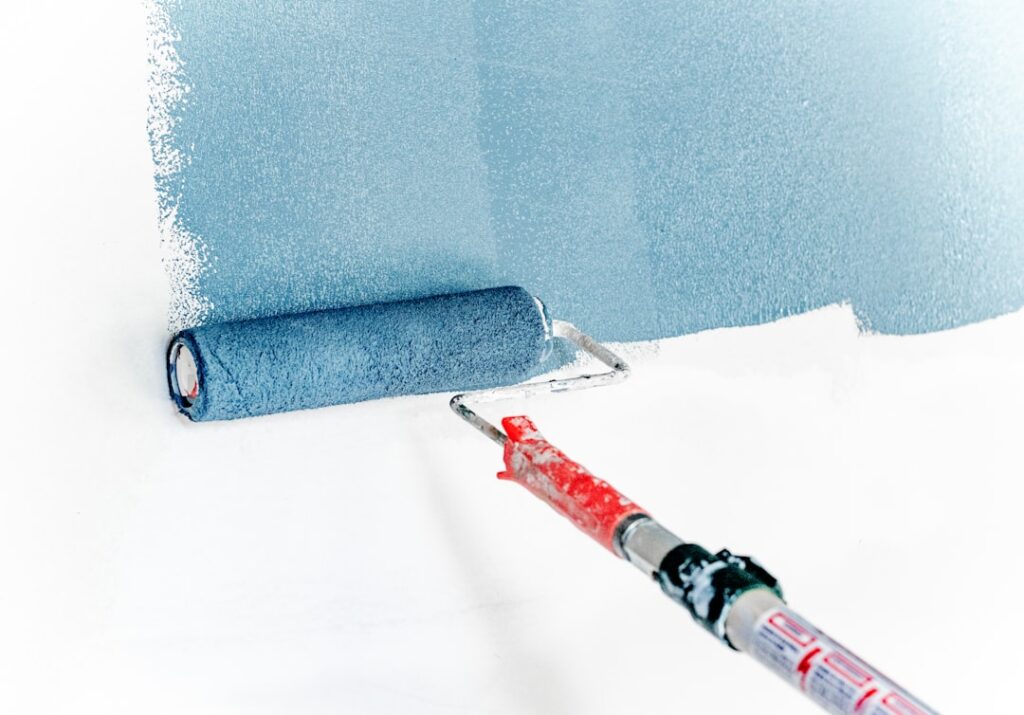
That sharp chemical smell when you open a can of paint has a name, and it’s the thing “low VOC” is designed to reduce. So what does low VOC mean in paint? It means the product releases a limited amount of volatile organic compounds, the carbon-based chemicals that evaporate as paint dries and create both the odor and the indoor air-quality concerns that come with painting. Understanding the actual limits, what the label claims really cover, and where the tradeoffs lie will help you choose a paint that’s healthier to live with without sacrificing the finish and durability you’re paying for.
- What VOCs Actually Are
- The Numbers That Define Low and Zero VOC
- Why It Matters for Your Health
- Low VOC Versus Zero VOC Versus Natural
- Do You Give Up Performance?
- Where Low-VOC Paint Matters Most
- Reading the Label and Avoiding Greenwashing
- How to Choose and Apply It Well
- Managing Odor and Air Quality After Painting
What VOCs Actually Are
Volatile organic compounds are carbon-containing chemicals that evaporate readily at room temperature. In paint they come from solvents and additives that keep the product liquid, help it flow, and let it cure to a durable film. As the paint dries, those solvents off-gas into the air, which is what you smell and breathe. Common paint VOCs include compounds like formaldehyde, toluene, and various glycols.
Off-gassing is heaviest during application and the first few days of curing, but some paints continue releasing small amounts for weeks or even months. That lingering release is why VOC content matters most in bedrooms, nurseries, and any room where people spend long stretches of time.
The Numbers That Define Low and Zero VOC
VOC content is measured in grams per liter (g/L), and the thresholds are set by regulation. The federal EPA caps VOCs at 250 g/L for flat interior paints and 380 g/L for other finishes, but those are ceilings, not targets. To be marketed as “low VOC,” a paint generally must fall under 50 g/L, and stricter regional rules, such as California’s, push architectural coatings well below the federal limits.
“Zero VOC” paints must contain less than 5 g/L, essentially trace amounts. It’s worth knowing that “zero” rarely means literally none, because colorants added at the store can reintroduce VOCs, and some compounds are exempt from the measurement altogether. Still, a zero-VOC base tinted with low-VOC colorant is dramatically cleaner than a conventional oil-based paint that can exceed 400 g/L.
Why It Matters for Your Health
Breathing high concentrations of paint VOCs can cause headaches, dizziness, nausea, and irritation of the eyes, nose, and throat during and right after painting. People with asthma or chemical sensitivities react more strongly, and prolonged exposure to certain VOCs has been linked to more serious respiratory and organ effects over time.
The people most worth protecting are infants, pregnant women, the elderly, and anyone with respiratory conditions. Choosing low- or zero-VOC paint for a nursery or a bedroom that will be occupied soon after painting is one of the simplest health upgrades in a renovation, and it lets you sleep in the room the same night rather than airing it out for days.
Low VOC Versus Zero VOC Versus Natural
These labels form a rough spectrum. Low-VOC paints under 50 g/L are widely available from every major brand and perform nearly identically to conventional paint. Zero-VOC paints under 5 g/L go a step further and are the standard choice for sensitive spaces. Beyond those, “natural” or plant- and mineral-based paints minimize synthetic ingredients entirely, though they can cost more and offer fewer colors.
Don’t confuse low VOC with low odor, either. A paint can be low in VOCs but still contain other ingredients that smell, and some higher-VOC products are formulated to smell mild. Read the actual g/L figure on the label or the technical data sheet rather than trusting a vague “eco” marketing claim on the front of the can.
Do You Give Up Performance?
A decade ago, low-VOC paints had a reputation for poor coverage and weak durability. That’s largely history. Today’s premium low- and zero-VOC lines from major manufacturers hide well in one to two coats, scrub clean, and hold up in kitchens and bathrooms as well as conventional paints. The reformulation that removed solvents also improved the resins.
Where the old tradeoffs still show up is at the budget end and in specialty situations. Very cheap low-VOC paints may need extra coats, and some low-VOC products dry faster, which shortens your working time and can make lap marks more likely if you’re slow with the roller. Buy a quality line and those issues mostly disappear.
Where Low-VOC Paint Matters Most
The value of low-VOC paint scales with how much time people spend in the room and how quickly it will be occupied. Bedrooms, nurseries, and home offices top the list, since you sleep and work in them for hours and often can’t air them out for days. Choose zero-VOC products for a nursery you’ll move a crib into within a week, where minimizing off-gassing directly protects a developing infant.
Enclosed, poorly ventilated spaces also benefit disproportionately because VOCs concentrate when air doesn’t move, so a windowless bathroom, a basement, or an interior hallway is a smart place to spend on low-emission paint. By contrast, an exterior project or a rarely used detached garage is a reasonable place to save money with a standard product, since the fumes disperse outdoors and no one lingers in the space while it cures.
Reading the Label and Avoiding Greenwashing
The paint aisle is full of vague eco-language, so learn to look past it to the numbers. The front-of-can “low VOC” or “eco-friendly” claim means little on its own; flip to the back label or pull up the technical data sheet and find the actual VOC figure in grams per liter. Under 50 g/L is genuinely low, under 5 g/L is zero-VOC, and anything without a stated number deserves skepticism.
Third-party certifications add real confidence because they’re independently tested rather than self-declared. Look for GREENGUARD Gold, which certifies low chemical emissions for sensitive environments like schools and healthcare, or Green Seal and MPI certifications. Remember too that deep base colors need more colorant, which can push a “zero-VOC” base above its rating, so ask the store to tint with low-VOC colorants if you’re choosing a saturated shade.
How to Choose and Apply It Well
Start by reading the label for a specific VOC number in g/L rather than relying on “low VOC” alone, and remember that adding deep or bright tint colors can raise the total, so ask for low-VOC colorants at the counter. Look for third-party certifications like GREENGUARD Gold or the label’s recyclability marks as a further signal of genuine low emissions.
Even with a clean paint, ventilate while you work: open windows and run a fan to move air out of the room. Give the paint the recommended cure time before scrubbing, typically a couple of weeks to full hardness even though it’s dry to the touch in hours. Knowing what does low VOC mean in paint turns a confusing shelf of cans into a clear decision, letting you pick a finish that protects your air without compromising the look or longevity of the job.
Managing Odor and Air Quality After Painting
Even a low-VOC paint releases some compounds as it cures, and a few simple habits clear them out faster. Cross-ventilate by opening windows on opposite sides of the room and running a box fan to push air outward rather than just stirring it around. An air purifier with an activated-carbon filter helps absorb residual odors, and keeping the room warm, around 70°F, speeds curing so the off-gassing period is shorter.
Skip the old tricks that don’t actually work, like leaving out bowls of onions or vinegar; they mask smell without removing VOCs. If you or a family member is especially sensitive, wait until the paint has cured for a few days before spending long stretches in the room, since the first 48 to 72 hours release the most. Combining a genuinely low-VOC product with good ventilation is the reliable way to repaint a bedroom and sleep in it comfortably soon after.


