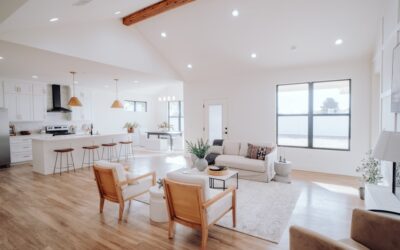
“Whitewood” is the lumber-yard label for the soft, pale-toned SPF group — spruce, pine, and fir mixed and graded together by structural properties rather than species. Whitewood flooring built from these inexpensive boards has quietly become a darling of farmhouse renovators, tiny-house builders, and budget-savvy homeowners who want real solid wood floors at $1.50 to $4 per square foot instead of $6 to $14. The catch is significant — whitewood is soft, dents easily, and demands careful finishing — but for the right buyer in the right room, no other product delivers the same authentic wood-floor look at the same price.
What You Are Actually Buying
Whitewood is a structural lumber category, not a single species. The boards sold under that label might be eastern white spruce, lodgepole pine, balsam fir, or any combination depending on what your local yard had in the truck that week. All three species share similar color (pale cream to light yellow), similar density (about 28 to 30 pounds per cubic foot dry), and similar working properties.
For flooring, the typical approach is to buy 1×6 or 1×8 select-grade SPF boards from a lumber yard or big-box store, mill them to tongue-and-groove on a router table or table saw, and install as wide-plank flooring. A 1×8 board nets to about 7.25 inches usable width — bigger than 90 percent of engineered floors sold today.
The Hardness Problem
Whitewood scores roughly 380 to 450 on the Janka hardness scale. Red oak scores 1,290. White oak scores 1,360. Hard maple scores 1,450. In practical terms, whitewood floors dent from dropped objects, chair legs, and high heels in ways that hardwood floors never would.
For most buyers, this is the deal-breaker. But for those drawn to the character of antique floors — visible nail heads, dents that tell a story, a patina that builds over decades — the softness is part of the appeal rather than a defect. Whitewood is essentially what 1800s farmhouse floors were made of, and those floors are still in service.
Where Whitewood Floors Actually Work
- Farmhouse and cabin builds where character matters more than perfection
- Tiny houses and budget builds where every dollar counts
- Bedrooms and closets with minimal foot traffic
- Attic conversions and finished basements
- Workshop loft spaces and guest rooms
- Vintage barn-house restorations
Where It Does Not Work
- Entryways, mudrooms, hallways — too much traffic
- Kitchens — dropped cookware leaves permanent dents
- Living rooms with kids and dogs
- Bathrooms (whitewood is not water-resistant)
- Any home where the buyer expects the floor to look factory-new in five years
Finish Choices That Compensate for Softness
The finish makes or breaks a whitewood floor. Cheap polyurethane will not save soft pine from denting, but it will hide the wood character that made you choose pine in the first place. Three finish approaches work best.
Hard-wax oils like Rubio Monocoat, Saicos Premium, or Osmo PolyX-Oil penetrate into the wood rather than building a film on top. Dents and dings spot-repair easily with a single re-application. Plan on a refresher coat every 18 to 24 months in busy areas.
Traditional shellac finishes look period-correct on whitewood floors and spot-repair almost invisibly. Zinsser Bulls Eye Shellac is the standard. Three to five coats build a workable finish. The downside is poor water resistance — wipe spills within minutes.
Modern water-based polyurethane like Bona Traffic HD adds a true wear layer that resists scratches better than oil finishes. It also ambers less than oil-based poly. Three coats, sand between coats, and your whitewood floor reads more like hardwood at a distance.
Installation Specifics
Acclimate boards in the room for 14 to 21 days. SPF lumber arrives at the yard with 12 to 19 percent moisture content, and equilibrium for interior use is 6 to 9 percent. Skip acclimation and the floor will shrink by an eighth-inch per board in the first heating season.
Run boards through a planer to remove the rough mill surface, then run a router with a tongue-and-groove bit to create the joint. Alternative — buy pre-milled tongue-and-groove pine flooring from a specialty wood dealer at $2.50 to $4 per square foot, which saves the milling labor.
Install with 18-gauge 2-inch cleats or 8d ring-shank nails through the tongue at 8 inches on center. Face-nail the first and last rows.
For a true antique look, hand-distress the boards before installation. A hammer, chain, and bag of bottle caps create authentic wear marks. The finish brings everything together visually.
Pricing Compared to Hardwood
- Rough 1×8 SPF lumber: $0.85 to $1.20 per square foot before milling.
- Pre-milled tongue-and-groove pine: $2.50 to $4 per square foot.
- Finish materials (hard-wax oil, shellac, or polyurethane): $0.80 to $1.50 per square foot.
- Installation labor (DIY): time investment, no labor cost.
- Installation labor (hired): $2.50 to $4 per square foot — many contractors will not touch whitewood floors because of warranty issues.
- Total turnkey: $4 to $7 per square foot for a whitewood floor vs $9 to $15 for hardwood.
Sun Fade and Color Aging
Pine yellows and ambers significantly with sun exposure — usually two to three shades darker within five years. The amber tone is part of the antique-floor appeal for many buyers, but it does mean the floor changes color over time in ways hardwood does not.
Sun-exposed areas amber faster than zones under rugs or furniture. This creates visible “ghost” lines if you move furniture after several years. Either accept the patina or rotate furniture every six months.
Long-Term Care
Daily microfiber dust mop. Weekly damp clean with a wood-specific cleaner — Bona Pro for poly-finished floors, Rubio Soap for oil-finished, or just a damp cloth with mild dish soap for shellac. Avoid wet mopping at all costs — water sits on whitewood and stains the soft fibers.
Plan a refresher coat of finish every 18 to 36 months in high-traffic zones. Whitewood floors live longer with preventive maintenance than they do with restorative repairs after damage. Felt pads on chair legs, area rugs in pivot zones, and entry mats at all exterior doors all extend service life. Done right, a whitewood floor in a low-traffic room lasts 50 to 100 years and develops a patina that no factory-made floor can replicate.
Prefer to explore on your own?
See how new flooring looks in your actual room in seconds — free, no signup.
Try the free Floor Studio →