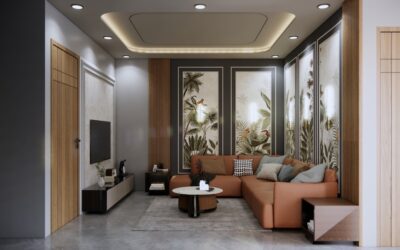
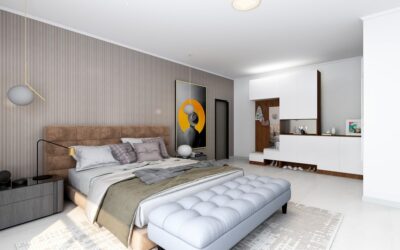
Bedrooms have the easiest job of any room in the house, which is exactly why so many homeowners overspend on the wrong flooring for them. Bedroom flooring options rarely need to be waterproof, scratch-proof, or rated for commercial wear. Quiet, warm, and comfortable underfoot matters more than durability scores. The smart play is to spend the saved budget on better cabinetry, paint, or the kitchen floor where punishment is real. Still, getting the bedroom floor right has its own subtleties: allergens, sound transmission to rooms below, and resale appeal all factor in.
What Bedrooms Actually Need from a Floor
Foot traffic in a typical bedroom is minimal: usually two adults walking barefoot, occasionally a kid jumping on the bed, and a vacuum once a week. Spills happen but rarely. The real performance demands are sound dampening (so the master bedroom isn’t a drum echoing into the room below), comfort (your feet hit it first thing every morning), and visual warmth (bedrooms benefit from softer materials and tones).
Resale matters for some buyers. Carpet in master bedrooms sells well in family-oriented markets; hardwood reads as more upscale in urban markets. Match the floor to your neighborhood’s expectations if resale is a priority.
Carpet
Carpet is still the dominant choice in American bedrooms for good reason. It absorbs sound, feels soft underfoot, holds heat, and forgives an imperfect subfloor. Mid-grade nylon or PET runs $3 to $6 per sq ft installed. A quality 8 lb rebond pad underneath ($0.40 to $0.80 per sq ft) extends carpet life and adds another layer of acoustic dampening.
The downside is allergens. Carpet traps dust, dander, and pollen, which becomes an issue for sensitive sleepers. A HEPA vacuum used twice a week largely handles it, but allergic occupants may still prefer hard surfaces.
Solid and Engineered Hardwood
Hardwood adds resale value, looks timeless, and pairs with any decor style. Solid 3/4-inch oak or maple runs $5 to $12 per sq ft installed; engineered hardwood with a 2mm to 4mm wear layer runs $4 to $10. Wide planks (5 inches or more) photograph beautifully and read as more luxurious.
The catch: hardwood is loud, especially over a wood subfloor. Footsteps echo to rooms below and the room itself feels brighter than carpeted rooms. An area rug under the bed solves both issues; plan for at least an 8×10 rug under a queen bed and 9×12 under a king. Acclimate solid hardwood for 5 to 7 days before installation to prevent seasonal gapping.
Luxury Vinyl Plank (LVP) and Rigid Core
LVP and SPC have become genuine contenders for bedrooms in the last few years. The visuals on premium products are nearly indistinguishable from real wood at three feet of viewing distance, and the construction is fully waterproof, dimensionally stable, and warmer than tile.
Pricing runs $2.50 to $7 per sq ft for materials. Installation is fast over almost any subfloor; an entire bedroom can be done in a single afternoon. Sound is the weak spot. LVP transmits footstep noise more than carpet but less than hardwood, especially with an attached IXPE underlayment pad.
- Carpet: Quietest, warmest, lowest cost
- Hardwood: Best resale, classic look, loudest
- LVP/SPC: Most versatile, waterproof, mid-range cost
- Laminate: Cheapest hard surface, scratches very well
Laminate
Laminate is the budget hard-surface pick. Modern AC4 and AC5 laminates handle bedroom traffic without breaking a sweat and cost $1.50 to $4 per sq ft installed. Visual quality has improved dramatically; embossed-in-register textures align with the printed grain, making the planks look and feel like real wood.
Two issues to flag: laminate sounds hollow underfoot without a quality underlayment, and it’s not waterproof. Spilled coffee that sits for an hour can swell the seams. For a master bedroom that occasionally hosts a glass of wine on the nightstand, LVP is the safer call. For a guest bedroom or kid’s room, laminate is fine.
Cork and Bamboo
Cork is the under-the-radar champion for bedrooms. It’s softer than wood, warmer than tile, naturally insulating, and surprisingly affordable at $4 to $8 per sq ft. The texture quiets footsteps and adds a slight bounce that’s easy on joints.
Bamboo runs harder than oak when made well (strand-woven varieties hit Janka 3,000+) and provides a clean, modern look. Pricing sits at $4 to $9 per sq ft. Both bamboo and cork are renewable resources, which appeals to eco-conscious buyers.
Tile and Stone
Tile in a bedroom is mostly limited to warm-climate regions like Arizona, Florida, and southern California. Porcelain wood-look tile and natural stone stay cool in summer, hold up to dust and pet hair, and clean easily. The big concession is comfort; bare feet on tile in winter is brutal without radiant floor heating, which adds $6 to $12 per sq ft to the install.
If you live somewhere with a real winter and prefer hard surfaces, hardwood or LVP is a better balance than tile.
Pros and Cons of Each Bedroom Flooring Option
Carpet wins on comfort and acoustics, loses on allergens and resale appeal in some markets. Hardwood wins on aesthetics and resale, loses on noise and softness. LVP and SPC win on versatility and waterproof performance, lose on the slight artificial feel underfoot. Laminate wins on price, loses on water tolerance. Cork and bamboo win on sustainability, lose on widespread availability and recognition. Tile wins in hot climates, loses everywhere else.
Picking the Right Bedroom Flooring
For most US homeowners, carpet in the master and kid bedrooms paired with hardwood or LVP in the rest of the house remains the smartest combination. Carpet costs the least, sleeps the warmest, and handles sound transmission better than anything else. If you have allergies, lean toward LVP with a large area rug under the bed. If resale or design aesthetics matter most, choose hardwood and accept the trade-offs in noise and cleaning. Sample multiple options at home for a few days before deciding; what looks great in a showroom can read very differently against your bedroom wall color and lighting.
Prefer to explore on your own?
See how new flooring looks in your actual room in seconds — free, no signup.
Try the free Floor Studio →