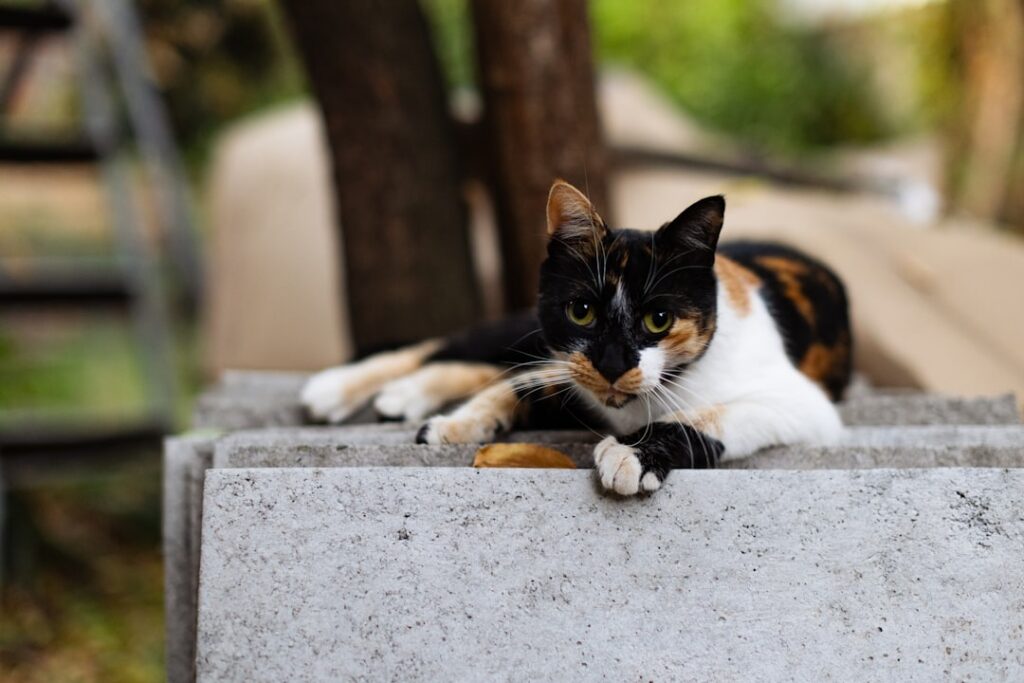
Pour a new patio and within a day there’s a cat sprawled across it — or worse, a line of paw prints cured permanently into your $2,000 slab. So why do cats like concrete so much? The short answer is that a concrete slab is, from a cat’s point of view, a giant climate-control device with a satisfying texture and a blank scent canvas. The longer answer behind why do cats like concrete involves some genuinely interesting feline physiology — and for homeowners, it comes with practical stakes, because keeping cats off curing concrete is a real construction problem with real solutions. Let’s cover both.
- Reason One: Concrete Is a Thermal Battery
- Reason Two: The Texture Feels Good
- Reason Three: Scent-Marking Real Estate
- Is Lying on Concrete Bad for Cats?
- The Homeowner Problem: Cats and Fresh Concrete
- Keeping Cats Off Cured Patios and Outdoor Furniture Zones
- Bonus Question: Why Do Cats Scratch and Lick Concrete?
- The Takeaway
Reason One: Concrete Is a Thermal Battery
Cats run hot. A healthy cat’s body temperature sits at 100.5°F to 102.5°F — a few degrees above ours — and domestic cats descend from desert-dwelling African wildcats, which left them with a high tolerance for heat and a strong instinct to manage temperature behaviorally rather than metabolically. Concrete’s thermal mass makes it the perfect tool. A slab in afternoon sun stores heat and can hold surface temperatures of 100°F to 125°F, then releases that warmth for hours after sunset — a free heated bed on a cool evening. Flip the season and the same slab works the other way: shaded concrete stays 10 to 20 degrees cooler than the air on a summer day, and a cat flattening itself belly-down against it is doing exactly what engineers call conductive cooling, dumping body heat into the cool mass through the thin fur of its underside. One material, two opposite comforts. Your cat isn’t confused; it’s optimizing.
Reason Two: The Texture Feels Good
Broom-finished concrete has a fine, abrasive tooth to it, and cats seek out mildly rough surfaces for two behaviors. Rolling: that gritty texture scratches along the back and flanks in places paws can’t reach — the same reason cats roll on asphalt driveways and doormats. Rubbing: a textured corner of a step or a slab edge gives a satisfying cheek-scratching station. Concrete is also dry and firm, which matters more than people realize; cats generally dislike damp or unstable surfaces underfoot, and a cured slab is the most predictable footing in the yard. Compared to wet grass or shifting mulch, it’s the feline equivalent of hardwood floors versus a muddy trail.
Reason Three: Scent-Marking Real Estate
Cats navigate the world through scent ownership. They carry scent glands in their cheeks, forehead, flanks, and paw pads, and they deposit pheromones by rubbing and rolling on surfaces they consider theirs. Concrete is porous — it holds scent well — and a fresh slab is, chemically speaking, unclaimed territory with no competing odors. That’s part of why new concrete is so magnetic: your cat (and every neighborhood cat) is racing to be first on the deed. Warm surfaces also volatilize scent compounds, so a sun-heated slab broadcasts marking signals more effectively. When you see a cat cheek-rubbing the corner of your porch steps daily, that’s maintenance marking — refreshing a scent lease that fades in days.
Is Lying on Concrete Bad for Cats?
Generally no, with two cautions. Hot slabs can genuinely burn paw pads — the common veterinary guidance is the seven-second rule borrowed from dog owners: if you can’t hold the back of your hand on the surface for 7 seconds, it’s too hot for sustained contact. Concrete above roughly 125°F, easy to reach in full summer sun, is a risk. Second, a cat that suddenly starts seeking cold surfaces obsessively, especially an older cat, can be showing fever or hyperthyroid signs — flag persistent behavior change to your vet. Otherwise, a cat napping on your patio is a cat doing normal, healthy cat things.
The Homeowner Problem: Cats and Fresh Concrete
Now the expensive part. Fresh concrete typically takes initial set in 4 to 8 hours and remains soft enough to record paw prints for up to 24 hours depending on mix, temperature, and humidity. Cats are drawn to it for every reason above — it’s warm from hydration heat (curing concrete generates its own warmth), it’s texturally novel, and it’s scent-blank. A cat crossing a slab at hour three leaves prints you’ll own for fifty years. Protection is cheap compared to grinding and patching:
- Physically exclude for 24 to 48 hours. Stake plastic mesh fencing or hardware cloth around the pour perimeter, 2 to 3 feet high. Cats defeat caution tape instantly; they respect actual barriers.
- Cover walkways with plastic sheeting laid loosely once the surface can take it (finisher’s call, often after final troweling) — sheeting also helps moist curing, though it can slightly mottle decorative finishes, so ask your contractor first.
- Motion-activated sprinklers (around $35 to $70) are the single most effective cat deterrent in independent testing and cover the vulnerable overnight window.
- Remove the heat lure: pours finished late in the day stay attractively warm all night; morning pours cure through daylight hours when you can supervise.
If prints happen anyway: shallow prints in concrete under a few hours old can often be re-troweled by the finisher; discovered the next day, options drop to grinding and a thin polymer-modified overlay ($3 to $8 per square foot for the affected area) — or embracing them as a signature. Plenty of clients choose the signature.
Keeping Cats Off Cured Patios and Outdoor Furniture Zones
For everyday deterrence on finished concrete — say, a patio a neighborhood cat has claimed as a litter area or scratching post — layer these:
- Citrus and scent deterrents: cats broadly dislike citrus; commercial granular repellents last 1 to 2 weeks per application.
- Texture disruption: upside-down plastic carpet runner (nubs up) or double-sided tape on ledges makes favorite lounging spots unappealing without harm.
- Offer a better option: the most reliable trick in the book — a designated warm spot (a dark-colored paver in a sunny corner, or an outdoor heated pad for your own cat) sited away from the area you’re defending. Cats take the upgrade almost every time.
- Wash marked areas with an enzymatic cleaner, not ammonia-based products — ammonia reads as urine and invites re-marking.
Bonus Question: Why Do Cats Scratch and Lick Concrete?
Two related behaviors puzzle owners enough to ask. Scratching on concrete steps or block walls is normal claw maintenance — the abrasive surface strips loose claw sheaths the way a scratching post does, while leaving both a visual mark and paw-gland scent. If your porch corner is getting shredded attention, a horizontal sisal or corrugated-cardboard scratcher placed directly on the favored spot redirects the habit in a week or two for under $20.
Licking or actually eating concrete, mortar, or soil is different and worth attention. Occasional investigative licking is harmless — concrete holds mineral salts and interesting odors. Persistent gnawing at masonry, though, is classic pica behavior, and in cats it correlates with anemia and certain mineral deficiencies often enough that veterinarians treat “eating concrete” as a bloodwork prompt, not a quirk. Young cats and indoor cats with low stimulation also mouth odd materials out of boredom, so the practical response is a vet check first, then enrichment — puzzle feeders, cat grass, more play. On the homeowner side, fresh masonry is mildly caustic until cured (wet concrete’s pH runs around 12 to 13), so keep pets clear of wet mortar and rinse paws that walk through it; cured concrete poses no chemical risk to a licking cat beyond whatever de-icer or fertilizer residue sits on it, which is a good argument for pet-safe ice melt on paths cats patrol.
The Takeaway
Cats like concrete because it solves three feline problems at once: thermoregulation, itch and texture satisfaction, and scent-territory management. None of it is mysterious and almost none of it is harmful — right up until there’s a curing slab involved. Plan any pour with 24 to 48 hours of real physical exclusion, keep summer surface temperatures in mind for paw safety, and if a cat has annexed your patio, redirect it to a better spot instead of fighting for the territory. You’ll lose the territorial argument with a cat anyway; every concrete finisher’s photo album proves it.