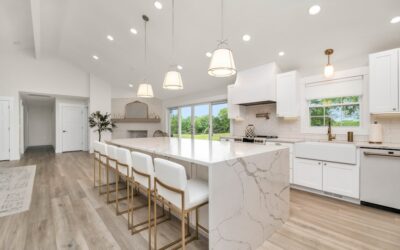
A powerful cooktop is only half of a serious kitchen; without ventilation to match, smoke, grease, and odors linger and coat every surface. A wolf range hood is engineered to pair with high-output ranges and cooktops, pulling heat, steam, and airborne grease out of the kitchen with the kind of quiet, capable performance that defines the Wolf brand. If you are building a premium kitchen or upgrading around a Wolf or other pro-style range, understanding the hood lineup, the critical CFM sizing math, and the installation requirements will help you choose a hood that actually keeps your kitchen clean and comfortable.
Part of our Kitchen Remodeling guide — explore the full guide →
Why Ventilation Matters More Than You Think
High-BTU burners and griddles generate enormous amounts of heat, steam, and grease-laden vapor. Without adequate extraction, that vapor settles as a sticky film on cabinets, walls, and ceilings, and combustion byproducts stay in the air you breathe. A properly sized range hood captures those contaminants at the source and vents them outside. Wolf builds its hoods with heavy-gauge stainless steel, powerful blowers, and effective baffle filters designed to handle the output of serious cooking equipment, which is exactly why they are specified alongside pro-style ranges.
Types of Wolf Range Hoods
Wolf offers several configurations to fit different kitchen layouts:
- Wall-mounted hoods: Mount on the wall above a range set against the wall, the most common setup, available in pro and cleaner-lined designs.
- Island hoods: Suspend from the ceiling over a cooktop on an island, finished on all sides since they are visible from every angle.
- Insert (built-in) liners: Ventilation power units designed to be built into a custom wood or plaster hood surround for a seamless, cabinetry-integrated look.
- Downdraft ventilation: Rises from behind or beside the cooktop and retracts when not in use, for kitchens where an overhead hood is not desired.
- Pro-style hoods: Bold, commercial-inspired stainless designs that make a statement and match Wolf’s pro ranges.
Sizing: Getting the CFM Right
The single most important spec is airflow, measured in cubic feet per minute (CFM). Too little and the hood cannot keep up; too much and you can create makeup-air problems in a tight home. A common guideline for gas cooking is to provide roughly 1 CFM for every 100 BTUs of cooktop output. So a 60,000-BTU range calls for around 600 CFM, and a big 90,000-BTU pro range may need 900 CFM or more.
The hood should also be at least as wide as the cooktop, and ideally 3 inches wider on each side for better capture, meaning a 36-inch range pairs well with a 42-inch hood where space allows. Mounting height matters too: most hoods should sit 30 to 36 inches above the cooking surface, following the manufacturer’s spec for the best balance of capture and clearance.
Ducted vs. Ductless
Wolf hoods are built for ducted (vented) operation, which is by far the more effective approach. A ducted hood pushes air and contaminants completely out of the house through rigid metal ductwork. This is always the preferred setup for a serious kitchen. Ductless recirculating operation, which filters the air and returns it to the room, is a compromise used only when venting outside is truly impossible, and it does far less to remove heat and moisture. If you can run a duct, run a duct, and keep the run as short and straight as possible with smooth rigid pipe rather than flexible ducting.
Makeup Air Considerations
Here is a detail many homeowners miss: a powerful hood pulling 600 CFM or more out of a tightly sealed modern home can create negative pressure, which can backdraft other appliances and make the hood struggle. Many building codes now require a makeup-air system for hoods above a certain CFM, typically 400 CFM, to replace the exhausted air. Factor this into your plans and budget, especially with a high-CFM Wolf hood in a well-sealed house, and consult your installer and local code.
What a Wolf Range Hood Costs
Wolf is a premium brand, and prices reflect that:
- Wall-mounted hoods: roughly $1,500 to $4,000 depending on size and style.
- Island hoods: $2,500 to $5,000 given their finished-all-around construction.
- Insert liners: $1,200 to $3,000 for the power unit alone, plus the cost of the custom surround.
- Blowers: some models require a separately purchased internal or remote blower, adding $300 to $900.
- Professional installation: $400 to $1,500, more if new ductwork or makeup air is required.
Installation and Maintenance
Given the weight, ductwork, and electrical needs, most Wolf hoods should be professionally installed. The installer secures the hood to framing, connects rigid ductwork to an exterior vent cap, and wires the unit, often on a dedicated circuit. Once installed, maintenance is straightforward: the stainless baffle filters are dishwasher-safe and should be cleaned every few weeks depending on how heavily you cook, since grease-clogged filters cut airflow and pose a fire risk. Wipe the stainless exterior with a stainless cleaner in the direction of the grain, and periodically check that the exterior damper opens and closes freely.
Blowers, Ducting, and Noise
Two technical details separate a hood that performs from one that disappoints: the blower configuration and the ductwork. Some Wolf hoods use an internal blower housed in the hood, while others accept an in-line blower mounted in the duct run or a remote blower placed near the exterior wall. Remote and in-line blowers are quieter at the cooktop because the motor noise is farther from the kitchen, which matters if you cook often. Ductwork is just as important as CFM: use smooth rigid metal duct sized to the hood’s specification, keep the run as short and straight as possible, and minimize elbows, since every bend and every foot of flexible duct sharply reduces real-world airflow. A powerful blower choked by undersized or convoluted ducting will never move the air its rating promises.
Features and Controls to Look For
Modern Wolf hoods include conveniences that make daily cooking easier. Multiple fan speeds let you dial in gentle extraction for simmering or full power for searing, and a boost setting handles heavy smoke. Look for bright, dimmable LED task lighting over the cooktop, which does double duty as a work light and a way to keep an eye on food. A delayed-off timer keeps the fan running for several minutes after you finish cooking to clear lingering steam and odors, then shuts off automatically. Heat sentry or auto-speed features ramp the blower up when the cooktop gets very hot. Dishwasher-safe stainless baffle filters, standard on Wolf, are far easier to maintain than mesh or charcoal filters and are a big part of why the hoods keep performing year after year.
Frequently Asked Questions
How much CFM do I need for my range hood?
A common rule for gas cooking is about 1 CFM per 100 BTUs. A 60,000-BTU range needs roughly 600 CFM, and a 90,000-BTU pro range may need 900 CFM or more. Match the airflow to your cooktop’s total output.
How much does a Wolf range hood cost?
Wall hoods run about $1,500 to $4,000, island hoods $2,500 to $5,000, and insert liners $1,200 to $3,000 plus the surround. Some models need a separate blower, and installation adds $400 to $1,500.
Should a range hood be ducted or ductless?
Ducted is far more effective because it removes heat, steam, and grease completely from the house. Wolf hoods are designed for ducted operation. Use ductless recirculating only when venting outside is genuinely impossible.
How wide should my range hood be?
The hood should be at least as wide as the cooktop and ideally 3 inches wider on each side for better capture. A 36-inch range pairs well with a 42-inch hood where cabinet space allows.
Do I need makeup air for a Wolf range hood?
Often yes. High-CFM hoods, typically above 400 CFM, can create negative pressure in a tightly sealed home and are required by many codes to have a makeup-air system. Consult your installer and local building code before installing.