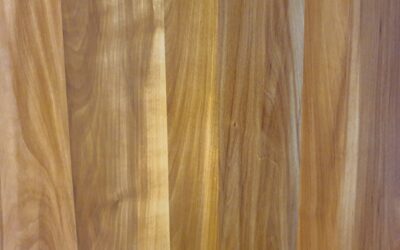
Walk into a modern showroom and you will struggle to tell a $9-per-square-foot oak floor from a $3 vinyl imitation until you crouch down and touch it. That is how far wood effect vinyl flooring planks have come, and it is why they now outsell real hardwood in many new homes. The best planks pair high-resolution photographic film with embossed-in-register grain, so the texture you feel lines up perfectly with the wood grain you see. This guide covers the technology, sizing, wear ratings, and installation so you can buy with confidence.
- What Makes Vinyl Look Like Real Wood
- SPC vs WPC Cores
- Wear Layer Ratings You Should Know
- Plank Sizes and Visual Style
- Cost of Wood Effect Vinyl Planks
- Installation Methods
- Acclimation and Subfloor Prep
- Color, Grain, and Making It Look Real
- Care and Maintenance
- Frequently Asked Questions
- The Bottom Line
What Makes Vinyl Look Like Real Wood
The realism comes from four stacked layers. A clear wear layer sits on top, protecting a printed design film beneath it. Below that is the rigid or flexible core, and finally a backing layer that adds stability and quiet. The design film is a photograph of actual timber, so a single product can capture the knots of hickory or the long straight grain of white oak.
Cheaper planks stop there and roll a random pebbled texture over the film. Premium planks add embossed-in-register (EIR) texture, where the press stamps grooves that align with the printed grain. Run your finger along an EIR plank and you feel a real wood pore exactly where you see it. That single feature separates convincing floors from obvious fakes.
SPC vs WPC Cores
Rigid-core wood effect vinyl comes in two main flavors, and the core drives how the floor feels and performs.
- SPC (stone plastic composite) — A dense limestone-and-PVC core that is extremely hard and dimensionally stable. SPC resists dents from furniture and pet claws, handles temperature swings, and installs beautifully over concrete slabs. It feels firm underfoot.
- WPC (wood plastic composite) — A foamed core mixing wood flour and PVC. It is thicker, warmer, and softer to walk on, which suits bedrooms and living rooms where comfort matters more than heavy traffic.
Both are fully waterproof. If you have big dogs, rolling office chairs, or a slab foundation, choose SPC. If underfoot comfort and sound are your priority, WPC wins.
Wear Layer Ratings You Should Know
The wear layer, measured in mils, determines how long the floor survives before the printed film shows through. Match the rating to your traffic:
- 6 to 8 mil — Light residential use, guest rooms, or rental turnovers on a budget.
- 12 mil — Standard family homes with normal foot traffic.
- 20 mil — Homes with kids, pets, and busy kitchens. The sweet spot for durability.
- 28 mil and up — Commercial-grade, rated for retail and offices.
Do not confuse overall plank thickness with wear layer. A 5mm plank might carry only a 12 mil wear layer, while a 6.5mm plank carries 20 mil. The wear layer is what protects the look, so read that number first.
Plank Sizes and Visual Style
Wood effect planks come in widths from about 5 inches to 9 inches and lengths from 36 to 60 inches. Wider, longer planks read as high-end European oak and make small rooms feel larger. Narrow planks lean traditional and busy. Long boards also mean fewer seams, which reads cleaner across an open floor plan.
Beveled edges add another layer of realism. A painted micro-bevel on all four sides casts a subtle shadow line that mimics individual solid boards. Square-edge planks blend into one continuous surface, which some homeowners prefer for a seamless modern look.
Cost of Wood Effect Vinyl Planks
Material pricing spans a wide range depending on core and wear layer. Budget flexible LVP starts around $1.50 to $2.50 per square foot. Mid-grade SPC with a 12 to 20 mil wear layer runs $2.50 to $4.50 per square foot. Premium designer lines with thick wear layers and attached cork underlayment reach $5 to $7 per square foot.
Installation for a floating click-lock floor adds $1 to $3 per square foot if you hire a pro. Glue-down installations cost slightly more in labor. For a 400-square-foot room, budget $1,400 to $4,000 installed, which still undercuts genuine hardwood by a wide margin.
Installation Methods
Most wood effect vinyl uses a click-lock floating system that requires no glue or nails. The planks snap edge to edge and float over the subfloor on a thin underlayment. This is the most DIY-friendly method and allows the floor to expand and contract with temperature.
- Floating click-lock — Fastest install, easy repairs, ideal for DIY. Leave a 1/4-inch expansion gap at all walls.
- Glue-down — Best for very large commercial spaces or high-humidity areas. Requires a flat, clean subfloor and full-spread adhesive.
- Loose-lay — Heavy planks with a grippy backing that stay put by friction, good for spaces where you may want to lift and reuse the floor.
Subfloor prep matters. Rigid SPC hides minor imperfections, but any bump over 3/16 inch across 10 feet should be leveled first, or you will feel it and hear hollow spots.
Acclimation and Subfloor Prep
Let planks sit in the room for 48 hours before installing so they adjust to household temperature and humidity. Sweep and vacuum the subfloor, check for high spots with a straightedge, and grind or fill as needed. On concrete, test for moisture even though the vinyl is waterproof, because trapped moisture can affect adhesives and underlayment.
Color, Grain, and Making It Look Real
The most convincing wood effect floors get three things right beyond texture. First is pattern variation: premium lines print 20 or more unique board faces, so the same knot does not repeat across the room the way it does on a 4-pattern budget product. Second is color range within each plank, mimicking how real timber shifts from board to board. Third is a matte or low-sheen finish, because genuine hardwood almost never has a plastic shine.
Popular looks track hardwood trends closely. Wide light oak with subtle graining reads Scandinavian and modern. Warm hickory with strong knots feels rustic and farmhouse. Gray and greige planks lean contemporary, though they carry the same trend risk as gray hardwood. When you shop, lay four or five planks together on the floor and step back ten feet. If you can spot a repeating knot or an obvious seam pattern from across the room, the print quality is too low, and a guest will notice it too.
Care and Maintenance
One of the biggest advantages over real wood is how little upkeep these floors demand. Sweep or vacuum on a hard-floor setting to keep grit off the wear layer, and damp-mop with a pH-neutral cleaner. Skip steam mops and wax, which can damage the finish. Place felt pads under furniture legs and use a hard-floor chair mat under rolling office chairs to protect even a thick wear layer.
Frequently Asked Questions
Do wood effect vinyl planks look cheap?
Not the good ones. Planks with EIR texture, painted bevels, and wide long boards look convincingly like hardwood. Cheaper planks with smooth surfaces and repeating patterns give themselves away, so buy for texture and pattern variation.
Are wood effect vinyl planks waterproof?
Rigid-core SPC and WPC planks are 100% waterproof and safe for kitchens, bathrooms, and basements. The core will not swell, unlike laminate, which uses a wood-fiber board.
How long do they last?
With a 20 mil wear layer and normal care, expect 15 to 25 years of residential service. Thinner 6 to 8 mil products may wear through in high-traffic areas within 5 to 10 years.
Can I install them over existing flooring?
Yes. Floating click-lock planks install over most flat, hard existing floors such as tile or vinyl, as long as the surface is clean, dry, and level. Remove carpet first.
Are they good with pets?
Excellent. A 20 mil or thicker wear layer resists claw scratches, and the waterproof core handles accidents. SPC in particular stands up to large, active dogs.
The Bottom Line
For homeowners who want the warmth of timber without the price or fuss of solid wood, wood effect vinyl flooring planks deliver a compelling answer. Focus on the wear layer rating, choose SPC or WPC to match your comfort and traffic needs, and pay for EIR texture and wide boards if realism is your goal. Done right, the floor will fool your guests and outlast far more expensive materials.
Prefer to explore on your own?
See how new flooring looks in your actual room in seconds — free, no signup.
Try the free Floor Studio →