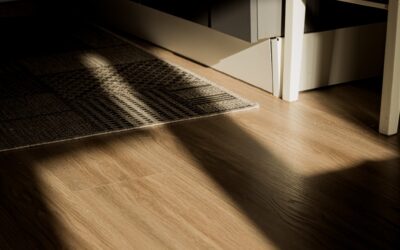
If you’ve shopped for luxury vinyl plank in the last few years, you’ve run into the acronym WPC — wood-plastic composite. It’s one of the two rigid-core vinyl constructions that now dominate the waterproof flooring aisle, and it’s the cushier, quieter, more forgiving of the pair. This guide covers what WPC actually is, how it differs from SPC and ordinary vinyl, what it costs, and where it makes sense in your home. One note up front: WPC flooring is an interior vinyl product — don’t confuse it with the exterior WPC composite boards used for decks and fences.
What WPC Flooring Is
WPC is a category of luxury vinyl flooring built on a rigid, foamed core. The “wood” in the name is a bit of legacy branding: early cores used wood flour, but modern WPC cores are mostly a blend of PVC, calcium carbonate (limestone), plasticizers, and a foaming agent that whips air into the mix. That foaming is the defining trait — it makes the core lighter, thicker, softer underfoot, and quieter than solid cores, while remaining 100% waterproof because there’s no wood fiber to swell.
A typical WPC plank stacks five layers:
- UV/top coat: Urethane finish, often ceramic-bead or aluminum-oxide enhanced, for scuff and stain resistance.
- Wear layer: Clear vinyl, measured in mils (thousandths of an inch). This is the durability spec that matters most.
- Print layer: The photographic wood or stone visual.
- WPC core: Foamed composite, usually 5 to 8 mm thick, carrying the click-lock joint.
- Attached underlayment: Cork or foam pad, typically 1 to 1.5 mm, for sound damping.
Total plank thickness runs 6.5 mm to 9+ mm — noticeably beefier than the 4 to 6 mm typical of SPC or the 2 to 4 mm of glue-down vinyl.
WPC vs SPC: The Decision Most Shoppers Face
SPC (stone-plastic composite) uses the same layer stack but with an unfoamed, limestone-heavy core that’s thinner, denser, and harder. The two overlap heavily, but they optimize for different things.
| Attribute | WPC | SPC |
|---|---|---|
| Core density | Foamed, lighter | Solid, very dense |
| Feel underfoot | Softer, warmer, quieter | Harder, more like tile |
| Dent resistance | Good | Excellent — best in vinyl |
| Subfloor forgiveness | Better bridges minor dips | Telegraphs imperfections less overall but needs flatness |
| Typical thickness | 6.5–9 mm | 4–6.5 mm |
| Typical price/sq ft | $3–$6 | $2.50–$5 |
| Best for | Living areas, bedrooms, upper floors | Kitchens, entries, rentals, sunrooms |
The practical shorthand: WPC for comfort and quiet, SPC for punishment. A family room where people stand, play, and drop the occasional remote favors WPC. A rental kitchen with rolling islands and dropped cast iron favors SPC.
Why People Choose WPC
- Genuinely waterproof. The plank itself is impervious — dog bowls, shower splash, plant overflow, and multi-day spills don’t swell it. (The subfloor below can still suffer if water sits, so flooding is never “no problem.”)
- Comfort. The foamed core has measurable give. Standing at a kitchen counter for an hour on WPC is kinder to knees and backs than tile or SPC.
- Quiet. Foam core plus attached pad makes WPC one of the quietest hard floors — a real benefit on second stories and in condos with sound requirements.
- Thermal feel. WPC doesn’t pull heat from bare feet the way tile or stone does.
- Floating install over imperfect floors. Thick, rigid planks bridge small subfloor flaws that thin glue-down vinyl would telegraph. Click-lock joints make it a legitimate DIY project.
The Honest Downsides
WPC dents. The foamed core that gives it comfort also gives way under concentrated point loads — a refrigerator foot, a piano leg, a stiletto heel. Use load-spreading glides under heavy appliances and furniture. Wear layers on budget WPC can be thin; a 12-mil product in a busy house will show traffic patterns in a few years, so treat 20 mil as the residential standard and 22 to 28 mil as the pet-proof tier. Like all vinyl, WPC can fade or expand in intense direct sun, so check the warranty before flooring a south-facing sunroom. And while premium WPC visuals are excellent, it’s still printed vinyl — it won’t add resale value the way hardwood does. If scratch resistance is your top concern rather than water, compare it against laminate, which still wins that contest.
What WPC Costs
Materials run $3 to $4 per square foot for solid mid-range product (20-mil wear layer, 6.5 mm), and $4.50 to $6.50 for premium lines with painted bevels, longer/wider planks, and 22+ mil wear layers. Professional installation adds $1.50 to $3.50 per square foot since floating floors go down fast. Budget a total of $4.50 to $9.50 per square foot installed — comparable to laminate plus underlayment, well under engineered hardwood, and roughly on par with mid-grade carpet once padding is counted.
Where to Use WPC in the House
WPC is one of the few floors that can legitimately run through an entire level — kitchen, bath, living, hall, and bedrooms — without a product change, which is why open-plan remodels love it. Its best-fit rooms are kitchens, full and half baths, laundry rooms, entries, and finished basements (over a slab that meets the manufacturer’s moisture limits — most rigid cores tolerate high readings, but check the spec against your concrete slab test results). On concrete, most WPC installs floated with no extra underlayment thanks to the attached pad; some brands want a 6-mil poly vapor barrier below grade. Acclimate boxes 48 hours, keep expansion gaps of 1/4 to 3/8 inch at walls, and break runs longer than about 50 feet with transitions.
Maintenance and Lifespan
Care is minimal: sweep or vacuum (no beater bar) regularly, damp-mop with a neutral pH cleaner, and skip wax, polish, oil soaps, and steam mops. Felt pads under chairs, walk-off mats at doors, and rugs without rubber backings (which can stain vinyl) cover the rest. Expect 10 to 20 years of service depending on wear-layer thickness and traffic; most quality lines carry lifetime residential warranties on waterproofing and 15-to-25-year wear warranties.
Shopping Checklist: Reading a WPC Spec Sheet
Brands market heavily on total thickness, but four other numbers predict how a WPC floor actually holds up. First, wear layer in mils — 12 mil is builder grade, 20 mil is the residential standard, 22 to 28 mil is the heavy-traffic tier; nothing else on the sheet compensates for a thin wear layer. Second, the finish chemistry: ceramic-bead or aluminum-oxide-enhanced urethanes outlast plain urethane by years and resist the micro-scuffing that dulls cheap vinyl in hallways. Third, joint profile — licensed systems like Unilin or Välinge click together positively and survive re-installation; knockoff joints chip and gap. Fourth, attached pad quality: cork damps sound slightly better and resists compression set; foam pads vary from excellent to packing-material.
Also confirm certifications and terms that signal a serious manufacturer: FloorScore certification for indoor air quality, a residential wear warranty of 15+ years with pet-stain language if you have animals, and a published static-load rating if you own heavy furniture. Check plank format against your room — 7-inch-wide, 48-to-60-inch planks suit open areas, while 9-inch super-wides need flatter subfloors to avoid rocking. Finally, buy all boxes from one production lot and keep an extra carton; rigid-core lines get discontinued and re-colored constantly, and a two-plank repair five years from now depends entirely on your attic stash.
WPC FAQ
Is WPC the same as composite decking? No. Exterior wood-plastic composite boards for decks are a different product entirely; WPC flooring is interior rigid-core vinyl.
Is WPC 100% waterproof? The plank is. Water can still migrate through seams to the subfloor in a true flood, so cleanup still matters.
WPC or SPC over concrete? Both work; SPC’s density suits slabs slightly better, but WPC feels warmer — many basements choose WPC for exactly that reason.
What wear layer should I buy? 20 mil for most homes; 12 mil only for low-traffic bedrooms; 22+ mil for big dogs and heavy traffic.
WPC hits a sweet spot no other floor quite reaches: fully waterproof, comfortable enough for all-day standing, quiet enough for upstairs, and DIY-installable. If your project needs one floor to do everything, it belongs on your shortlist.
Prefer to explore on your own?
See how new flooring looks in your actual room in seconds — free, no signup.
Try the free Floor Studio →