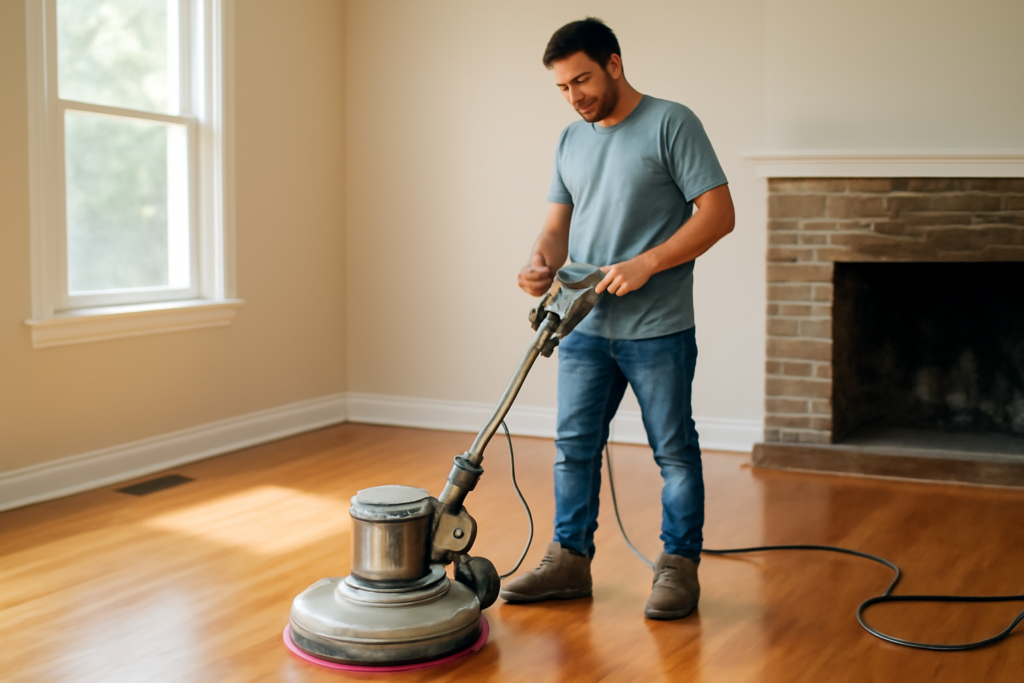
When hardwood floors look dull, scratched, or grimy but the wood underneath is still sound, you often do not need a full sanding to bring them back. A wood floor buffer is a heavy rotating machine that cleans, smooths, and polishes hardwood, and it is the tool behind both a deep-clean refresh and a light “screen and recoat” that can make tired floors look almost new without the cost and dust of a complete refinish.
These machines are powerful, though, and used carelessly they can gouge a floor or damage its finish. Knowing the types, the technique, and the limits will help you decide whether to rent one or call a pro.
What a Floor Buffer Actually Does
At its core, a buffer is a motor that spins a large pad or abrasive disc, typically 16 to 20 inches across, against the floor. Depending on the pad you attach, the same machine can perform very different jobs:
- Deep cleaning with a scrubbing pad to lift ground-in grime.
- Buffing and polishing with a soft pad to restore shine.
- Screening with a fine abrasive screen to lightly scuff an old finish so a new coat bonds.
What a buffer does not do is sand bare wood flat. For removing deep scratches, stains, or color, you need a drum or orbital sander; the buffer is for surface work and recoating.
Types of Floor Buffers
Homeowners encounter a few distinct machines, and choosing the right one matters:
- Rotary (swing) buffer – the classic single-pad machine that “swings” side to side. Powerful and common at rental counters, but it takes practice to control.
- Orbital floor buffer – vibrates in small orbits rather than spinning aggressively. Much more forgiving and the safer choice for first-timers doing a screen-and-recoat.
- Square-pad orbital – reaches closer to walls and is very DIY-friendly.
If you are new to this, an orbital buffer is far easier to handle than a swing machine, which can lurch and dig in if you are not ready for it.
The Screen-and-Recoat Refresh
The most valuable job a buffer does for homeowners is a screen and recoat. Rather than sanding to bare wood, you lightly abrade the existing finish and apply a fresh topcoat. Done correctly it removes light scratches and restores luster at a fraction of a full refinish.
- Clean thoroughly. Vacuum and clean the floor so no grit remains; debris under the screen will scratch.
- Screen the finish. Run the buffer with a fine screen to dull the old coating evenly.
- Vacuum and tack. Remove all dust completely, then wipe with a tack cloth.
- Recoat. Apply a compatible finish per its instructions and let it cure.
Important caveat: a screen and recoat only works if the new finish bonds to the old. Floors with wax, certain factory finishes, or contamination may not accept a new coat, so test an inconspicuous area first.
How to Use a Buffer Safely
Respect the machine. A rotary buffer can pull hard to one side, so before you start, learn how slight pressure on the handle steers it. Tilt the handle down gently and the machine drifts one way; lift slightly and it goes the other.
- Wear eye protection and a dust mask; screening creates fine dust.
- Keep the cord behind you and over your shoulder so you never run over it.
- Never let the machine sit spinning in one spot; keep it moving to avoid swirl marks and burns.
- Work with the grain and in overlapping passes for an even result.
- Start the machine with the pad flat on the floor, and keep a firm two-handed grip.
Aggressive screening or the wrong abrasive can cut through the finish and damage the wood, so use the grit the recoat product recommends and let the machine’s weight do the work.
Renting Versus Hiring a Pro
Many home centers and rental yards offer floor buffers by the day, and an orbital buffer rental is a reasonable DIY proposition for a confident homeowner. Daily rental rates are usually modest, plus the cost of pads, screens, and finish.
That said, a swing buffer in inexperienced hands can swirl or gouge a floor, and recoat adhesion problems can be expensive to fix. If your floors are valuable, the layout is tricky, or you are unsure whether the existing finish will accept a recoat, hiring an experienced flooring professional is often the safer investment. Treat any rental and material figures as estimates and check local pricing.
Keeping Floors Buffer-Ready
Good routine care extends the time between recoats. Sweep or vacuum grit regularly, since sand and dirt act like sandpaper underfoot. Use felt pads under furniture, place mats at entries, and clean only with products made for hardwood, never excess water or harsh chemicals.
With sensible maintenance and an occasional screen and recoat, a wood floor buffer lets you stretch the life of your hardwood for many years and delay a full, dusty refinish for as long as possible.
Choosing the Right Pad or Screen
The accessory you attach matters as much as the machine. Buffer pads are color-coded by aggressiveness, and using the wrong one can either do nothing or cut too deep. White and red pads are soft, meant for polishing and light cleaning. Maroon and green pads are more aggressive for scrubbing. For screening before a recoat, sanding screens come in grits, typically in the 120 to 220 range, and the finish product you are using will recommend a specific grit.
When in doubt, start with a finer, less aggressive option and step up only if needed. It is far easier to make a second, slightly more aggressive pass than to repair a floor you cut through. Keep pads and screens clean during use, since loaded abrasive stops working and can leave swirl marks.
When a Buffer Is Not Enough
It is important to set expectations. A buffer and a screen-and-recoat cannot fix everything. Deep gouges, pet stains that have penetrated the wood, water damage, sun-faded boards, or a worn-through finish that exposes bare wood all call for full sanding with a drum or orbital sander, not just buffing. Likewise, you cannot change the stain color with a recoat; that requires sanding to bare wood first.
If you are unsure whether your floors are candidates for a simple refresh or need a full refinish, have an experienced flooring contractor assess them. Spending on the right approach the first time protects both your floors and your budget, and a pro can tell at a glance whether a quick screen-and-recoat will deliver the result you want.
Prefer to explore on your own?
See how new flooring looks in your actual room in seconds — free, no signup.
Try the free Floor Studio →