After two decades of installing and maintaining hardwood, I can tell you that the right wood floor cleaning machine saves your back and your finish in equal measure, while the wrong one can void a warranty in an afternoon. Wood is unforgiving of standing water, and most machines were engineered for tile and vinyl first, with hardwood added as a marketing afterthought. Knowing which category a machine belongs to, and how it meters moisture, matters far more than the brand printed on the handle.
This guide walks through the real categories of powered floor cleaners, what each does well on sealed wood, and the specific features that separate a safe purchase from an expensive mistake. I will also cover what to avoid outright, because on hardwood the damage from over-wetting is often invisible until the boards cup a season later.
Why Wood Is Different From Every Other Floor
Wood is hygroscopic, meaning it absorbs and releases moisture with the surrounding air. A polyurethane or aluminum-oxide factory finish forms a protective skin, but that skin is not waterproof. Water finds the micro-gaps at board seams, wicks into the end grain, and swells the fibers. The result is cupping, crowning, or gaps that open and close with the seasons. That single fact drives every recommendation in this article: a good machine puts down a light, quickly evaporating film, not a puddle.
The second difference is abrasion. Grit acts like sandpaper under any pad or brush, and hardwood shows scratches that tile shrugs off. That is why vacuuming or dry-dust-mopping before any wet pass is non-negotiable, and why the softness of a machine’s brushroll or pad matters. A cleaner that scrubs aggressively is fine for grout lines but will dull a satin urethane over time.
Finally, sealed and unsealed wood are two different animals. Site-finished and prefinished floors with intact polyurethane tolerate damp cleaning. Older wax-finished, oiled, or unsealed floors do not, and no water-based machine belongs on them. If a drop of water beads on your floor, it is sealed; if it soaks in and darkens the wood, keep every machine on this list away from it and stick to dry methods.

Steam Mops: Powerful but Risky on Hardwood
Steam mops heat water to produce vapor that loosens grime and sanitizes without chemicals. On sealed tile and stone they are excellent. On hardwood they are the single most misunderstood tool in the category. Heat and forced moisture are exactly what a wood finish is built to resist, and repeated steaming can drive water through hairline gaps in the seal, cloud the finish, and eventually delaminate it.
Many manufacturers now market a hardwood setting, and a few brands claim their floors are steam-safe, but most flooring manufacturers explicitly void warranties if you steam-clean them. If you already own a steam mop and insist on using it, use the lowest steam setting, keep the head moving so heat never dwells in one spot, and use a dry towel to follow behind. Personally, I steer clients away from steam on any wood floor they want to keep for decades.
The honest verdict: a steam mop is a capable machine for the wrong material. If your home is mostly wood, your money is better spent on a moisture-controlled washer or a good microfiber system. Reserve steam for the tile bathroom and the kitchen backsplash.
Hard-Floor Washers: The CrossWave and Tineco Category
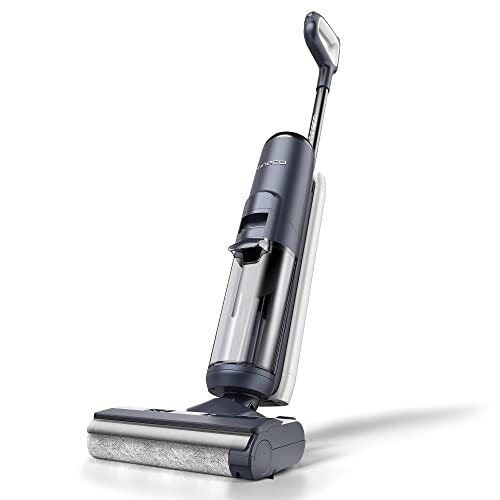
The fastest-growing type of wood floor cleaning machine is the hard-floor washer, exemplified by the Bissell CrossWave and the Tineco Floor One series. These units vacuum and wash in a single pass, using a spinning roller brush that is continuously fed a metered stream of cleaning solution while a separate tank collects the dirty water. Because they lift the wash water back up immediately, they leave far less standing moisture than a traditional mop and bucket, which is exactly what wood needs.
The best of these machines include a dedicated hardwood or wood mode that reduces the water flow and often slows the brush. The Tineco smart models add a sensor that detects how dirty the floor is and adjusts moisture automatically, plus a self-cleaning cycle that runs clean water through the roller so it dries without souring. For a busy household with a mix of wood and tile, this is the category I recommend most often.
Watch two things when buying. First, confirm the machine is rated for sealed hardwood and use only the manufacturer’s wood-safe or multi-surface formula, never a concentrated general cleaner. Second, check the roller design: a soft microfiber-and-nylon roller is gentle, while an aggressive stiff-bristle brush meant for grout can scuff a satin finish. Empty and rinse both tanks after every use so the machine never lays down dirty film.
Cordless Vacuum-Mop Combos
A close cousin to the hard-floor washer is the cordless vacuum-mop combo, sold by Tineco, Dreame, Shark, and others. These are lighter, battery-powered, and aimed at quick daily maintenance rather than deep scrubbing. They still meter moisture onto a roller and recover the dirty water, so they share the wood-friendly wet-and-lift principle, but with less suction and smaller tanks.
For a smaller home or an owner who wants to touch up high-traffic lanes a few times a week, a cordless combo is a genuinely good match for hardwood. The light moisture load and continuous recovery mean the floor is nearly dry within a minute or two. The trade-off is runtime, which on a full-size home can mean recharging mid-clean, and the smaller dirty-water tank fills quickly on a floor that has not been cleaned in a while.
If you go cordless, prioritize a model with a low-moisture or wood mode and a roller that self-cleans on the dock. The docking station that flushes and dries the roller between uses is the feature that keeps these machines from developing a musty smell, which is the most common complaint I hear from owners.
Robot Mops and Vacuum-Mop Hybrids
Robot vacuums with mopping pads have improved enough to earn a mention. The better units lift the mop pad when they detect carpet, use a vibrating or spinning pad with a controlled trickle of water, and empty and refill at a base station. On sealed wood, the low water volume is actually reassuring, and for daily dust and light footprints they keep a floor presentable with zero effort.
The limitation is depth of clean. A robot mop smears a light film over the surface; it will not scrub a dried spill or lift ground-in grime the way a powered washer will. Think of it as maintenance between real cleanings, not a replacement. Make sure whatever model you choose can reliably detect and avoid wood transitions to unsealed areas or rugs, and set the water level to its lowest setting for hardwood.
One caution specific to wood: any robot that returns to a wet pad repeatedly can re-deposit dirty moisture. Choose a model that washes its own pad at the dock, and keep an eye on how much water it actually lays down on the first few runs before trusting it unattended.
Orbital and Cylindrical Buffers for Deep Cleaning
For periodic deep cleaning and finish maintenance, an orbital floor machine or a cylindrical scrubber like those from Oreck or Koblenz has a place. These use a driven pad or a pair of counter-rotating brushes to work a cleaning solution across the surface, and with the right pad they can also apply and buff a wood floor refresher or polish. Professionals use larger versions of these to screen and recoat, but the consumer models are for cleaning and shine restoration, not sanding.
The key with any buffer on wood is the pad. A soft white or red polishing pad lifts grime and evens out a polish without abrading the finish. Anything more aggressive belongs on stone or a floor you intend to refinish. Keep the solution light, spread thin, and let the machine’s weight do the work rather than forcing it.
These machines are overkill for weekly cleaning but shine when you want to strip old polish buildup and restore luster to a tired finish. Rent one before you buy if you only face this task once or twice a year.
What to Avoid, and How to Choose
Regardless of category, avoid three things on hardwood: excess water, harsh chemistry, and grit. Never flood the floor, never use undiluted cleaners or anything acidic or high in ammonia, and always dry-clean before the wet pass. If a machine cannot control its water output, it does not belong on wood. Skip steam entirely if your finish or warranty is in question, and never let any wet machine dwell in one spot.
To choose, start with your floor mix. Mostly wood with some tile points to a hard-floor washer with a true wood mode. A small home wanting quick upkeep points to a cordless combo or a robot mop. A once-a-year deep clean points to a rented buffer. Confirm sealed-hardwood compatibility in the manual, buy the manufacturer’s matching solution, and commit to emptying and rinsing tanks after every use.
Whichever wood floor cleaning machine you land on, remember that the machine is only half the system. Frequent dry dust-mopping between wet cleanings, felt pads under furniture, and prompt spill cleanup do more to preserve a finish than any gadget. Buy the tool that meters moisture well, respect the material, and your floors will still look furniture-showroom fresh a decade from now.
Prefer to explore on your own?
See how new flooring looks in your actual room in seconds — free, no signup.
Try the free Floor Studio →