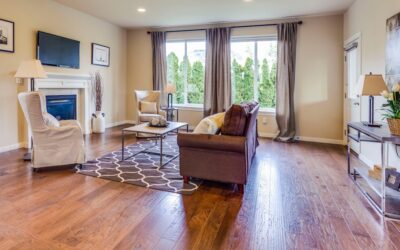
The same engineered white oak that costs $9 per square foot at a specialty retailer can be found for $4.50 at the right time, in the right place. Real wood flooring deals exist year-round if you know where to shop, but the deal is only a deal if the product matches the spec you actually need. Here is how to save 30 to 50 percent without ending up with discontinued boards you cannot match if you damage a section three years from now.
- Where Real Wood Flooring Deals Live
- Mill Outlets: The Largest Discounts
- Closeout and Discontinued Lines
- Big-Box Clearance and Seasonal Sales
- Online Wholesalers and Contractor Accounts
- Wood Flooring Auctions and Salvage
- Spot the Fake “Deal”
- What Specs Still Matter at a Discount
- How Much to Order
- Time Your Purchase
- Final Word
Where Real Wood Flooring Deals Live
Five reliable channels produce genuine savings, in roughly descending order of discount:
- Mill outlets and direct-from-manufacturer sellers: 30-50% off retail
- Closeout and discontinued-line specialty stores: 25-45% off
- Big-box clearance and end-of-season: 20-40% off
- Contractor accounts and online wholesalers: 15-30% off
- Open-box and freight-damaged from online retailers: 15-35% off
Each channel has trade-offs. The biggest discount usually comes with the smallest available quantity, the least selection, and zero ability to reorder if you damage flooring later.
Mill Outlets: The Largest Discounts
Around Dalton, Georgia (the carpet capital) and a few hardwood mill towns in Pennsylvania, Tennessee, and Wisconsin, mill outlets sell direct to the public. These are typically a mix of overruns, second-quality, and discontinued pattern runs. Pricing on engineered white oak that retails for $8 to $12 per sq ft commonly drops to $4 to $6.
The catch: inventory rotates monthly. If you fall in love with a specific board today and need 200 more sq ft in two years, the run may be gone. Always order 10 to 15 percent extra at purchase to cover future repairs.
Closeout and Discontinued Lines
LL Flooring, Floor & Decor, and a number of regional discounters specialize in discontinued runs. The flooring is genuinely first-quality from major manufacturers; it just happens to be the color or style the brand has decided not to keep producing. Wood flooring deals from these channels typically run 25 to 45 percent below original MSRP.
Look for products with: matching dye lots across all the boxes you need, sealed and undamaged boxes, and at least 10 percent more square footage available than your project requires. If the available quantity exactly matches your needs, you have zero buffer for cuts, mistakes, or future repairs.
Big-Box Clearance and Seasonal Sales
Home Depot and Lowe’s run major flooring promotions in late February to early March (pre-spring remodeling season), early September (back-to-school), and Black Friday through New Year’s. Discounts range from 15 to 40 percent on featured product. The deepest discounts are on house-brand engineered hardwood and on inventory the buyers want to clear before new SKUs land.
End-cap clearance throughout the year on partial pallets is where the best wood flooring deals at big-box live. Look for the orange clearance tags. Verify all boxes are from the same dye lot before purchasing; mixed-lot floors look obviously patched once installed.
Online Wholesalers and Contractor Accounts
Sites like BuildDirect, Wholesale Wood Floor, and a number of regional flooring wholesalers sell to both contractors and the public. Pricing typically beats retail by 15 to 30 percent on identical product. Shipping is the variable that determines whether you actually save money. Pallet freight to the curb runs $200 to $500 depending on quantity and destination.
If your contractor holds a wholesale account, ask if they will pass partial savings along when sourcing your wood. Many will offer the wholesale price plus a 15 to 20 percent markup, which still beats most retail-installed bundles.
Wood Flooring Auctions and Salvage
For older homes and renovation projects with character, salvage and auction sources can produce extraordinary wood flooring deals. Reclaimed barn-wood oak, antique heart pine, and salvaged maple from gymnasiums and factory floors are sold at $2 to $8 per board foot, vastly below new equivalent product. Sources include Craigslist, Facebook Marketplace, regional architectural salvage yards, and online auction sites.
The trade-off is unpredictable condition: nail holes, cupping, and irregular widths require milling, which adds $1 to $3 per sq ft if outsourced. Reclaimed wood is best for accent rooms or smaller installations where the character is the goal.
Spot the Fake “Deal”
Three red flags that a deal is not a deal:
- “Up to 50% off” with no specific products discounted that much: Marketing fluff
- Heavily discounted “first-quality” with no manufacturer name: Often grey-market or seconds
- Prices well below the wholesale floor: The mill cost on quality engineered oak is around $3.50/sq ft. Anything under $3 is suspicious
Verify the brand, model number, and warranty against the manufacturer’s website before purchasing. Counterfeit and grey-market flooring is real, especially in click-lock laminate and engineered products imported through unauthorized channels.
What Specs Still Matter at a Discount
The same specs that matter at full price still matter on sale. For engineered hardwood: 2 mm or thicker wear layer, multi-ply hardwood core, and at least a 25-year residential warranty. For solid hardwood: 3/4 inch thick, kiln-dried to 6-9 percent moisture, and milled within tolerance per the National Wood Flooring Association.
A “great deal” on engineered flooring with a 0.5 mm wear layer and HDF core is not actually a deal because the floor lasts 7 years instead of 25. Wood flooring deals are deals only when the underlying product would have been a good buy at retail.
How Much to Order
Order 10 to 15 percent more than the room’s square footage to cover cuts, waste, and future repairs. For diagonal installs and herringbone patterns, increase to 15 to 20 percent. Budget for the same overage rule on any wood flooring deals where you cannot reorder later. Discontinued lines especially require ordering enough for the project plus stash boards for repairs over the next 10 to 15 years.
Time Your Purchase
Best months to buy: late February, mid-September, late November. Flooring retailers run their largest sales in these windows, both because they want to move inventory and because installer demand is lowest, which means contractor labor is also more competitive. Buy materials in February and schedule installation before April and you maximize savings on both fronts.
Final Word
Wood flooring deals are real and abundant. The skill is matching channel to project size, verifying the product specs match what your home needs, and ordering enough to cover both immediate installation and future repairs. Done right, you put a 25 to 40 year hardwood floor in your home for the price of mid-tier laminate. That kind of value still exists in residential building, but only for shoppers who do their homework.
Prefer to explore on your own?
See how new flooring looks in your actual room in seconds — free, no signup.
Try the free Floor Studio →